Benin Edible Oils Market Growth Rate Analysis (2025 - 2031)
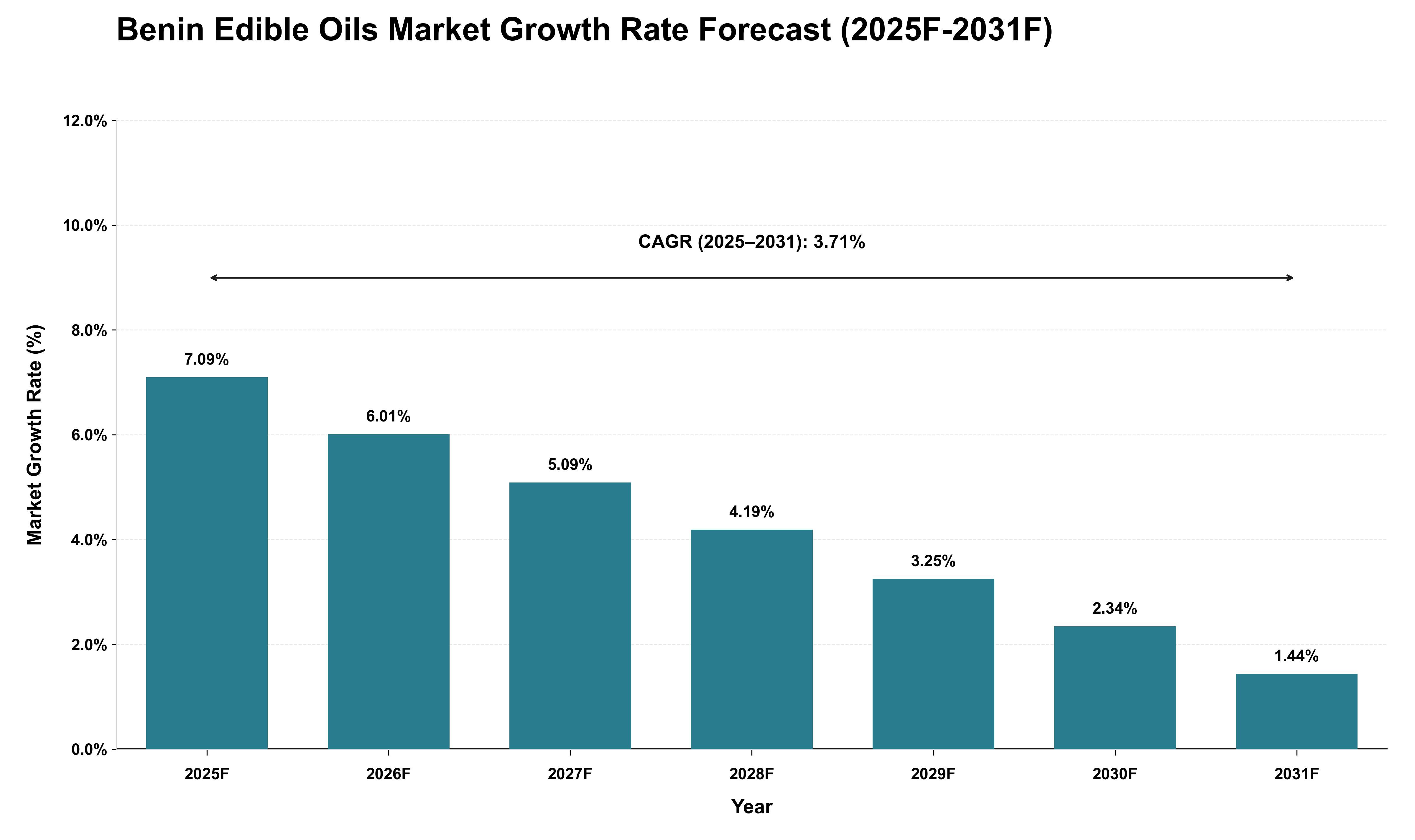
The outlook for the Benin edible oils market will be shaped by several macroeconomic factors, particularly concerning supply chain dynamics and input costs. As global agricultural commodity prices fluctuate, the cost of raw materials for edible oil production is expected to influence pricing strategies and profit margins. The forecasted CAGR of 3.71% reflects a gradual decline in annual growth rates, starting at 7.09% in 2025 and tapering to 1.44% by 2031, indicating a potential adjustment in consumer demand as import dependencies remain significant. This dependency may lead to vulnerabilities in supply chains, particularly if geopolitical tensions or climate-related disruptions impact sourcing from key producing regions. Consequently, manufacturers will likely face challenges in maintaining competitive pricing while navigating these external pressures, ultimately shaping the market's trajectory over the forecast period.
Key Highlights of the Report:
- Benin Edible Oils Market Outlook
- Market Size of Benin Edible Oils Market, 2024
- Forecast of Benin Edible Oils Market, 2031
- Historical Data and Forecast of Benin Edible Oils Revenues & Volume for the Period 2021-2031
- Benin Edible Oils Market Trend Evolution
- Benin Edible Oils Market Drivers and Challenges
- Benin Edible Oils Price Trends
- Benin Edible Oils Porter`s Five Forces
- Benin Edible Oils Industry Life Cycle
- Historical Data and Forecast of Benin Edible Oils Market Revenues & Volume By Type for the Period 2021-2031
- Historical Data and Forecast of Benin Edible Oils Market Revenues & Volume By Palm Oil for the Period 2021-2031
- Historical Data and Forecast of Benin Edible Oils Market Revenues & Volume By Soybean Oil for the Period 2021-2031
- Historical Data and Forecast of Benin Edible Oils Market Revenues & Volume By Sunflower Oil for the Period 2021-2031
- Historical Data and Forecast of Benin Edible Oils Market Revenues & Volume By Rapeseed Oil for the Period 2021-2031
- Historical Data and Forecast of Benin Edible Oils Market Revenues & Volume By Olive Oil for the Period 2021-2031
- Historical Data and Forecast of Benin Edible Oils Market Revenues & Volume By Packaging Type for the Period 2021-2031
- Historical Data and Forecast of Benin Edible Oils Market Revenues & Volume By Pouches for the Period 2021-2031
- Historical Data and Forecast of Benin Edible Oils Market Revenues & Volume By Jars for the Period 2021-2031
- Historical Data and Forecast of Benin Edible Oils Market Revenues & Volume By Cans for the Period 2021-2031
- Historical Data and Forecast of Benin Edible Oils Market Revenues & Volume By Bottles for the Period 2021-2031
- Historical Data and Forecast of Benin Edible Oils Market Revenues & Volume By End Use for the Period 2021-2031
- Historical Data and Forecast of Benin Edible Oils Market Revenues & Volume By Domestic for the Period 2021-2031
- Historical Data and Forecast of Benin Edible Oils Market Revenues & Volume By Food Service for the Period 2021-2031
- Historical Data and Forecast of Benin Edible Oils Market Revenues & Volume By Industrial for the Period 2021-2031
- Benin Edible Oils Import Export Trade Statistics
- Market Opportunity Assessment By Type
- Market Opportunity Assessment By Packaging Type
- Market Opportunity Assessment By End Use
- Benin Edible Oils Top Companies Market Share
- Benin Edible Oils Competitive Benchmarking By Technical and Operational Parameters
- Benin Edible Oils Company Profiles
- Benin Edible Oils Key Strategic Recommendations






































