Benin Organic Shampoo Market: Import Trend Analysis
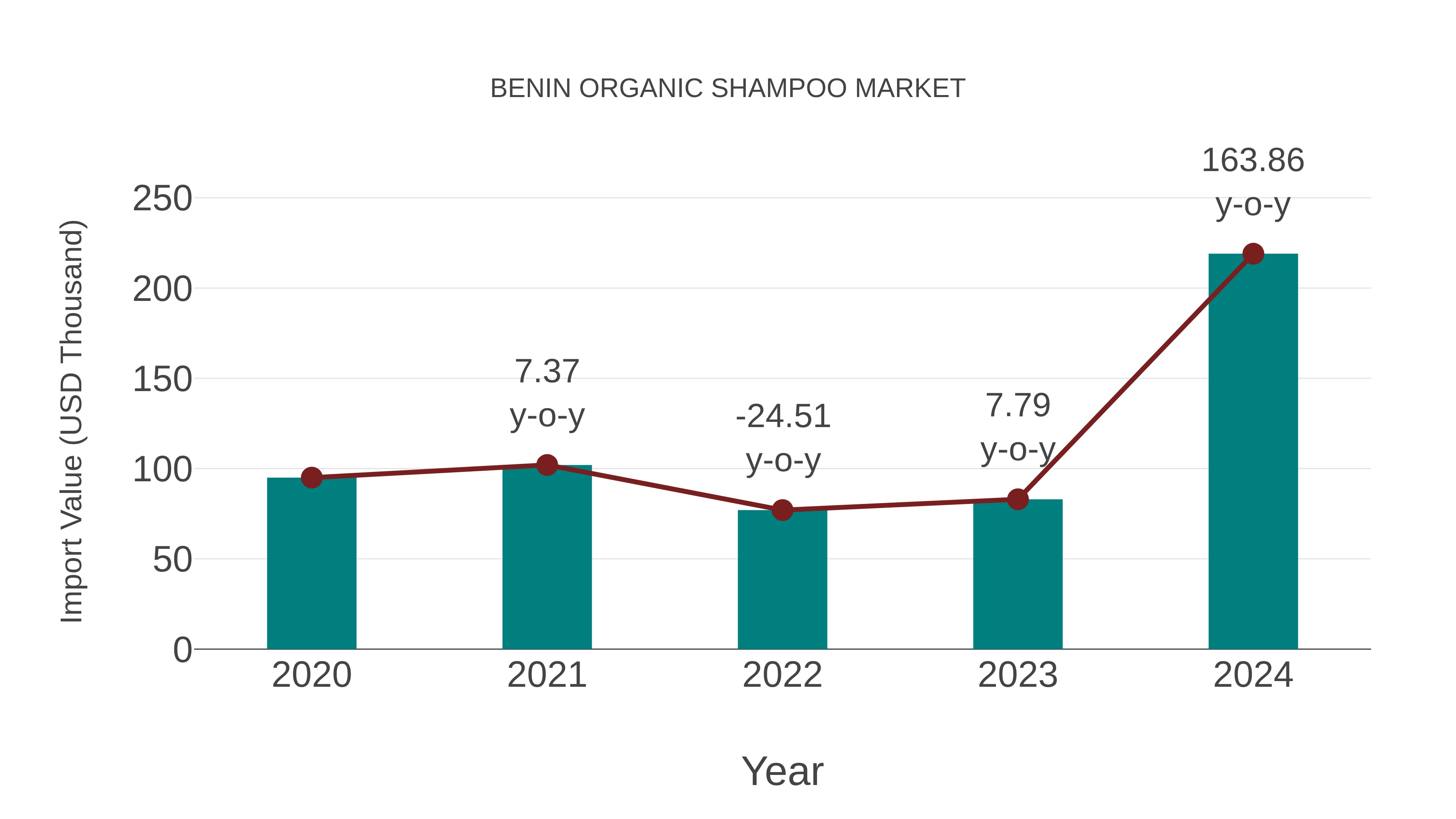
Benin`s import trend for organic shampoo saw significant growth from 2023 to 2024, with a growth rate of 163.86% during this period. The compound annual growth rate (CAGR) for the years 2020 to 2024 stood at 23.22%. This surge in imports could be attributed to increasing consumer awareness and demand for organic personal care products in the region.
Benin Organic Shampoo Market Overview
The Benin organic shampoo market is experiencing steady growth due to increasing consumer awareness about the benefits of organic and natural products for hair care. The market is driven by a growing preference for chemical-free products, especially among environmentally conscious consumers. Local brands and international companies are actively introducing organic shampoo products to cater to this demand, offering a variety of options such as sulfate-free, paraben-free, and cruelty-free formulations. Distribution channels include supermarkets, beauty stores, and online platforms, contributing to the accessibility of organic shampoo products to a wider consumer base. The market is expected to continue expanding as more consumers seek healthier and sustainable alternatives for their hair care routines, presenting opportunities for further product innovation and market growth.
Benin Organic Shampoo Market Trends and Opportunities
The Benin Organic Shampoo Market is experiencing a growing demand for natural and sustainable hair care products. Consumers are increasingly conscious about the ingredients in their personal care products, leading to a shift towards organic shampoos that are free from harmful chemicals. This trend presents an opportunity for both local and international brands to tap into the market by offering a wide range of organic and eco-friendly shampoo options. Additionally, there is a rising interest in traditional African ingredients such as shea butter, coconut oil, and African black soap, creating opportunities for product innovation and differentiation. Collaborations with local farmers and producers to source organic ingredients can further enhance the appeal of organic shampoos in Benin.
Benin Organic Shampoo Market Challenges
The Benin Organic Shampoo Market faces several challenges, including limited awareness and understanding of the benefits of organic products among consumers, leading to lower demand compared to conventional shampoos. Another challenge is the lack of availability and access to organic ingredients locally, resulting in higher production costs and limited product variety. Additionally, the competition from well-established international brands and counterfeit products in the market poses a challenge for local organic shampoo manufacturers to gain market share and build brand reputation. Furthermore, inadequate regulatory framework and quality control measures in the organic cosmetics industry in Benin contribute to consumer skepticism and hinder market growth. Overcoming these challenges would require targeted marketing efforts, partnerships with organic ingredient suppliers, and advocacy for stricter regulations to ensure product authenticity and quality in the market.
Benin Organic Shampoo Market Drivers
The Benin Organic Shampoo Market is being primarily driven by the increasing consumer awareness and preference for natural and organic products. Consumers are becoming more conscious of the potential harmful effects of chemicals in traditional shampoos and are seeking safer, eco-friendly alternatives. The growing trend towards sustainability and environmental consciousness is also fueling the demand for organic shampoos in Benin. Additionally, the rising disposable income levels and changing lifestyle choices among the population are contributing to the overall growth of the market. Manufacturers are responding to these consumer preferences by introducing a wide range of organic shampoo products, further driving the market expansion in Benin.
Benin Organic Shampoo Market Government Policies
The government of Benin has implemented policies to support the growth of the organic shampoo market in the country. These policies include providing incentives and support for organic farming practices, promoting sustainable agriculture through training and education programs, and ensuring the quality and safety of organic products through regulatory measures. Additionally, the government has encouraged the development of local organic product manufacturers by offering financial assistance and access to markets. These policies aim to boost the organic shampoo market in Benin, create employment opportunities, and promote environmental sustainability in the country`s agricultural sector.
Benin Organic Shampoo Market Future Outlook
The future outlook for the Benin Organic Shampoo Market appears promising, driven by a growing consumer preference for natural and sustainable personal care products. With increased awareness of the harmful effects of chemicals in traditional shampoos, there is a rising demand for organic alternatives in Benin. This trend is expected to continue as consumers become more health-conscious and environmentally aware. Key factors such as the availability of organic ingredients, product innovation, and effective marketing strategies will play a crucial role in shaping the market`s growth. As the market matures, collaboration between local producers and international brands could further boost the availability and variety of organic shampoo options in Benin, offering significant opportunities for expansion and market penetration.
Key Highlights of the Report:
- Benin Organic Shampoo Market Outlook
- Market Size of Benin Organic Shampoo Market, 2025
- Forecast of Benin Organic Shampoo Market, 2032
- Historical Data and Forecast of Benin Organic Shampoo Revenues & Volume for the Period 2022 - 2032F
- Benin Organic Shampoo Market Trend Evolution
- Benin Organic Shampoo Market Drivers and Challenges
- Benin Organic Shampoo Price Trends
- Benin Organic Shampoo Porter's Five Forces
- Benin Organic Shampoo Industry Life Cycle
- Historical Data and Forecast of Benin Organic Shampoo Market Revenues & Volume By Distribution Channel for the Period 2022 - 2032F
- Historical Data and Forecast of Benin Organic Shampoo Market Revenues & Volume By Supermarkets/hypermarkets for the Period 2022 - 2032F
- Historical Data and Forecast of Benin Organic Shampoo Market Revenues & Volume By Specialty stores for the Period 2022 - 2032F
- Historical Data and Forecast of Benin Organic Shampoo Market Revenues & Volume By Online for the Period 2022 - 2032F
- Benin Organic Shampoo Import Export Trade Statistics
- Market Opportunity Assessment By Distribution Channel
- Benin Organic Shampoo Top Companies Market Share
- Benin Organic Shampoo Competitive Benchmarking By Technical and Operational Parameters
- Benin Organic Shampoo Company Profiles
- Benin Organic Shampoo Key Strategic Recommendations






































