Benin Polyethylene Terephthalate Market Size Growth Rate
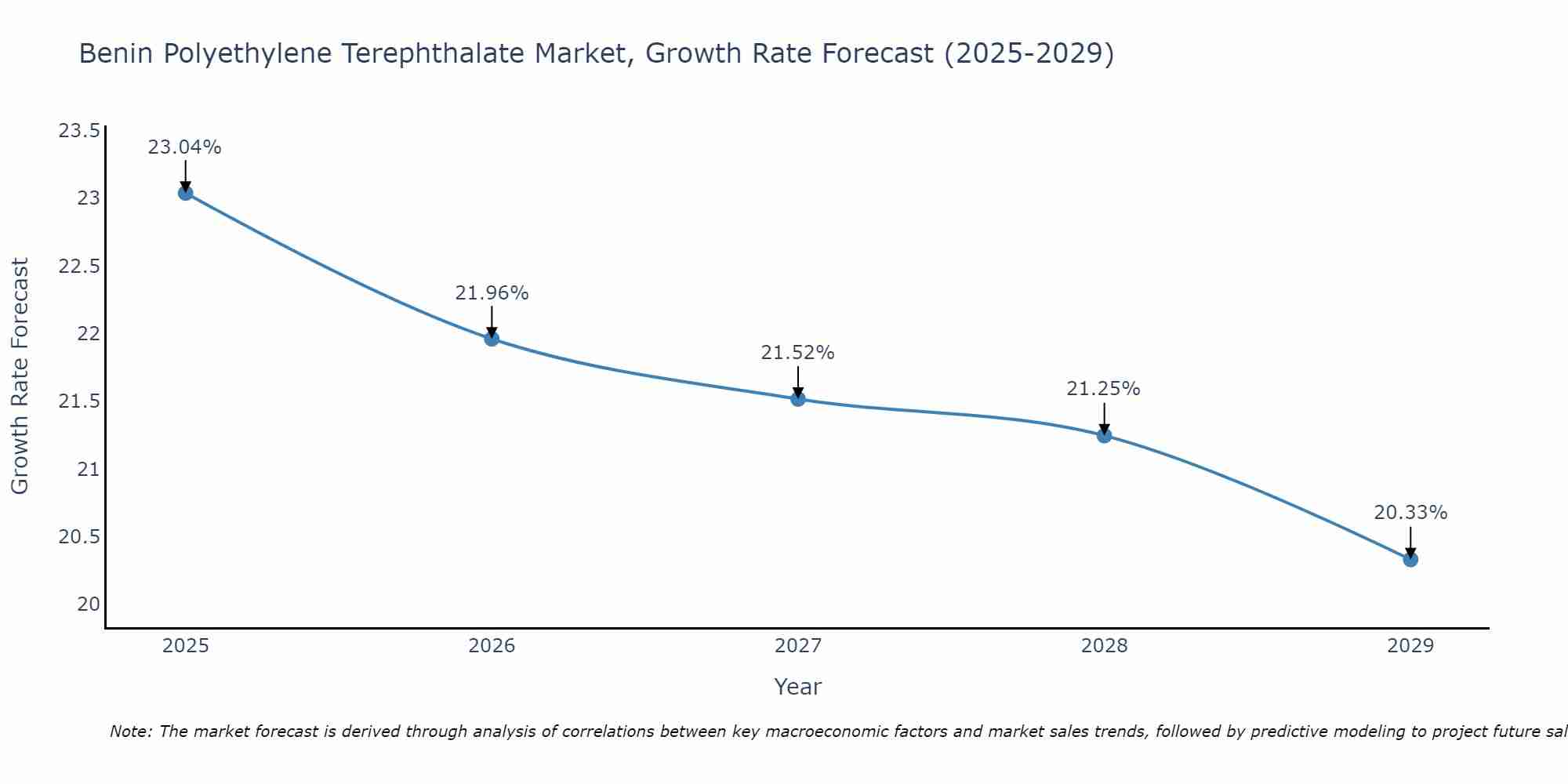
The Benin Polyethylene Terephthalate Market may undergo a gradual slowdown in growth rates between 2025 and 2029. Beginning strongly at 23.04% in 2025, growth softens to 20.33% in 2029.
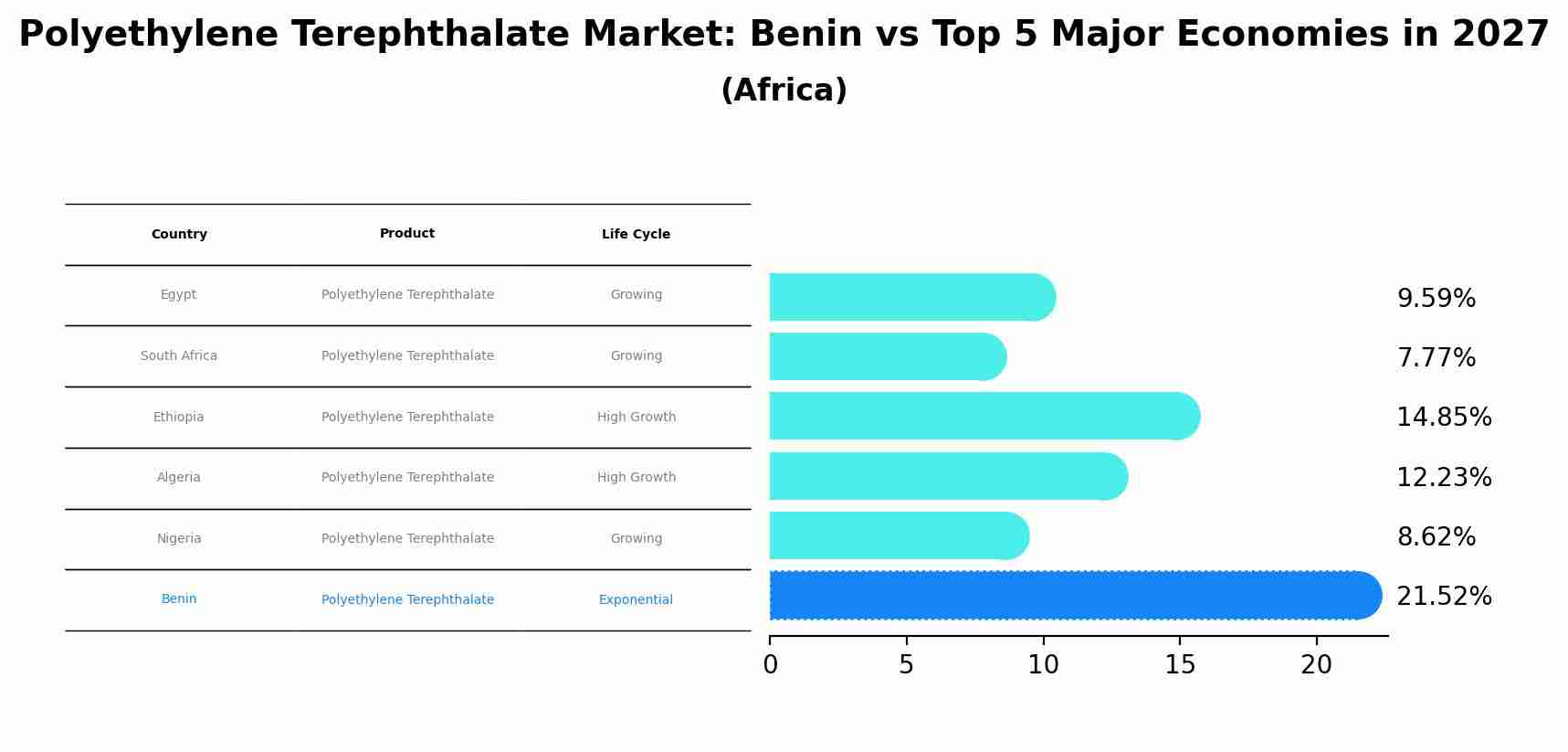
Polyethylene Terephthalate Market: Benin vs Top 5 Major Economies in 2027 (Africa)
By 2027, the Polyethylene Terephthalate market in Benin is anticipated to reach a growth rate of 21.52%, as part of an increasingly competitive Africa region, where Egypt remains at the forefront, supported by South Africa, Ethiopia, Algeria and Nigeria, driving innovations and market adoption across sectors.
Benin Polyethylene Terephthalate Market Overview
The Polyethylene Terephthalate (PET) market in Benin is growing, particularly in the packaging industry where PET is used for bottles, containers, and films. PET is valued for its strength, transparency, and recyclability, making it a preferred material for packaging food, beverages, and personal care products. The market is driven by the demand for lightweight, durable, and recyclable packaging solutions. Challenges include managing the environmental impact of PET, ensuring efficient recycling processes, and competition from alternative packaging materials.
Drivers of the market
The polyethylene terephthalate (PET) market in Benin is influenced by the demand for sustainable and recyclable packaging solutions. The use of PET in beverage and food packaging is driving market growth. Additionally, the focus on reducing plastic waste and improving recycling infrastructure is contributing to market expansion.
Challenges of the market
The Polyethylene Terephthalate (PET) market in Benin faces challenges including the high cost of production and limited local manufacturing capabilities. The need for specialized technology and infrastructure for production and distribution can hinder market growth. Additionally, addressing issues related to product quality, regulatory compliance, and competition from alternative materials is essential for market development.
Government Policy of the market
The Polyethylene Terephthalate (PET) market in Benin is influenced by government policies related to packaging and recycling. Policies promoting the use of PET in packaging and sustainability initiatives, and regulations concerning PET quality and environmental impact are essential. Support for investment in PET technologies and research into recycling solutions plays a significant role in shaping the market.
Key Highlights of the Report:
- Benin Polyethylene Terephthalate Market Outlook
- Market Size of Benin Polyethylene Terephthalate Market, 2024
- Forecast of Benin Polyethylene Terephthalate Market, 2031
- Historical Data and Forecast of Benin Polyethylene Terephthalate Revenues & Volume for the Period 2021-2031
- Benin Polyethylene Terephthalate Market Trend Evolution
- Benin Polyethylene Terephthalate Market Drivers and Challenges
- Benin Polyethylene Terephthalate Price Trends
- Benin Polyethylene Terephthalate Porter`s Five Forces
- Benin Polyethylene Terephthalate Industry Life Cycle
- Historical Data and Forecast of Benin Polyethylene Terephthalate Market Revenues & Volume By Type for the Period 2021-2031
- Historical Data and Forecast of Benin Polyethylene Terephthalate Market Revenues & Volume By Virgin for the Period 2021-2031
- Historical Data and Forecast of Benin Polyethylene Terephthalate Market Revenues & Volume By Recycled for the Period 2021-2031
- Historical Data and Forecast of Benin Polyethylene Terephthalate Market Revenues & Volume By Application for the Period 2021-2031
- Historical Data and Forecast of Benin Polyethylene Terephthalate Market Revenues & Volume By Rigid Packaging for the Period 2021-2031
- Historical Data and Forecast of Benin Polyethylene Terephthalate Market Revenues & Volume By Film for the Period 2021-2031
- Historical Data and Forecast of Benin Polyethylene Terephthalate Market Revenues & Volume By Sheets and Straps for the Period 2021-2031
- Historical Data and Forecast of Benin Polyethylene Terephthalate Market Revenues & Volume By Others for the Period 2021-2031
- Benin Polyethylene Terephthalate Import Export Trade Statistics
- Market Opportunity Assessment By Type
- Market Opportunity Assessment By Application
- Benin Polyethylene Terephthalate Top Companies Market Share
- Benin Polyethylene Terephthalate Competitive Benchmarking By Technical and Operational Parameters
- Benin Polyethylene Terephthalate Company Profiles
- Benin Polyethylene Terephthalate Key Strategic Recommendations






































