Brazil Animal Horn Market Size, Share & Growth Rate
The Brazil Animal Horn Market was estimated at USD 124 Million in 2025 and is projected to reach USD 147 Million by 2032, growing at a CAGR of 2.5% from 2026 to 2032. This growth trajectory is driven by a resurgence in the appreciation for traditional craftsmanship and the increased demand for ethically sourced decorative items. Additionally, the cultural significance of animal horns in various Brazilian regions continues to support their market presence, facilitating a blend of artisanal appeal and modern consumer trends.
Brazil Animal Horn Market Year-wise Growth Rate and Key Drivers
This graph highlights how the Brazil Animal Horn Market has steadily grown over the years, supported by major growth factors.
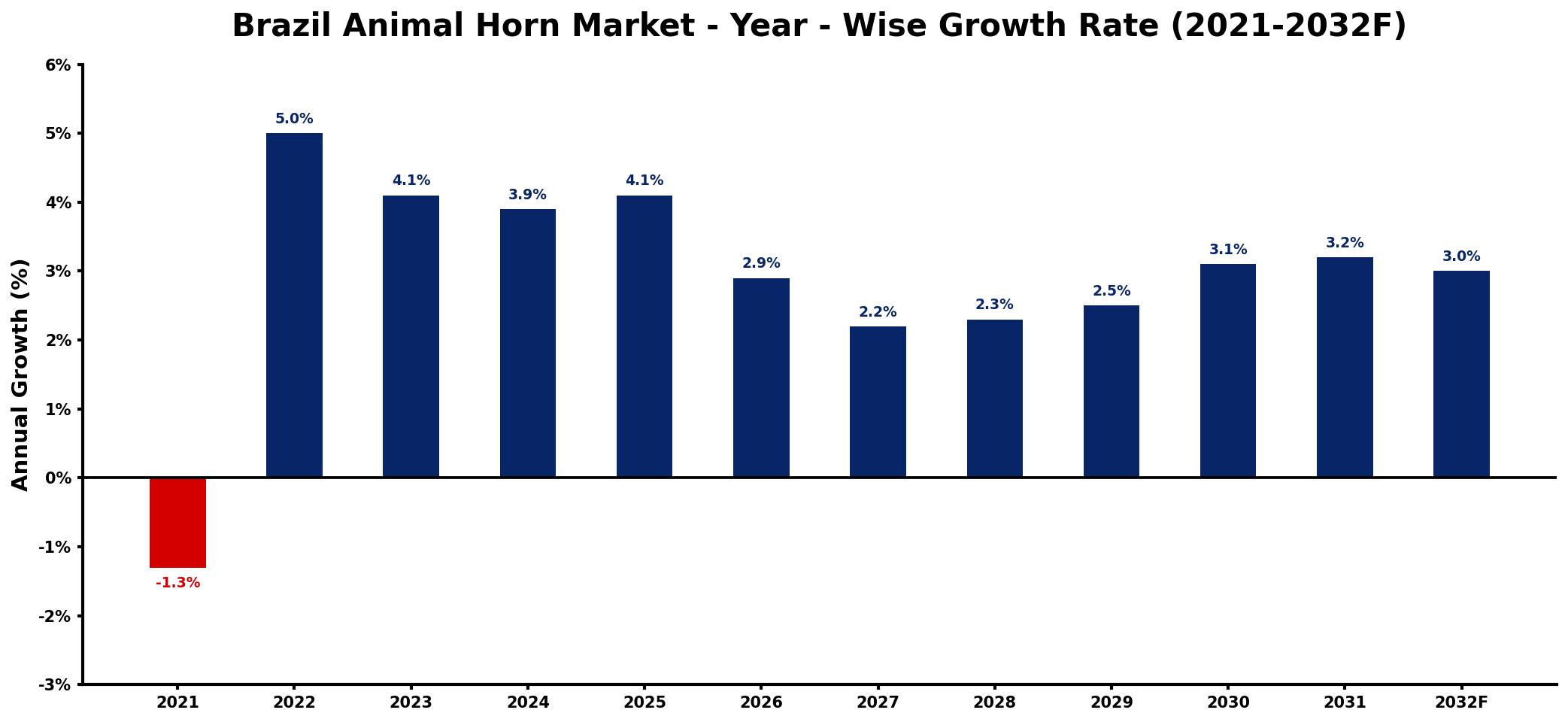
The table below presents the year‑wise growth rates along with the key drivers influencing the market
| Year | Growth Rate | Major Drivers |
| 2021 | -1.3% | decreased consumer interest in accessories |
| 2022 | 5.0% | increased demand for sustainable materials |
| 2023 | 4.1% | growing popularity of natural products |
| 2024 | 3.9% | rising investment in artisan crafts |
| 2025 | 4.1% | expansion of niche markets globally |
| 2026 | 2.9% | increased focus on eco-friendly sourcing |
| 2027 | 2.2% | growing awareness of cultural heritage |
| 2028 | 2.3% | improved raw material availability |
| 2029 | 2.5% | increased collaborations with designers |
| 2030 | 3.1% | growing demand for unique collectibles |
| 2031 | 3.2% | expanding industrial usage applications |
| 2032 | 3.0% | increased interest in ethical sourcing |
Note: Market size estimations and growth projections presented in this report are based on 6Wresearch's proprietary forecasting methodology, utilizing the latest available industry data, government publications, and primary research inputs.
Brazil Animal Horn Market Synopsis
The Brazil Animal Horn Market is currently witnessing a renaissance, merging traditional uses with contemporary applications. As consumers increasingly value sustainability and cultural heritage, products made from animal horns are gaining traction in both local and international markets.
Artisans throughout Brazil are exploring innovative designs that reflect the country's rich biodiversity and cultural narrative. The market showcases a variety of offerings, from handmade jewelry to decorative objects, each carrying a story that resonates with consumers' desires for authenticity.
Brazil Animal Horn Market Key Takeaways
- The market reflects a unique interplay of cultural heritage and contemporary craftsmanship.
- Ethical sourcing and sustainability are vital for the market's long-term viability.
- Regulatory frameworks are evolving to balance wildlife protection with market needs.
- Consumer interest in traditional crafts is driving demand for animal horn products.
- Export potential remains significant, supported by international trade dynamics.
Evaluation of Restraints in Brazil Animal Horn Market
Despite the positive growth outlook, the Brazil Animal Horn Market faces several restraints. Ethical concerns surrounding the sourcing of animal materials often lead to scrutiny and skepticism from consumers. Regulatory restrictions aimed at wildlife conservation can hinder access to raw materials, impacting production capabilities. Additionally, fluctuations in market demand due to changing consumer preferences can create uncertainty for producers. These factors necessitate a commitment to sustainable practices and transparent marketing strategies to build consumer trust and ensure market resilience.
Brazil Animal Horn Market Trends
Emerging trends in the Brazil Animal Horn Market include a shift towards environmentally friendly production practices and a rise in consumer awareness regarding sustainability. Artisans are increasingly adopting eco-friendly methods, which resonate with conscientious consumers. Furthermore, collaborations between traditional artisans and modern designers are resulting in unique, contemporary products that appeal to younger demographics. The integration of technology in production processes is also enhancing product quality and design innovation.
Brazil Animal Horn Market Opportunities
Opportunities for growth within the Brazil Animal Horn Market are abundant, especially in the realm of online retail. The surge in e-commerce presents a platform for artisans to reach wider audiences, both domestically and internationally. Additionally, there is potential for expanding product lines to include medicinal applications, as consumer interest in natural remedies rises. Educational initiatives that highlight the cultural importance of animal horns can also enhance market appeal, promoting a deeper appreciation for these traditional crafts.
Government Initiatives in the Brazil Animal Horn Market
Government policies in Brazil play a crucial role in shaping the animal horn market. Efforts to establish clearer regulations regarding wildlife trade aim to protect biodiversity while allowing sustainable practices to flourish. Public spending on conservation programs helps to safeguard ecosystems, which, in turn, supports ethical sourcing of animal horn products. Additionally, governmental support for artisanal crafts through grants and incentives can enhance local economies and promote cultural heritage.
Future Insights of the Brazil Animal Horn Market
Looking ahead to 2026-2032, the Brazil Animal Horn Market is set to evolve significantly. As sustainability remains a priority for consumers, brands that can demonstrate ethical sourcing and transparent practices will likely thrive. The integration of innovative designs and modern aesthetics will attract a new wave of customers, particularly among environmentally conscious millennials. With the potential for increased exportation, the market is well-positioned for growth, as long as it navigates the challenges of regulation and ethical production effectively.
Brazil Animal Horn Market Latest Developments (2025 - 2026)
Recent developments in the Brazil Animal Horn Market indicate a growing emphasis on ethical production methods, with several artisan groups adopting sustainable practices. Collaborative projects between local artisans and international designers are becoming more frequent, creating unique product offerings that cater to global tastes. Additionally, educational campaigns aimed at consumers are emerging, focusing on the significance of cultural heritage and the importance of supporting local craftsmen. These trends reflect a positive direction for the market as it aligns with broader consumer expectations.
Brazil Animal Horn Market - Key Attractiveness of the Report
- 10 Years of Market Numbers
- Historical Data Starting from 2022 to 2025
- Base Year: 2025
- Forecast Data until 2032
- Key Performance Indicators Impacting the Market
- Major Upcoming Developments and Projects
Key Highlights of the Report:
- Brazil Animal Horn Market Outlook
- Market Size of Brazil Animal Horn Market, 2025
- Forecast of Brazil Animal Horn Market, 2032
- Historical Data and Forecast of Brazil Animal Horn Revenues & Volume for the Period 2022-2032F
- Brazil Animal Horn Market Trend Evolution
- Brazil Animal Horn Market Drivers and Challenges
- Brazil Animal Horn Price Trends
- Brazil Animal Horn Porter's Five Forces
- Brazil Animal Horn Industry Life Cycle
- Historical Data and Forecast of Brazil Animal Horn Market Revenues & Volume By Distribution Channel for the Period 2022-2032F
- Historical Data and Forecast of Brazil Animal Horn Market Revenues & Volume By Online for the Period 2022-2032F
- Historical Data and Forecast of Brazil Animal Horn Market Revenues & Volume By Offline for the Period 2022-2032F
- Historical Data and Forecast of Brazil Animal Horn Market Revenues & Volume By Application for the Period 2022-2032F
- Historical Data and Forecast of Brazil Animal Horn Market Revenues & Volume By Commercial for the Period 2022-2032F
- Historical Data and Forecast of Brazil Animal Horn Market Revenues & Volume By Cosmetics & Personal Care for the Period 2022-2032F
- Historical Data and Forecast of Brazil Animal Horn Market Revenues & Volume By Others for the Period 2022-2032F
- Brazil Animal Horn Import Export Trade Statistics
- Market Opportunity Assessment By Distribution Channel
- Market Opportunity Assessment By Application
- Brazil Animal Horn Top Companies Market Share
- Brazil Animal Horn Competitive Benchmarking By Technical and Operational Parameters
- Brazil Animal Horn Company Profiles
- Brazil Animal Horn Key Strategic Recommendations






































