Brazil Candied Fruit Market Summary
The brazil candied fruit market was estimated at USD 389 Million in 2025 and is projected to reach USD 467 Million by 2032, growing at a CAGR of 3.1% from 2026 to 2032.
Brazil Candied Fruit Market Year-wise Growth Rate and Key Drivers
This graph highlights how the Brazil Candied Fruit Market has steadily grown over the years, supported by major growth factors.
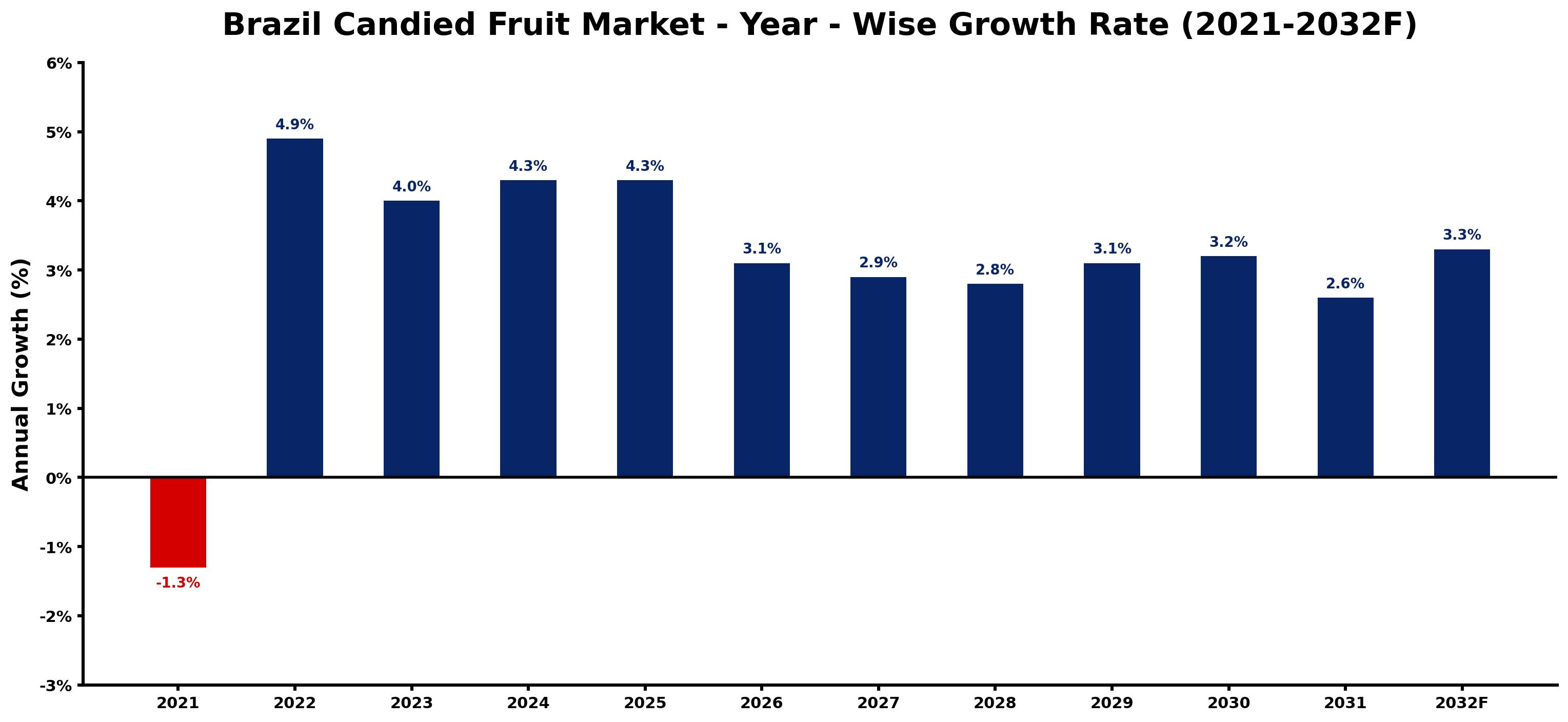
The table below presents the year wise growth rates along with the key drivers influencing the market
| Year | Growth Rate | Major Drivers |
| 2021 | -1.3% | Adverse weather conditions significantly diminished fruit yields, leading to a scarcity in candied fruit supply. |
| 2022 | 4.9% | Local producers enhance product quality, appealing to discerning Brazilian buyers. |
| 2023 | 4.0% | E-commerce platforms expand reach, providing new access to specialty candied fruits. |
| 2024 | 4.3% | Seasonal festivities in Brazil drive demand for traditional candied fruit offerings. |
| 2025 | 4.3% | International culinary trends influence Brazilian consumption of exotic candied fruits. |
| 2026 | 3.1% | Sustainable sourcing practices attract environmentally conscious consumers in major cities. |
| 2027 | 2.9% | Emerging health trends highlight the benefits of dried fruits, enhancing sales potential. |
| 2028 | 2.8% | Collaborations with local chefs promote innovative uses for candied fruit in dishes. |
| 2029 | 3.1% | Social media influencers spotlight artisanal candied fruit, capturing younger demographics. |
| 2030 | 3.2% | Increased tourism boosts demand for local snacks, including unique candied varieties. |
| 2031 | 2.6% | Innovations in packaging improve shelf life, making these products more attractive. |
| 2032 | 3.3% | Consumer interest in traditional Brazilian desserts fuels ongoing candied fruit growth. |
Note - Market size estimations and growth projections presented in this report are based on 6Wresearch's advanced forecasting approach, validated with industry datasets as of June 2026.
Brazil Candied Fruit Market Synopsis
The Brazil Candied Fruit Market is projected to reach 3.1% and witness significant growth during the forecast period (2026-2032). The burgeoning shift towards healthier snacking options is steering consumer preferences towards candied fruits, which are celebrated for their unique flavors and natural ingredients. As the demand for both traditional and innovative snacks escalates, the market is increasingly catering to health-conscious individuals who still crave indulgent treats.
Brazil Candied Fruit Market Growth Drivers
Several key factors are propelling the Brazil Candied Fruit Market, significantly influencing its expansion:
- Increasing Health Awareness: A growing awareness of the benefits of healthier snacking alternatives has directly fueled the demand for candied fruits. Consumers are eager to enjoy sweet treats that are perceived as less harmful and more nutritious than traditional candies.
- Versatility in Culinary Applications: The multifunctionality of candied fruits in various culinary contexts, from desserts to savory dishes, enhances their market appeal. Chefs and home cooks alike are integrating these products into a range of recipes, promoting innovation in the kitchen.
- Cultural Preferences: Brazil's diverse culinary landscape embraces the incorporation of candied fruits in traditional dishes and desserts, thereby embedding these products into the nation's food culture and driving consumption.
- Natural and Exotic Flavor Profiles: The market is increasingly appealing to consumers' desires for unique and exotic flavors. Candied fruits offer a taste experience that caters to adventurous palates seeking new sensations.
- Rise of Gourmet Products: A trend towards gourmet and artisanal snacks is emerging, with consumers willing to pay a premium for high-quality, handcrafted candied fruit products that promise authenticity and superior taste.
Brazil Candied Fruit Market Challenges and Restraints
Despite the promising growth trajectory of the Brazil Candied Fruit Market, several challenges may hinder its progress:
- Perishability of Raw Materials: The highly perishable nature of fresh fruits poses challenges, as the market relies significantly on seasonal availability and proper storage techniques for candied fruit production.
- Preservation Techniques: The effectiveness of preservation methods directly impacts the shelf life and quality of candied fruits, necessitating ongoing advancements in food technology to address these concerns.
- Market Competition: Increasing competition within the larger confectionery sector creates a complex landscape, where candied fruits must be marketed effectively against a vast array of alternative snack options.
- Consumer Education: As the appeal for natural and healthy snacks rises, there is a need for educating consumers about the quality and health benefits of candied fruits versus conventional sweets.
- Economic Factors: Fluctuations in the economy, such as inflation and currency exchange rates, can affect pricing and consumer spending habits, posing risks to market stability.
Brazil Candied Fruit Market Government Investment and Initiatives
Government policy plays a pivotal role in shaping the Brazil Candied Fruit Market. Recent initiatives have focused on promoting sustainable agricultural practices, which enhance the quality and availability of fruits used for candied production. The Brazilian government has been proactive in supporting the local fruit industry, providing incentives for both farmers and manufacturers to engage in environmentally friendly practices. This includes funding for research and development aimed at improving preservation methods and extending the shelf life of candied products. Furthermore, there is an emphasis on integrating candied fruits into the culinary heritage of Brazil, encouraging their use in traditional recipes, thus stimulating both market growth and cultural appreciation.
Brazil Candied Fruit Market Latest Developments (May 2025 - June 2026)
Recent developments within the Brazil Candied Fruit Market have highlighted a notable trend towards expanding the range of flavors and product offerings available to consumers. Manufacturers are increasingly experimenting with innovative combinations of fruits and flavors, enhancing the sensory experience of candied fruits. Additionally, there has been an uptick in partnerships between local farmers and producers aimed at ensuring a steady supply of high-quality fruits, which is crucial for maintaining product standards. As sustainability continues to be a key focus, companies are investing in eco-friendly packaging solutions to appeal to environmentally conscious consumers. Furthermore, industry stakeholders are emphasizing the importance of consumer education around the health benefits of candied fruits, aiming to reposition these products within the broader snack category.
Brazil Candied Fruit Market - Key Attractiveness of the Report
- 10 Years of Market Numbers
- Historical Data Starting from 2022 to 2025
- Base Year: 2025
- Forecast Data until 2032
- Key Performance Indicators Impacting the Market
- Major Upcoming Developments and Projects
Key Highlights of the Report:
- Brazil Candied Fruit Market Outlook
- Market Size of Brazil Candied Fruit Market, 2025
- Forecast of Brazil Candied Fruit Market, 2032
- Historical Data and Forecast of Brazil Candied Fruit Revenues & Volume for the Period 2022-2032F
- Brazil Candied Fruit Market Trend Evolution
- Brazil Candied Fruit Market Drivers and Challenges
- Brazil Candied Fruit Price Trends
- Brazil Candied Fruit Porter's Five Forces
- Brazil Candied Fruit Industry Life Cycle
- Historical Data and Forecast of Brazil Candied Fruit Market Revenues & Volume By Type for the Period 2022-2032F
- Historical Data and Forecast of Brazil Candied Fruit Market Revenues & Volume By Hard Type for the Period 2022-2032F
- Historical Data and Forecast of Brazil Candied Fruit Market Revenues & Volume By Chewing Type for the Period 2022-2032F
- Historical Data and Forecast of Brazil Candied Fruit Market Revenues & Volume By Distribution Channel for the Period 2022-2032F
- Historical Data and Forecast of Brazil Candied Fruit Market Revenues & Volume By Convenience Stores for the Period 2022-2032F
- Historical Data and Forecast of Brazil Candied Fruit Market Revenues & Volume By Traditional Grocery Stores for the Period 2022-2032F
- Historical Data and Forecast of Brazil Candied Fruit Market Revenues & Volume By Supermarkets/Hypermarkets for the Period 2022-2032F
- Historical Data and Forecast of Brazil Candied Fruit Market Revenues & Volume By Online Sales Channel for the Period 2022-2032F
- Historical Data and Forecast of Brazil Candied Fruit Market Revenues & Volume By Others for the Period 2022-2032F
- Brazil Candied Fruit Import Export Trade Statistics
- Market Opportunity Assessment By Type
- Market Opportunity Assessment By Distribution Channel
- Brazil Candied Fruit Top Companies Market Share
- Brazil Candied Fruit Competitive Benchmarking By Technical and Operational Parameters
- Brazil Candied Fruit Company Profiles
- Brazil Candied Fruit Key Strategic Recommendations






































