Mexico Candied Fruit Market Summary
The mexico candied fruit market was estimated at USD 149 Million in 2025 and is projected to reach USD 171 Million by 2032, growing at a CAGR of 0.9% from 2026 to 2032.
Mexico Candied Fruit Market Year-wise Growth Rate and Key Drivers
This graph highlights how the Mexico Candied Fruit Market has steadily grown over the past five years, supported by major growth factors.
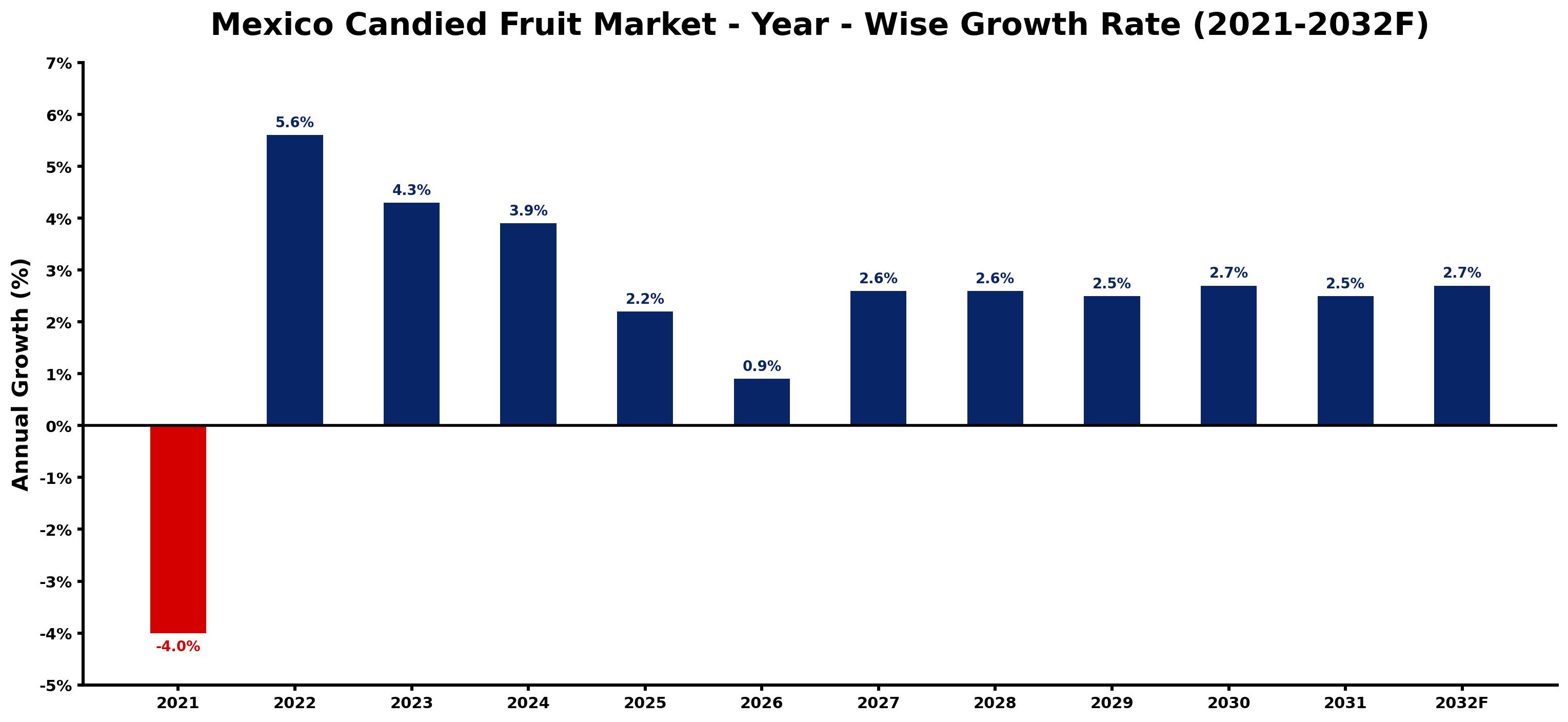
The table below presents the year wise growth rates along with the key drivers influencing the market
| Year | Growth Rate | Major Drivers |
| 2021 | -4.0% | Decreased tourism and hospitality activities curtailed demand for candied fruit in traditional festive settings. |
| 2022 | 5.6% | Increased interest in natural snacks prompted innovation in flavor combinations and textures. |
| 2023 | 4.3% | E-commerce platforms expanded distribution, making candied fruits more accessible nationwide. |
| 2024 | 3.9% | Health-conscious consumers embraced candied fruits with lower sugar and organic options. |
| 2025 | 2.2% | Cultural festivities and holidays drove seasonal spikes in candied fruit consumption. |
| 2026 | 0.9% | Urbanization trends influenced traditional markets, boosting sales in metropolitan areas. |
| 2027 | 2.6% | Emergence of artisanal brands promoted premium quality and unique regional flavors. |
| 2028 | 2.6% | Food service sector recovery created new opportunities for bulk candied fruit purchases. |
| 2029 | 2.5% | Sustainability trends encouraged brands to source fruits ethically and reduce waste. |
| 2030 | 2.7% | Integration of local ingredients deepened consumer connections and regional authenticity. |
| 2031 | 2.5% | Social media marketing strategies showcased candied fruits as trendy snack alternatives. |
| 2032 | 2.7% | Global trade dynamics influenced pricing and availability of imported candied fruit varieties. |
Note - Market size estimations and growth projections presented in this report are based on 6Wresearch's advanced forecasting approach, validated with industry datasets as of June 2026.
Mexico Candied Fruit Market Synopsis
The Mexico Candied Fruit Market is projected to reach 0.9% and witness significant growth during the forecast period (2026-2032). This market serves the growing demand for sweet snacks, offering a diverse range of candied and dried fruit options that cater to various consumer preferences. The appeal of traditional flavors, combined with innovative, exotic varieties, positions this market to thrive as consumers increasingly seek healthier and more flavorful snacking alternatives.
Mexico Candied Fruit Market Growth Drivers
Several key factors are driving the growth of the Mexico Candied Fruit Market. A notable trend is the increasing preference for natural and preservative-free products among health-conscious consumers. This shift has prompted manufacturers to innovate, leading to the introduction of organic and minimally processed candied fruits that retain their nutritional value while satisfying sweet cravings.
- The rising health awareness among Mexican consumers is pushing the demand for candied fruits that offer a guilt-free snacking experience.
- Expanding applications of candied fruits in confectionery, baking, and culinary creations are enhancing their popularity across various market segments.
- Adventurous flavor combinations and gourmet offerings are attracting a younger demographic interested in unique taste experiences.
- The food service industry's increasing incorporation of candied fruits into desserts and beverages is also a significant factor in market growth.
- Promotions and marketing campaigns highlighting the versatility of candied fruits contribute to an elevated consumer interest.
Mexico Candied Fruit Market Challenges and Restraints
Despite its growth potential, the Mexico Candied Fruit Market faces several challenges that could restrain its expansion. Market players must navigate the delicate balance between maintaining traditional practices and innovating to meet consumer trends.
- There is a prevalent challenge in diversifying product offerings to attract a broader consumer base while adhering to traditional manufacturing methods.
- Fluctuating raw material prices can impact production costs, potentially affecting profit margins for manufacturers.
- Increased competition from alternative snacks and health-focused products poses a significant threat to market share.
- Regulatory compliance and adherence to food safety standards can create hurdles for smaller producers, limiting their market reach.
- Consumer skepticism regarding artificial ingredients can hinder the acceptance of some candied fruit products if not adequately addressed.
Mexico Candied Fruit Market Regional Analysis
The geographical dynamics of the Mexico Candied Fruit Market reveal significant variations in consumer preferences and market strategies. Different regions exhibit unique flavor profiles and traditions that influence local candied fruit consumption patterns.
- The northern regions of Mexico tend to favor traditional candied fruits, often used in festive celebrations, aligning with cultural practices.
- Urban centers display a growing trend towards experimental and gourmet options, reflecting a diverse and evolving palate.
- Rural areas maintain a strong affinity for locally sourced and traditional products, making it essential for manufacturers to cater to both segments.
- Emerging markets in southern Mexico show an expanding interest in health-oriented snacks, fostering growth in natural candied fruit products.
- Cross-border trade influences regional consumption patterns, as flavors popular in the United States are gaining traction among Mexican consumers.
Mexico Candied Fruit Market Government Investment and Initiatives
The Mexican government plays a pivotal role in supporting the candied fruit industry through various initiatives aimed at promoting food safety and quality standards. Agencies such as COFEPRIS and SENASICA enforce regulations that ensure the safety and quality of processed foods, including candied fruits.
- Government policies emphasize hygiene practices in food processing, which are crucial for maintaining consumer trust in candied fruit products.
- Public investments in agricultural development assist suppliers in enhancing their production capabilities, positively impacting the availability of high-quality raw materials.
- Incentives for organic farming are encouraging more producers to adopt sustainable practices, contributing to the growth of the natural candied fruit segment.
- Training programs and workshops facilitated by government bodies help small producers understand compliance requirements and improve product quality.
- Collaborative efforts between the government and local producers aim to preserve traditional methods while encouraging innovation in product offerings.
Mexico Candied Fruit Market Latest Developments (May 2025 - June 2026)
Between May 2025 and June 2026, the Mexico Candied Fruit Market has experienced noteworthy developments that highlight its evolving landscape. Manufacturers have increasingly focused on product diversification, responding to consumer demands for unique flavors and health-conscious alternatives. Innovations in processing techniques have led to the introduction of new varieties that retain more natural characteristics without compromising on taste.
- The market has seen the emergence of premium product lines, which cater to consumers willing to pay a higher price for higher quality and exotic flavors.
- Strategic partnerships between producers and local farmers have strengthened supply chains, ensuring a steady availability of quality raw materials.
- Culinary events and trade fairs have showcased candied fruit applications in gourmet dishes, further enhancing their appeal among chefs and food enthusiasts.
- Online retail channels have gained traction, providing consumers with greater access to a wider range of products and flavors.
- Feedback from consumer surveys has guided product development, leading to better alignment with evolving trends in health and sustainability.
Mexico Candied Fruit Market - Key Attractiveness of the Report
- 10 Years of Market Numbers
- Historical Data Starting from 2022 to 2025
- Base Year: 2025
- Forecast Data until 2032
- Key Performance Indicators Impacting the Market
- Major Upcoming Developments and Projects
Key Highlights of the Report:
- Mexico Candied Fruit Market Outlook
- Market Size of Mexico Candied Fruit Market, 2025
- Forecast of Mexico Candied Fruit Market, 2032
- Historical Data and Forecast of Mexico Candied Fruit Revenues & Volume for the Period 2022-2032F
- Mexico Candied Fruit Market Trend Evolution
- Mexico Candied Fruit Market Drivers and Challenges
- Mexico Candied Fruit Price Trends
- Mexico Candied Fruit Porter's Five Forces
- Mexico Candied Fruit Industry Life Cycle
- Historical Data and Forecast of Mexico Candied Fruit Market Revenues & Volume By Type for the Period 2022-2032F
- Historical Data and Forecast of Mexico Candied Fruit Market Revenues & Volume By Hard Type for the Period 2022-2032F
- Historical Data and Forecast of Mexico Candied Fruit Market Revenues & Volume By Chewing Type for the Period 2022-2032F
- Historical Data and Forecast of Mexico Candied Fruit Market Revenues & Volume By Distribution Channel for the Period 2022-2032F
- Historical Data and Forecast of Mexico Candied Fruit Market Revenues & Volume By Convenience Stores for the Period 2022-2032F
- Historical Data and Forecast of Mexico Candied Fruit Market Revenues & Volume By Traditional Grocery Stores for the Period 2022-2032F
- Historical Data and Forecast of Mexico Candied Fruit Market Revenues & Volume By Supermarkets/Hypermarkets for the Period 2022-2032F
- Historical Data and Forecast of Mexico Candied Fruit Market Revenues & Volume By Online Sales Channel for the Period 2022-2032F
- Historical Data and Forecast of Mexico Candied Fruit Market Revenues & Volume By Others for the Period 2022-2032F
- Mexico Candied Fruit Import Export Trade Statistics
- Market Opportunity Assessment By Type
- Market Opportunity Assessment By Distribution Channel
- Mexico Candied Fruit Top Companies Market Share
- Mexico Candied Fruit Competitive Benchmarking By Technical and Operational Parameters
- Mexico Candied Fruit Company Profiles
- Mexico Candied Fruit Key Strategic Recommendations






































