Brazil Canvas Market Size, Share & Growth Rate
The Brazil Canvas Market was estimated at USD 168 Million in 2025 and is projected to reach USD 200 Million by 2032, growing at a CAGR of 2.5% from 2026 to 2032. This growth trajectory is driven primarily by the increasing infrastructure projects and rising consumer interest in artistic expressions. As Brazil continues to evolve its construction capabilities and cultural landscapes, the demand for high-quality, durable canvas products is set to expand significantly.
Brazil Canvas Market Year-wise Growth Rate and Key Drivers
This graph highlights how the Brazil Canvas Market has steadily grown over the years, supported by major growth factors.
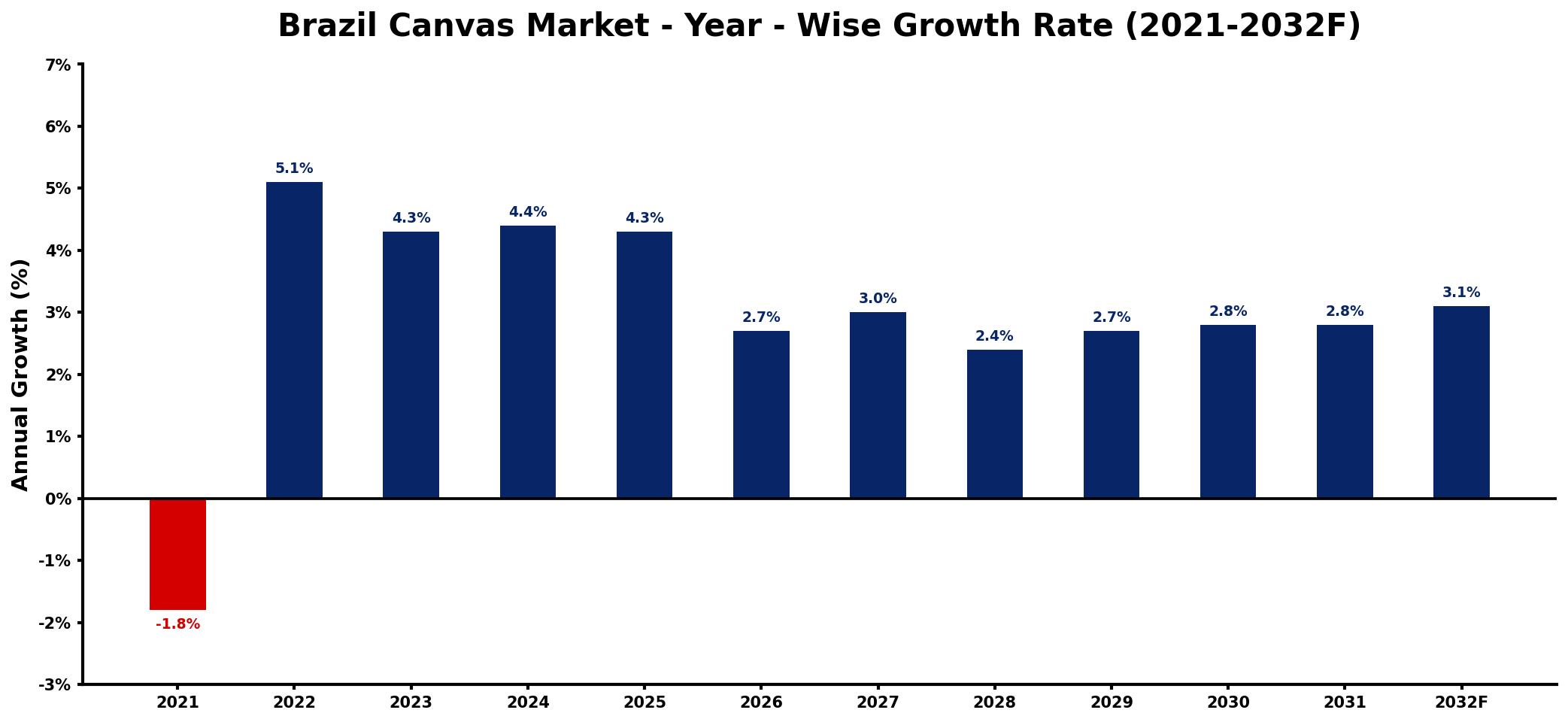
The table below presents the year‑wise growth rates along with the key drivers influencing the market
| Year | Growth Rate | Major Drivers |
| 2021 | -1.8% | Decreased demand from construction sector |
| 2022 | 5.1% | Increased investment in arts education |
| 2023 | 4.3% | Growth in home decor market |
| 2024 | 4.4% | Rise in DIY project popularity |
| 2025 | 4.3% | Expansion of e-commerce sales channels |
| 2026 | 2.7% | Boost in tourism-related art projects |
| 2027 | 3.0% | Increased corporate art acquisitions |
| 2028 | 2.4% | growing regional consumption patterns |
| 2029 | 2.7% | strengthening underlying market demand |
| 2030 | 2.8% | increased capital investment inflows |
| 2031 | 2.8% | Increased popularity of personalized gifts |
| 2032 | 3.1% | rising export shipment volumes |
Note: Market size estimations and growth projections presented in this report are based on 6Wresearch's proprietary forecasting methodology, utilizing the latest available industry data, government publications, and primary research inputs.
Brazil Canvas Market Synopsis
The canvas market in Brazil has seen a notable surge in demand for high-quality materials, particularly for applications in construction and artistic endeavors. With the country's rich tradition in the arts and a growing trend towards outdoor lifestyles, the versatility of canvas products plays a crucial role in driving market growth.
Additionally, manufacturers are increasingly focusing on sustainable production practices, addressing the growing consumer preference for eco-friendly materials. This shift not only enhances brand loyalty but also positions domestic producers favorably against imported synthetics.
Brazil Canvas Market Key Takeaways
- The Brazil Canvas Market is projected to grow steadily, reflecting the ongoing investment in infrastructure and the arts.
- Technological advancements are shaping product offerings, allowing for innovative designs and sustainable practices.
- Competition from synthetic materials remains a significant challenge, driving manufacturers to differentiate their offerings.
- Economic factors, including currency fluctuations, continue to impact raw material costs and pricing strategies.
- Government policies may support domestic production, impacting overall market dynamics.
Evaluation of Restraints in Brazil Canvas Market
The canvas market in Brazil faces substantial challenges that inhibit its growth potential. One of the primary restraints is the fierce competition from synthetic alternatives, such as nylon and polyester, which not only match canvas in terms of performance but often come at a lower cost. This pricing pressure complicates profit margins for traditional canvas manufacturers, forcing them to innovate and optimize operations to remain competitive. Furthermore, the economic volatility in Brazil, characterized by currency fluctuations and inflation, adds another layer of complexity by affecting the cost of raw materials and logistics. Additionally, evolving consumer preferences favoring sustainability present a significant hurdle for established canvas producers who may be slow to adapt to these changing market demands.
Brazil Canvas Market Trends
Current trends in the Brazil Canvas Market indicate a shift towards sustainable production methods and eco-friendly materials. As consumer awareness of environmental issues rises, manufacturers are increasingly integrating sustainable practices into their operations, such as using organic cotton and reducing waste. Furthermore, advancements in digital printing technology are expanding the creative possibilities for artists and designers, leading to an upsurge in bespoke canvas products tailored to specific consumer demands. Additionally, the growing outdoor lifestyle among Brazilians is further propelling the demand for durable and versatile canvas goods, including tents, bags, and outdoor art installations.
Brazil Canvas Market Opportunities
The Brazil Canvas Market offers several growth opportunities for stakeholders willing to adapt to evolving consumer preferences. Investing in innovative manufacturing techniques and sustainable materials can create a competitive edge. Additionally, expanding product lines to include more eco-friendly options may attract a growing segment of environmentally conscious consumers. Exploring new applications in diverse sectors, such as agriculture and commercial transport, also represents a promising avenue for market expansion. With the right strategies, manufacturers can position themselves favorably to capture a larger market share in this evolving landscape.
Government Initiatives in the Brazil Canvas Market
Brazilian government initiatives are increasingly focusing on supporting domestic industries, including the canvas sector. Policies aimed at enhancing local manufacturing capabilities and reducing the environmental impact of production processes are gaining traction. Public spending on infrastructure projects further supports demand for canvas materials, ensuring that local manufacturers can compete effectively against imports. Furthermore, regulations that promote sustainability are likely to encourage producers to innovate and align with consumer expectations for eco-friendly products.
Future Insights of the Brazil Canvas Market
Looking ahead to 2026-2032, the Brazil Canvas Market is poised for gradual but steady growth, driven by ongoing infrastructure developments and a heightened appreciation for artistic expression. As manufacturers continue to embrace sustainable practices and invest in advanced technologies, the market will likely see a diversification of products that cater to both functional and aesthetic needs. Additionally, with a more robust logistics framework, even remote regions may experience increased access to high-quality canvas products, contributing to overall market expansion.
Brazil Canvas Market Latest Developments (2025 - 2026)
Recent developments in the Brazil Canvas Market highlight a growing emphasis on sustainability and innovation. Many manufacturers are now incorporating recycled materials into their production processes, responding to consumer demand for eco-friendly options. Furthermore, the integration of technology in manufacturing has streamlined operations and improved product quality. Alongside this, collaborations between artists and canvas producers are becoming more prevalent, resulting in unique and customized offerings that appeal to diverse consumer tastes.
Brazil Canvas Market - Key Attractiveness of the Report
- 10 Years of Market Numbers
- Historical Data Starting from 2022 to 2025
- Base Year: 2025
- Forecast Data until 2032
- Key Performance Indicators Impacting the Market
- Major Upcoming Developments and Projects
Key Highlights of the Report:
- Brazil Canvas Market Outlook
- Market Size of Brazil Canvas Market, 2025
- Forecast of Brazil Canvas Market, 2032
- Historical Data and Forecast of Brazil Canvas Revenues & Volume for the Period 2022-2032F
- Brazil Canvas Market Trend Evolution
- Brazil Canvas Market Drivers and Challenges
- Brazil Canvas Price Trends
- Brazil Canvas Porter's Five Forces
- Brazil Canvas Industry Life Cycle
- Historical Data and Forecast of Brazil Canvas Market Revenues & Volume By Types for the Period 2022-2032F
- Historical Data and Forecast of Brazil Canvas Market Revenues & Volume By Plane Canvas for the Period 2022-2032F
- Historical Data and Forecast of Brazil Canvas Market Revenues & Volume By Duck Canvas for the Period 2022-2032F
- Historical Data and Forecast of Brazil Canvas Market Revenues & Volume By Application for the Period 2022-2032F
- Historical Data and Forecast of Brazil Canvas Market Revenues & Volume By Tent for the Period 2022-2032F
- Historical Data and Forecast of Brazil Canvas Market Revenues & Volume By Luggage Fabric for the Period 2022-2032F
- Historical Data and Forecast of Brazil Canvas Market Revenues & Volume By Automotive Fabric for the Period 2022-2032F
- Historical Data and Forecast of Brazil Canvas Market Revenues & Volume By Apparel for the Period 2022-2032F
- Historical Data and Forecast of Brazil Canvas Market Revenues & Volume By Others for the Period 2022-2032F
- Brazil Canvas Import Export Trade Statistics
- Market Opportunity Assessment By Types
- Market Opportunity Assessment By Application
- Brazil Canvas Top Companies Market Share
- Brazil Canvas Competitive Benchmarking By Technical and Operational Parameters
- Brazil Canvas Company Profiles
- Brazil Canvas Key Strategic Recommendations






































