Brazil Deli Meat Market Size, Share & Growth Rate
The Brazil Deli Meat Market was estimated at USD 241 Million in 2025 and is projected to reach USD 287 Million by 2032, growing at a CAGR of 2.5% from 2026 to 2032. This growth is significantly influenced by changing consumer preferences that favor convenience and quality in meal options. As urbanization continues to rise and lifestyles become busier, Brazilian consumers increasingly turn to deli meats for their versatility and ease of preparation, enhancing the demand for these products.
Brazil Deli Meat Market Year-wise Growth Rate and Key Drivers
This graph highlights how the Brazil Deli Meat Market has steadily grown over the years, supported by major growth factors.
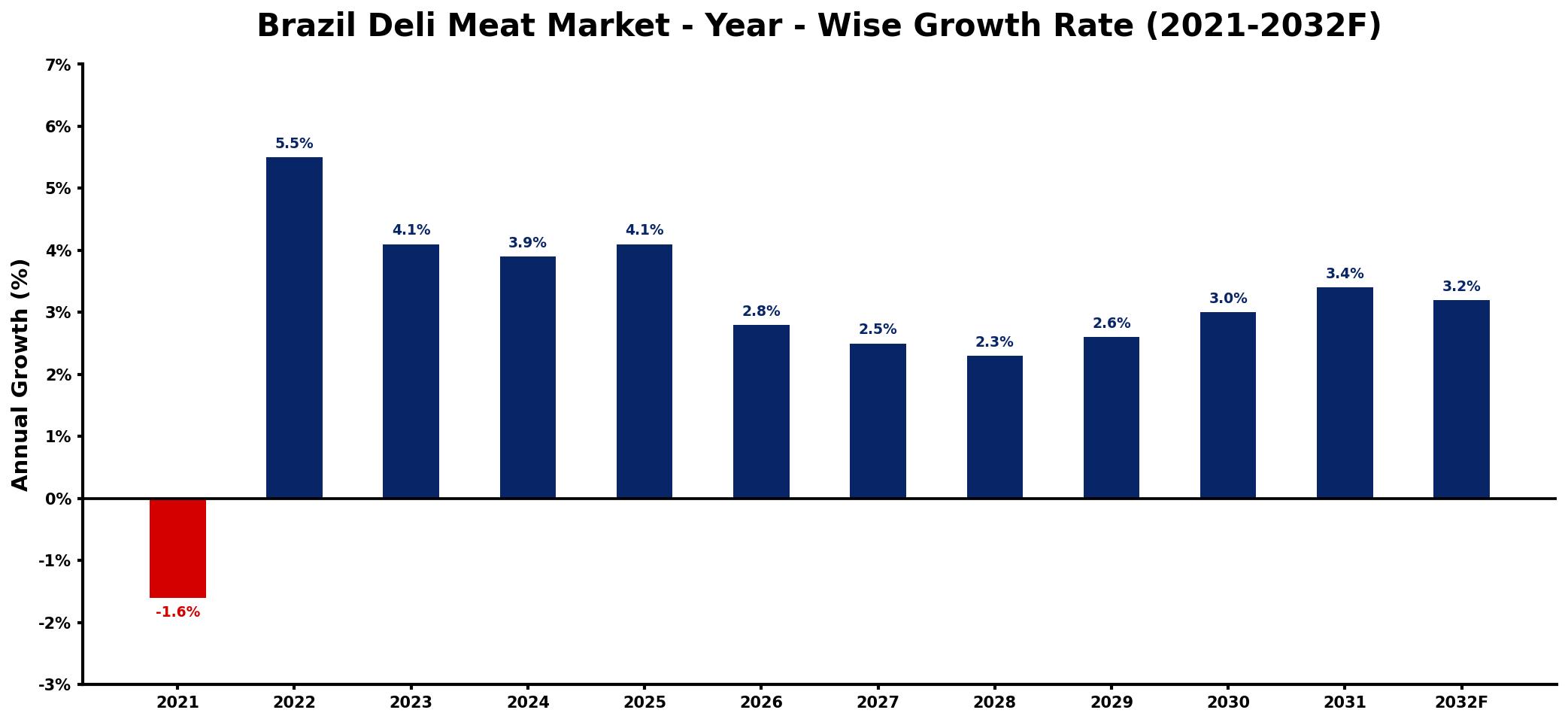
The table below presents the year‑wise growth rates along with the key drivers influencing the market
| Year | Growth Rate | Major Drivers |
| 2021 | -1.6% | Supply chain disruptions impact availability |
| 2022 | 5.5% | Rising consumer health consciousness trends |
| 2023 | 4.1% | New product innovations attract consumers |
| 2024 | 3.9% | Increased demand for convenience foods |
| 2025 | 4.1% | Growing popularity of snacking options |
| 2026 | 2.8% | Expansion of retail distribution channels |
| 2027 | 2.5% | Emerging flavors driving consumer interest |
| 2028 | 2.3% | Sustainable sourcing practices gaining traction |
| 2029 | 2.6% | Increased investment in food technology |
| 2030 | 3.0% | Growing online shopping adoption rates |
| 2031 | 3.4% | Rising disposable income supports spending |
| 2032 | 3.2% | Focus on premium quality offerings |
Note: Market size estimations and growth projections presented in this report are based on 6Wresearch's proprietary forecasting methodology, utilizing the latest available industry data, government publications, and primary research inputs.
Brazil Deli Meat Market Synopsis
The Brazilian deli meat market has recently gained momentum, driven by a heightened demand for ready-to-eat and processed meat products. Looking ahead, the market is poised for steady expansion as consumers prioritize convenience without sacrificing quality. The increasing urban population and their evolving dietary preferences are expected to further solidify the markets upward trajectory.
While growth is robust, the market must navigate various challenges, particularly regarding health regulations and compliance issues. However, with strong consumer demand and ongoing innovation in product offerings, the future looks bright for the Brazil deli meat sector.
Brazil Deli Meat Market Key Takeaways
- The market is driven by a growing preference for convenient and high-quality meal solutions.
- Urbanization and busy lifestyles are increasing the demand for deli meats as quick protein sources.
- Compliance with health regulations remains a critical factor for manufacturers.
- Consumer trends indicate a shift towards premium and specialty deli meat products.
- Investment opportunities exist in innovation, product diversity, and sustainable practices.
Evaluation of Restraints in Brazil Deli Meat Market
Despite the positive growth trajectory, the Brazil deli meat market faces significant restraints primarily due to stringent health and safety regulations. Manufacturers must ensure compliance with complex legislative frameworks to avoid penalties and safeguard consumer health. This necessity can hinder innovation and speed-to-market for new products. Furthermore, rising health consciousness among consumers may prompt shifts in preferences, pushing traditional deli meat producers to adapt swiftly to changing demands. Balancing compliance with innovative offerings will be essential for sustained market growth.
Brazil Deli Meat Market Trends
Current trends in the Brazil deli meat market highlight an increasing inclination towards gourmet and specialty products that cater to discerning consumers. In addition to quality, sustainability is becoming a focal point, with consumers showing a preference for ethically produced meats. Technology is also playing a role, as producers leverage advances in processing and packaging to enhance product freshness and shelf-life. Moreover, convenience-driven offerings, such as pre-packaged meal solutions, are set to gain further traction as more consumers seek quick yet nutritious options for their meals.
Brazil Deli Meat Market Opportunities
The Brazilian deli meat market presents several lucrative opportunities for growth and investment. There is a noticeable demand for organic and health-conscious deli meat options, which can attract a broader consumer base. Additionally, innovation in flavors and packaging can help companies stand out in a competitive landscape. Entering untapped regional markets and enhancing distribution channels could further enhance market penetration. Investments in marketing, focused on educating consumers about product quality and benefits, can also amplify sales and brand loyalty.
Government Initiatives in the Brazil Deli Meat Market
Government initiatives in Brazil strive to maintain high safety and quality standards within the deli meat industry. Regulatory bodies, such as the Brazil Health Regulatory Agency (ANVISA), oversee production practices, ensuring compliance with sanitary conditions and the control of additives. Policies are being implemented to foster transparency in labeling and improve consumer trust in processed food products. These initiatives play a crucial role in shaping industry practices and advancing public health objectives.
Future Insights of the Brazil Deli Meat Market
Looking towards 2026-2032, the Brazil deli meat market is expected to continue its growth trajectory, fueled by evolving consumer habits and market dynamics. As the demand for convenient meal solutions rises, manufacturers will likely invest in diversifying their product offerings. The focus on health, sustainability, and premium quality will drive innovation, enhancing competition in the sector. As urbanization increases, companies that can successfully navigate regulatory challenges while meeting consumer demands will emerge as leaders in this evolving market landscape.
Brazil Deli Meat Market Latest Developments (2025 - 2026)
Recent industry developments indicate a significant push towards product diversification and health-oriented offerings in the Brazil deli meat market. Many producers are exploring new recipes that align with changing dietary preferences, such as low-sodium and organic options. There is also a growing trend of sustainability initiatives, with companies adopting eco-friendly practices in packaging and sourcing. The emphasis on consumer education continues to be a priority, as brands aim to enhance transparency about ingredients and production methods.
Brazil Deli Meat Market - Key Attractiveness of the Report
- 10 Years of Market Numbers
- Historical Data Starting from 2022 to 2025
- Base Year: 2025
- Forecast Data until 2032
- Key Performance Indicators Impacting the Market
- Major Upcoming Developments and Projects
Key Highlights of the Report:
- Brazil Deli Meat Market Outlook
- Market Size of Brazil Deli Meat Market, 2025
- Forecast of Brazil Deli Meat Market, 2032
- Historical Data and Forecast of Brazil Deli Meat Revenues & Volume for the Period 2022-2032F
- Brazil Deli Meat Market Trend Evolution
- Brazil Deli Meat Market Drivers and Challenges
- Brazil Deli Meat Price Trends
- Brazil Deli Meat Porter's Five Forces
- Brazil Deli Meat Industry Life Cycle
- Historical Data and Forecast of Brazil Deli Meat Market Revenues & Volume By Source for the Period 2022-2032F
- Historical Data and Forecast of Brazil Deli Meat Market Revenues & Volume By Beef for the Period 2022-2032F
- Historical Data and Forecast of Brazil Deli Meat Market Revenues & Volume By Pork for the Period 2022-2032F
- Historical Data and Forecast of Brazil Deli Meat Market Revenues & Volume By Chicken for the Period 2022-2032F
- Historical Data and Forecast of Brazil Deli Meat Market Revenues & Volume By Others for the Period 2022-2032F
- Historical Data and Forecast of Brazil Deli Meat Market Revenues & Volume By Product Type for the Period 2022-2032F
- Historical Data and Forecast of Brazil Deli Meat Market Revenues & Volume By Cured Meat for the Period 2022-2032F
- Historical Data and Forecast of Brazil Deli Meat Market Revenues & Volume By Uncured Meat for the Period 2022-2032F
- Historical Data and Forecast of Brazil Deli Meat Market Revenues & Volume By Sales Channel for the Period 2022-2032F
- Historical Data and Forecast of Brazil Deli Meat Market Revenues & Volume By Hypermarkets/Supermarkets for the Period 2022-2032F
- Historical Data and Forecast of Brazil Deli Meat Market Revenues & Volume By Specialty Stores for the Period 2022-2032F
- Historical Data and Forecast of Brazil Deli Meat Market Revenues & Volume By Convenience Stores for the Period 2022-2032F
- Historical Data and Forecast of Brazil Deli Meat Market Revenues & Volume By Online Channels for the Period 2022-2032F
- Historical Data and Forecast of Brazil Deli Meat Market Revenues & Volume By Others for the Period 2022-2032F
- Brazil Deli Meat Import Export Trade Statistics
- Market Opportunity Assessment By Source
- Market Opportunity Assessment By Product Type
- Market Opportunity Assessment By Sales Channel
- Brazil Deli Meat Top Companies Market Share
- Brazil Deli Meat Competitive Benchmarking By Technical and Operational Parameters
- Brazil Deli Meat Company Profiles
- Brazil Deli Meat Key Strategic Recommendations






































