Brazil Endpoint Security Market Size & Growth Rate (2026-2032)
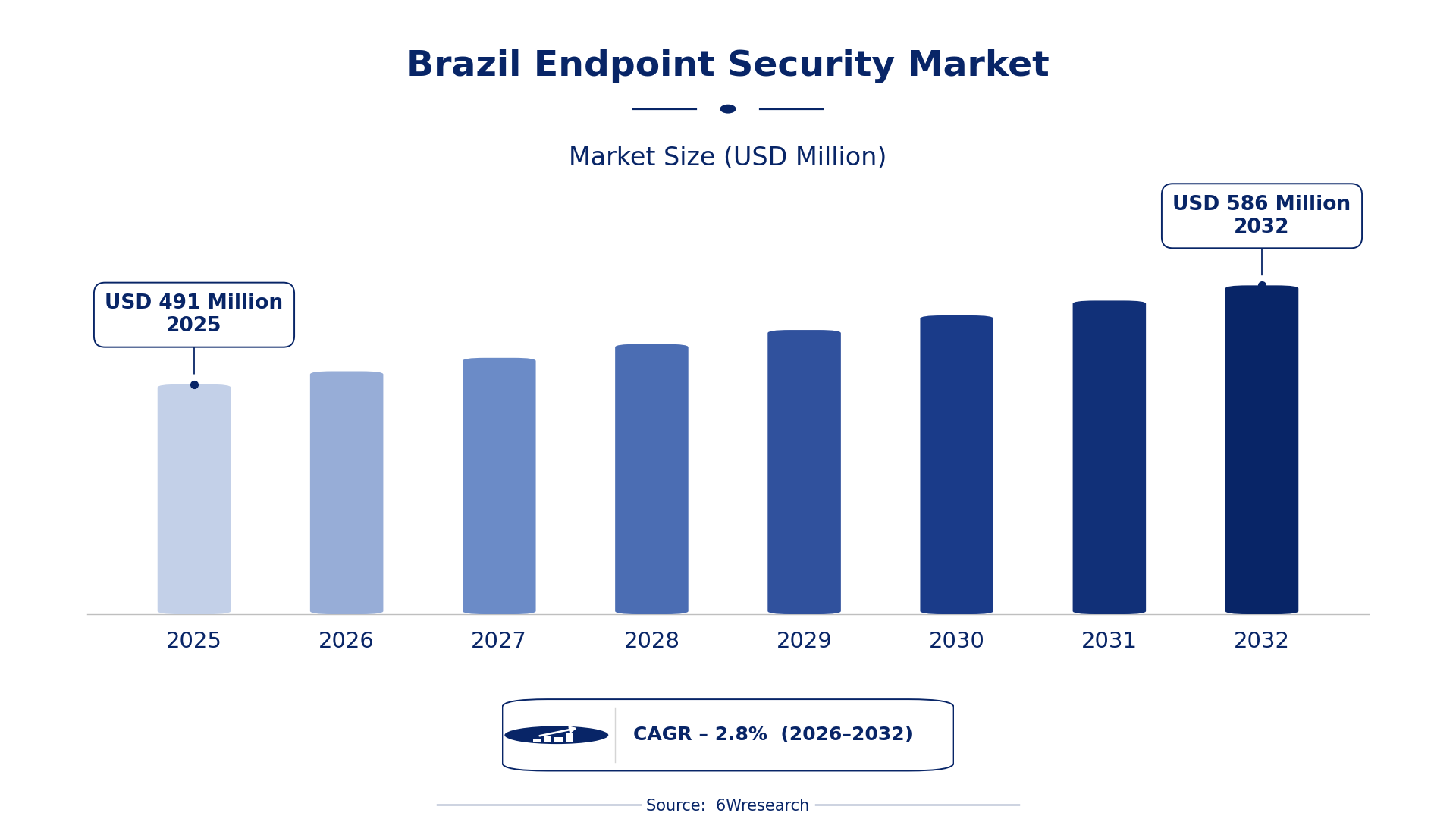
The Brazil Endpoint Security Market was estimated at USD 491 Million in 2025 and is projected to reach USD 586 Million by 2032, growing at a CAGR of 2.8% from 2026 to 2032.
Brazil Endpoint Security Market Synopsis
At the forefront of the Brazil Endpoint Security market is the escalating threat of cyberattacks. Organizations across sectors are recognizing that endpoints are often the most vulnerable points in their security architecture. With an increasing number of employees working remotely, the challenge of safeguarding these access points has intensified.
Another driving force is the growing sophistication of malware. As attackers refine their methods, the need for advanced protection measures becomes more pressing. Companies are now prioritizing investment in endpoint security solutions that not only defend against existing threats but also anticipate new vulnerabilities.
Brazil Endpoint Security Market Year-wise Growth Rate and Key Drivers
This graph illustrates the annual growth rates of the Brazil Endpoint Security Market from 2021 to 2032, highlighting a steady upward trajectory and projected expansion over the forecast period.
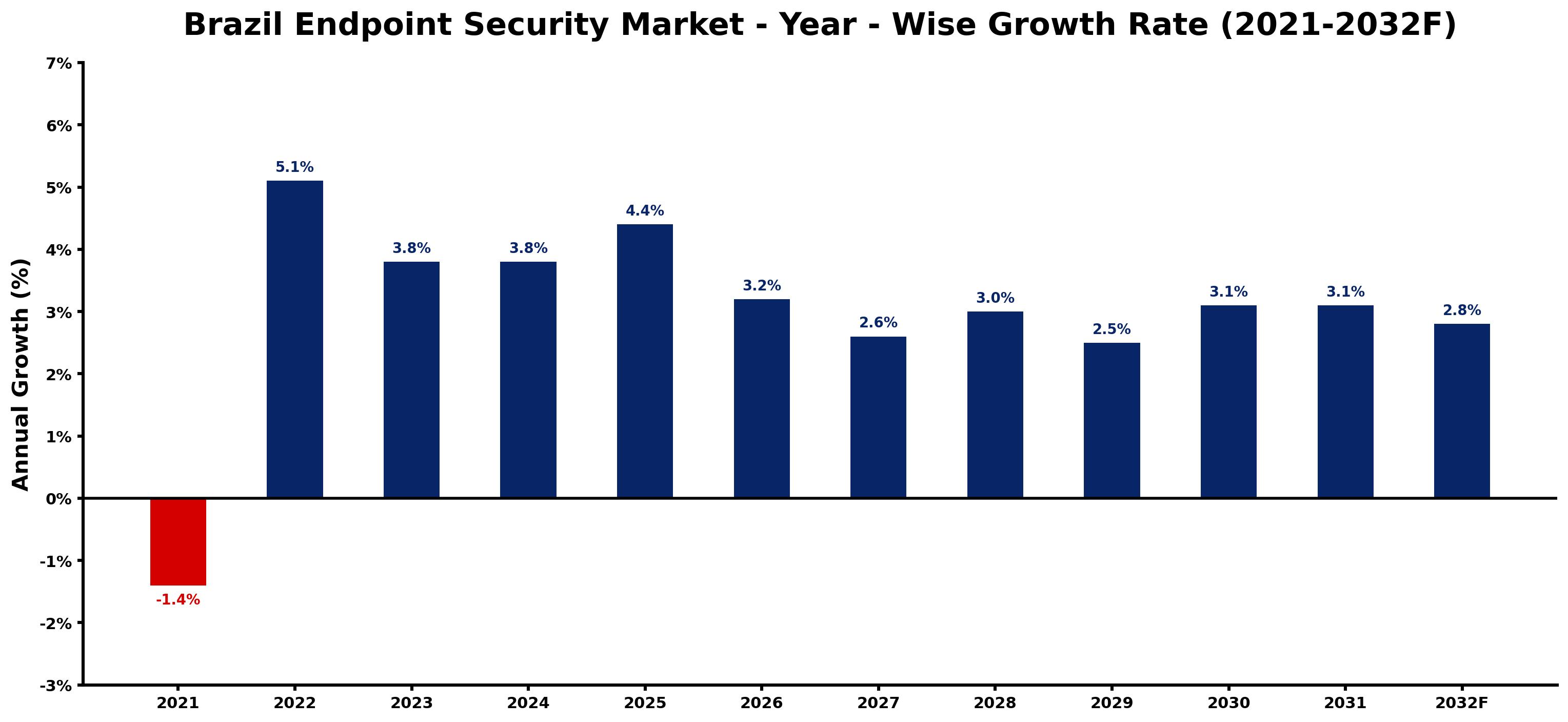
The table below presents the year‑wise growth rates along with the key drivers influencing the market
| Year | Growth Rate | Major Drivers |
| 2021 | -1.4% | New data privacy regulations hindered security investments. |
| 2022 | 5.1% | Brazilian General Data Privacy Law enforcement enhances cybersecurity focus. |
| 2023 | 3.8% | Increased cybercrime incidents drive demand for endpoint security. |
| 2024 | 3.8% | Government partnerships with tech firms enhance cybersecurity initiatives. |
| 2025 | 4.4% | Rise in remote work encourages secure endpoint solutions. |
| 2026 | 3.2% | Local startups innovating cloud-based security services rapidly. |
| 2027 | 2.6% | Growing adoption of IoT devices increases security vulnerabilities. |
| 2028 | 3.0% | Investment in data protection regulations boosts market growth. |
| 2029 | 2.5% | Major companies enhancing digital security frameworks amid risks. |
| 2030 | 3.1% | Increased public awareness of data breaches drives demand. |
| 2031 | 3.1% | Cybersecurity education programs spur consumer interest in solutions. |
| 2032 | 2.8% | Rising sophistication of cyberattacks prompts proactive security measures. |
Note: Market size estimations and growth projections presented in this report are based on 6Wresearch's proprietary forecasting methodology, utilizing the latest available industry data, government publications, and primary research inputs.
Brazil Endpoint Security Market Key Takeaways
Below are some of the specific key takeaways from the market, including:
- The shift to remote work has accelerated investments in endpoint security technologies.
- Organizations are increasingly aware of the necessity for user awareness training to complement technical solutions.
- Integration with existing security infrastructure is crucial for effective endpoint protection.
- Compliance with regulatory standards, particularly from ANPD, influences security strategies.
- Investment in advanced threat detection methods is expected to grow in response to evolving malware techniques.
Evaluation of Restraints in Brazil Endpoint Security Market
Several factors hinder the growth of the Brazil Endpoint Security market. First, the diversity of endpoint devices poses a challenge for uniform security solutions. This diversity often complicates the integration of security measures across different operating systems and hardware configurations. Additionally, the fast-changing nature of malware means that even the most advanced security solutions can quickly become outdated. Companies face the continual task of adapting to these changes, which can strain resources. Lastly, many organizations lack the necessary training to effectively utilize these security solutions, resulting in vulnerabilities that could be easily mitigated.
Brazil Endpoint Security Market Trends
The demand for integrated security solutions is on the rise. Businesses are seeking platforms that can offer comprehensive protection across multiple device types, rather than siloed approaches. Artificial intelligence is becoming increasingly important, with its capability to identify and respond to threats in real-time. on top of that, a notable trend is the enhancement of user training programs, as organizations realize that human error is often a weak link in cybersecurity defenses.
Brazil Endpoint Security Market Opportunities
The Brazil Endpoint Security market presents multiple avenues for growth. The expansion of remote work arrangements continues to create a pressing demand for effective security solutions tailored to mobile devices and home networks. Additionally, as compliance requirements become stricter, companies are compelled to invest in security measures that not only protect against threats but also satisfy regulatory obligations. Investing in research and development for cutting-edge technologies, such as machine learning algorithms for predictive threat analysis, will be key for vendors looking to differentiate themselves.
Government Initiatives in the Brazil Endpoint Security Market
Government policy plays an integral role in shaping the Brazil Endpoint Security market. With increasing incidents of cyber threats, public sector initiatives are now prioritizing the establishment of regulatory frameworks to ensure effective protection for end-user devices. Compliance with standards set by the National Data Protection Authority (ANPD) is pushing organizations to adopt more robust endpoint security measures.
- A regulatory framework introduced in 2025 mandating stricter data protection practices is currently influencing market operations.
- The Brazilian government is actively engaging in a cybersecurity awareness campaign to educate businesses about endpoint security risks and best practices.
- A public-private initiative expected to expand the country’s cybersecurity infrastructure is currently underway.
- In early 2025, a cybersecurity standard was established to guide enterprises in fortifying their endpoint security protocols.
- Future plans include the development of a national cybersecurity strategy aimed at fostering collaboration among stakeholders in the public and private sectors.
Future Insights of the Brazil Endpoint Security Market
Looking ahead to 2026-2032, the Brazil Endpoint Security market is set to witness a transformative phase characterized by technological advancements and heightened regulatory compliance. As threats become more sophisticated, organizations will be compelled to adopt multi-layered security solutions, blending hardware and software protections with human-centric training initiatives. The growing emphasis on compliance will further necessitate the integration of security solutions that address both current and evolving data protection laws.
Brazil Endpoint Security Market Latest Developments
Recent activities within the Brazil Endpoint Security market indicate a proactive shift towards improved security frameworks. Companies are increasingly prioritizing the integration of AI and machine learning into their endpoint security measures. The push for greater security is being met with heightened governmental support and educational initiatives.
- A major technology vendor launched an AI-based endpoint protection solution in Q1 2025, enabling organizations to detect threats more effectively.
- Ongoing partnerships between cybersecurity firms and educational institutions aim to enhance cybersecurity literacy among the workforce.
- A public-private initiative focused on increasing cybersecurity awareness within SMEs began in mid-2025 and remains underway.
- By mid-2026, a rollout is expected to expand access to advanced endpoint security tools across public sector agencies.
- In 2025, a cybersecurity framework designed to unify standards across industries was completed and is now guiding compliance efforts.
Brazil Endpoint Security Market - Key Attractiveness of the Report
- 10 Years of Market Numbers
- Historical Data Starting from 2022 to 2025
- Base Year: 2025
- Forecast Data until 2032
- Key Performance Indicators Impacting the Market
- Major Upcoming Developments and Projects
Key Highlights of the Report:
- Brazil Endpoint Security Market Outlook
- Market Size of Brazil Endpoint Security Market, 2025
- Forecast of Brazil Endpoint Security Market, 2032
- Historical Data and Forecast of Brazil Endpoint Security Revenues & Volume for the Period 2022-2032F
- Brazil Endpoint Security Market Trend Evolution
- Brazil Endpoint Security Market Drivers and Challenges
- Brazil Endpoint Security Price Trends
- Brazil Endpoint Security Porter's Five Forces
- Brazil Endpoint Security Industry Life Cycle
- Historical Data and Forecast of Brazil Endpoint Security Market Revenues & Volume By Solution for the Period 2022-2032F
- Historical Data and Forecast of Brazil Endpoint Security Market Revenues & Volume By Endpoint Protection Platform for the Period 2022-2032F
- Historical Data and Forecast of Brazil Endpoint Security Market Revenues & Volume By Endpoint Detection for the Period 2022-2032F
- Historical Data and Forecast of Brazil Endpoint Security Market Revenues & Volume By Response for the Period 2022-2032F
- Historical Data and Forecast of Brazil Endpoint Security Market Revenues & Volume By Vertical for the Period 2022-2032F
- Historical Data and Forecast of Brazil Endpoint Security Market Revenues & Volume By Healthcare for the Period 2022-2032F
- Historical Data and Forecast of Brazil Endpoint Security Market Revenues & Volume By Retail for the Period 2022-2032F
- Historical Data and Forecast of Brazil Endpoint Security Market Revenues & Volume By eCommerce for the Period 2022-2032F
- Historical Data and Forecast of Brazil Endpoint Security Market Revenues & Volume By Government for the Period 2022-2032F
- Historical Data and Forecast of Brazil Endpoint Security Market Revenues & Volume By Organization Size for the Period 2022-2032F
- Historical Data and Forecast of Brazil Endpoint Security Market Revenues & Volume By Small and Medium-Sized Enterprises (SMEs) for the Period 2022-2032F
- Historical Data and Forecast of Brazil Endpoint Security Market Revenues & Volume By Large Enterprises for the Period 2022-2032F
- Historical Data and Forecast of Brazil Endpoint Security Market Revenues & Volume By Deployment Mode for the Period 2022-2032F
- Historical Data and Forecast of Brazil Endpoint Security Market Revenues & Volume By On-premises for the Period 2022-2032F
- Historical Data and Forecast of Brazil Endpoint Security Market Revenues & Volume By Cloud for the Period 2022-2032F
- Historical Data and Forecast of Brazil Endpoint Security Market Revenues & Volume By Service for the Period 2022-2032F
- Historical Data and Forecast of Brazil Endpoint Security Market Revenues & Volume By Professional Services for the Period 2022-2032F
- Historical Data and Forecast of Brazil Endpoint Security Market Revenues & Volume By Managed Services for the Period 2022-2032F
- Brazil Endpoint Security Import Export Trade Statistics
- Market Opportunity Assessment By Solution
- Market Opportunity Assessment By Vertical
- Market Opportunity Assessment By Organization Size
- Market Opportunity Assessment By Deployment Mode
- Market Opportunity Assessment By Service
- Brazil Endpoint Security Top Companies Market Share
- Brazil Endpoint Security Competitive Benchmarking By Technical and Operational Parameters
- Brazil Endpoint Security Company Profiles
- Brazil Endpoint Security Key Strategic Recommendations






































