Argentina Endpoint Security Market Size & Growth Rate (2026-2032)
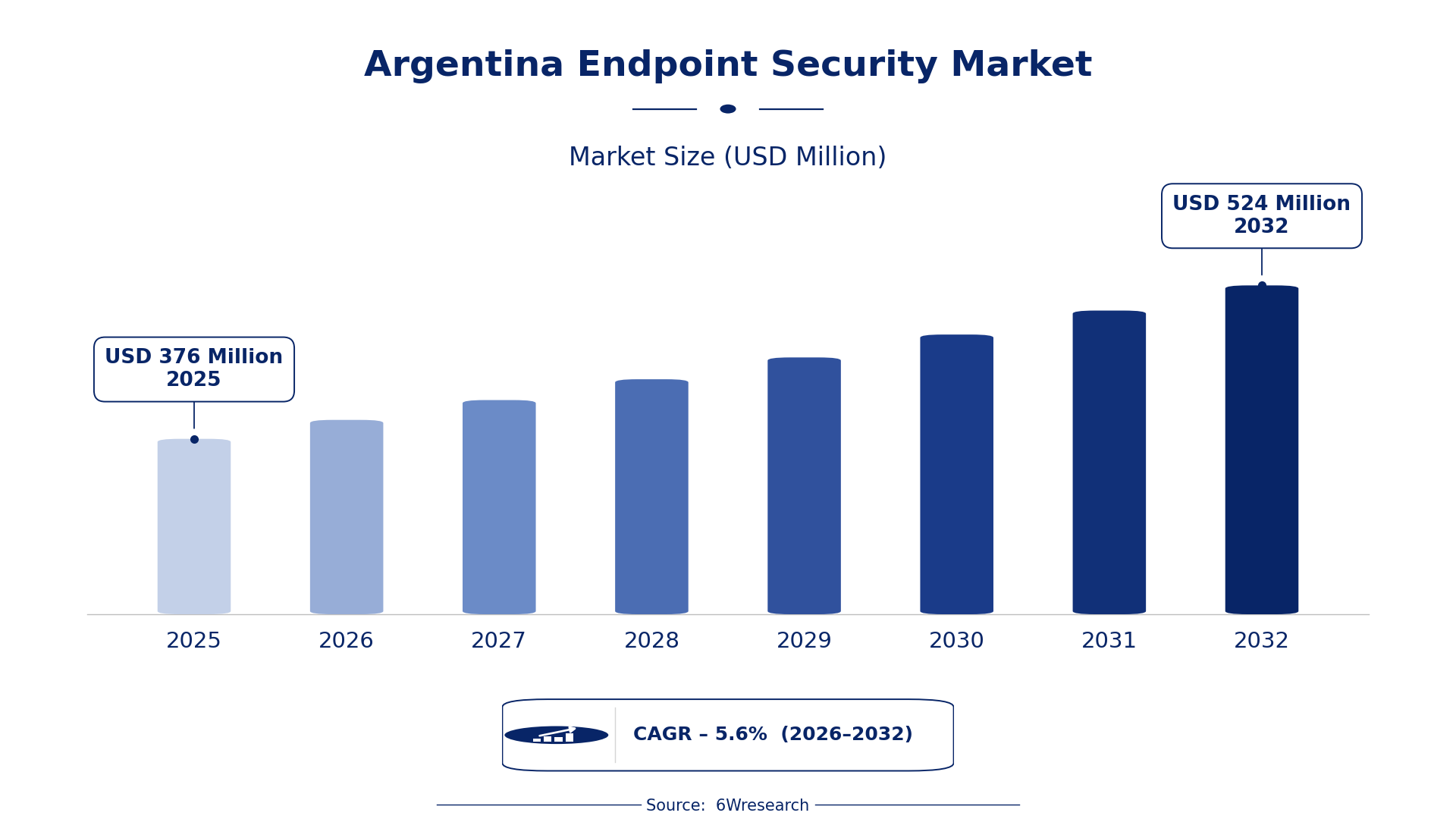
The Argentina Endpoint Security Market was estimated at USD 376 Million in 2025 and is projected to reach USD 524 Million by 2032, growing at a CAGR of 5.6% from 2026 to 2032.
Argentina Endpoint Security Market Synopsis
The Argentina Endpoint Security Market is currently on a solid upward trajectory, driven by escalating cyber threats and the critical need for enhanced digital protection. With businesses recognizing the urgency of safeguarding their endpoints, the market is transitioning toward a more proactive security framework, poised for sustained expansion.
As digital transformation accelerates, the adoption of sophisticated endpoint security solutions has become essential for organizations across sectors. This proactive approach is further fueled by growing awareness of data protection among enterprises and ongoing government efforts to bolster cybersecurity measures.
Argentina Endpoint Security Market Year-wise Growth Rate and Key Drivers
This graph illustrates the annual growth rates of the Argentina Endpoint Security Market from 2021 to 2032, highlighting a steady upward trajectory and projected expansion over the forecast period.
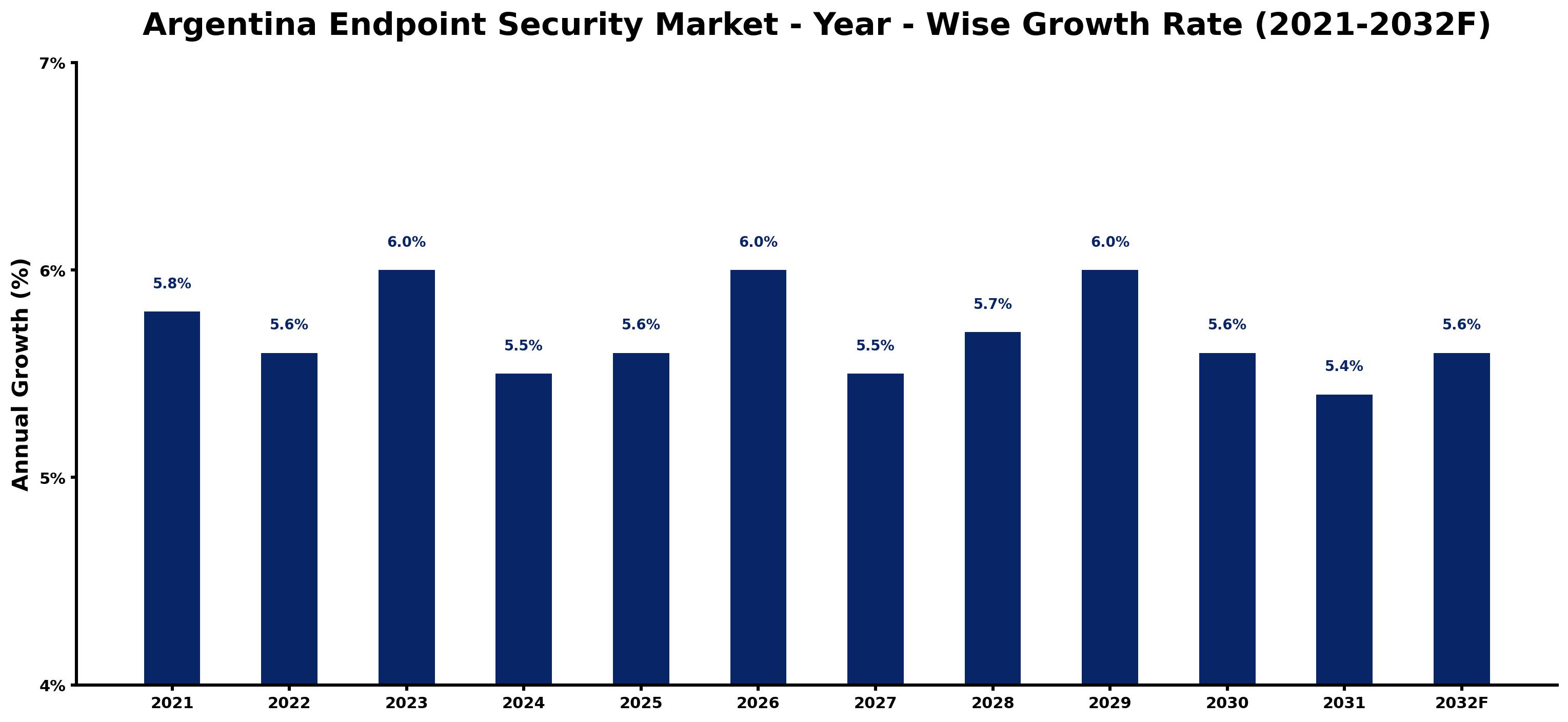
The table below presents the year‑wise growth rates along with the key drivers influencing the market
| Year | Growth Rate | Major Drivers |
| 2021 | 5.8% | Regulatory emphasis on personal data protection laws. |
| 2022 | 5.6% | Increased ransomware attacks prompting corporate security investments. |
| 2023 | 6.0% | Growth of remote work accelerating endpoint protection needs. |
| 2024 | 5.5% | Government digital transformation initiatives increasing cybersecurity focus. |
| 2025 | 5.6% | Teleworking culture driving demand for secure access solutions. |
| 2026 | 6.0% | Adoption of mobile payment systems requiring robust security. |
| 2027 | 5.5% | Rise in IoT devices boosting endpoint security significance. |
| 2028 | 5.7% | Financial sector upgrades necessitating stronger cyber defenses. |
| 2029 | 6.0% | Educational institutions expanding digital resources need protection. |
| 2030 | 5.6% | Social engineering threats leading to stronger security policies. |
| 2031 | 5.4% | Compliance requirements for international operations driving investments. |
| 2032 | 5.6% | Healthcare digitization increasing sensitivity around patient data. |
Note: Market size estimations and growth projections presented in this report are based on 6Wresearch's proprietary forecasting methodology, utilizing the latest available industry data, government publications, and primary research inputs.
Argentina Endpoint Security Market Key Takeaways
Below are some of the specific key takeaways from the market, including:
- The increasing prevalence of cyberattacks is driving demand for advanced endpoint security solutions.
- Businesses are increasingly adopting cloud-based security systems to accommodate remote workforces.
- Regulatory compliance is becoming a critical factor in shaping endpoint security strategies.
- Integration of AI and machine learning technologies is on the rise to enhance threat detection capabilities.
- Public awareness regarding cybersecurity risks is encouraging more organizations to invest in endpoint protection.
Evaluation of Restraints in Argentina Endpoint Security Market
A major challenge facing the Argentina Endpoint Security Market is the continuously evolving tactics employed by cybercriminals. As these threats become more complex, organizations must ensure their security measures are equally advanced. The growing trend of remote work further complicates this landscape, creating multiple vulnerabilities across diverse devices. Balancing robust security while maintaining user convenience and complying with an ever-changing regulatory environment remains a significant hurdle for many businesses.
Argentina Endpoint Security Market Trends
A notable trend in the Argentina Endpoint Security Market is the shift towards cloud-based security solutions, as organizations seek to enhance flexibility and scalability. As businesses embrace hybrid work models, the demand for integrated security platforms that unify endpoint protection is rising.
In addition, there is a marked emphasis on advanced threat detection methods, as organizations confront increasingly sophisticated cyber threats. Compliance with data protection regulations is driving the integration of regulatory requirements into security strategies, making robust endpoint security a necessity rather than an option.
Argentina Endpoint Security Market Opportunities
Investment opportunities in the Argentina Endpoint Security Market are flourishing, particularly in areas like real-time threat detection solutions and centralized endpoint security management platforms. The rise in remote working arrangements creates a fertile ground for vendors offering cloud-based security solutions. There is also a clear demand for advanced technologies like AI and machine learning, which can bolster cybersecurity postures and enhance incident response capabilities.
Government Initiatives in the Argentina Endpoint Security Market
The Argentine government is actively shaping the endpoint security framework through various regulatory measures and initiatives. Focused on establishing a secure digital ecosystem, the government recognizes cybersecurity as a national priority, which is crucial for promoting business confidence and investment. Public-private partnerships are being encouraged to enhance cybersecurity capabilities across different sectors.
- A recent initiative aims to promote public-private partnerships to enhance national cybersecurity infrastructure.
- Current efforts include strengthening the legal framework for data protection and cybersecurity compliance.
- Plans are underway to launch a national cybersecurity awareness campaign expected to begin by early 2026.
- The National Cybersecurity Agency is currently implementing new regulations to address emerging threats and vulnerabilities.
- A proposed regulatory framework to ensure greater transparency in data handling practices is expected to be introduced by late 2026.
Future Insights of the Argentina Endpoint Security Market
Looking ahead to 2026-2032, the Argentina Endpoint Security Market is expected to evolve significantly, fueled by the increasing digitization of enterprises and the escalating risk of cyber threats. Demand for innovative endpoint protection solutions that can address both current and future challenges will drive growth. Regulatory pressures will necessitate a more comprehensive approach to cybersecurity, prompting organizations to rethink their security strategies in favor of more integrated and adaptive solutions. As remote and hybrid work environments persist, the need for robust endpoint security will only intensify.
Argentina Endpoint Security Market Latest Developments
In recent months, the Argentina Endpoint Security Market has witnessed a surge of activity, driven by a pressing need for enhanced protection against cyber threats. Organizations are increasingly prioritizing advanced security measures, and vendors are responding with innovative solutions to meet this growing demand. The convergence of technology and heightened awareness of cybersecurity issues has led to significant developments across the sector.
- A major technology vendor announced an expansion of its endpoint security offerings in Q3 2025 to include AI-enhanced threat detection capabilities.
- In early 2025, a local cybersecurity firm launched a new endpoint protection platform tailored specifically for SMEs.
- An ongoing initiative to upgrade national cybersecurity infrastructure aims to bolster endpoint security measures nationwide.
- A new partnership between a leading software company and a cybersecurity provider to deliver comprehensive security solutions was forged in mid-2025.
- A rollout of updated compliance guidelines for endpoint security is expected by late 2026, focusing on regulatory alignment.
Argentina Endpoint Security Market - Key Attractiveness of the Report
- 10 Years of Market Numbers
- Historical Data Starting from 2022 to 2025
- Base Year: 2025
- Forecast Data until 2032
- Key Performance Indicators Impacting the Market
- Major Upcoming Developments and Projects
Key Highlights of the Report:
- Argentina Endpoint Security Market Outlook
- Market Size of Argentina Endpoint Security Market, 2025
- Forecast of Argentina Endpoint Security Market, 2032
- Historical Data and Forecast of Argentina Endpoint Security Revenues & Volume for the Period 2022-2032F
- Argentina Endpoint Security Market Trend Evolution
- Argentina Endpoint Security Market Drivers and Challenges
- Argentina Endpoint Security Price Trends
- Argentina Endpoint Security Porter's Five Forces
- Argentina Endpoint Security Industry Life Cycle
- Historical Data and Forecast of Argentina Endpoint Security Market Revenues & Volume By Solution for the Period 2022-2032F
- Historical Data and Forecast of Argentina Endpoint Security Market Revenues & Volume By Endpoint Protection Platform for the Period 2022-2032F
- Historical Data and Forecast of Argentina Endpoint Security Market Revenues & Volume By Endpoint Detection for the Period 2022-2032F
- Historical Data and Forecast of Argentina Endpoint Security Market Revenues & Volume By Response for the Period 2022-2032F
- Historical Data and Forecast of Argentina Endpoint Security Market Revenues & Volume By Vertical for the Period 2022-2032F
- Historical Data and Forecast of Argentina Endpoint Security Market Revenues & Volume By Healthcare for the Period 2022-2032F
- Historical Data and Forecast of Argentina Endpoint Security Market Revenues & Volume By Retail for the Period 2022-2032F
- Historical Data and Forecast of Argentina Endpoint Security Market Revenues & Volume By eCommerce for the Period 2022-2032F
- Historical Data and Forecast of Argentina Endpoint Security Market Revenues & Volume By Government for the Period 2022-2032F
- Historical Data and Forecast of Argentina Endpoint Security Market Revenues & Volume By Organization Size for the Period 2022-2032F
- Historical Data and Forecast of Argentina Endpoint Security Market Revenues & Volume By Small and Medium-Sized Enterprises (SMEs) for the Period 2022-2032F
- Historical Data and Forecast of Argentina Endpoint Security Market Revenues & Volume By Large Enterprises for the Period 2022-2032F
- Historical Data and Forecast of Argentina Endpoint Security Market Revenues & Volume By Deployment Mode for the Period 2022-2032F
- Historical Data and Forecast of Argentina Endpoint Security Market Revenues & Volume By On-premises for the Period 2022-2032F
- Historical Data and Forecast of Argentina Endpoint Security Market Revenues & Volume By Cloud for the Period 2022-2032F
- Historical Data and Forecast of Argentina Endpoint Security Market Revenues & Volume By Service for the Period 2022-2032F
- Historical Data and Forecast of Argentina Endpoint Security Market Revenues & Volume By Professional Services for the Period 2022-2032F
- Historical Data and Forecast of Argentina Endpoint Security Market Revenues & Volume By Managed Services for the Period 2022-2032F
- Argentina Endpoint Security Import Export Trade Statistics
- Market Opportunity Assessment By Solution
- Market Opportunity Assessment By Vertical
- Market Opportunity Assessment By Organization Size
- Market Opportunity Assessment By Deployment Mode
- Market Opportunity Assessment By Service
- Argentina Endpoint Security Top Companies Market Share
- Argentina Endpoint Security Competitive Benchmarking By Technical and Operational Parameters
- Argentina Endpoint Security Company Profiles
- Argentina Endpoint Security Key Strategic Recommendations






































