Brazil Flower and Ornamental Plants Market Summary
The brazil flower and ornamental plants market was estimated at USD 353 Million in 2025 and is projected to reach USD 421 Million by 2032, growing at a CAGR of 2.5% from 2026 to 2032.
Brazil Flower and Ornamental Plants Market Year-wise Growth Rate and Key Drivers
This graph highlights how the Brazil Flower and Ornamental Plants Market has steadily grown over the years, supported by major growth factors.
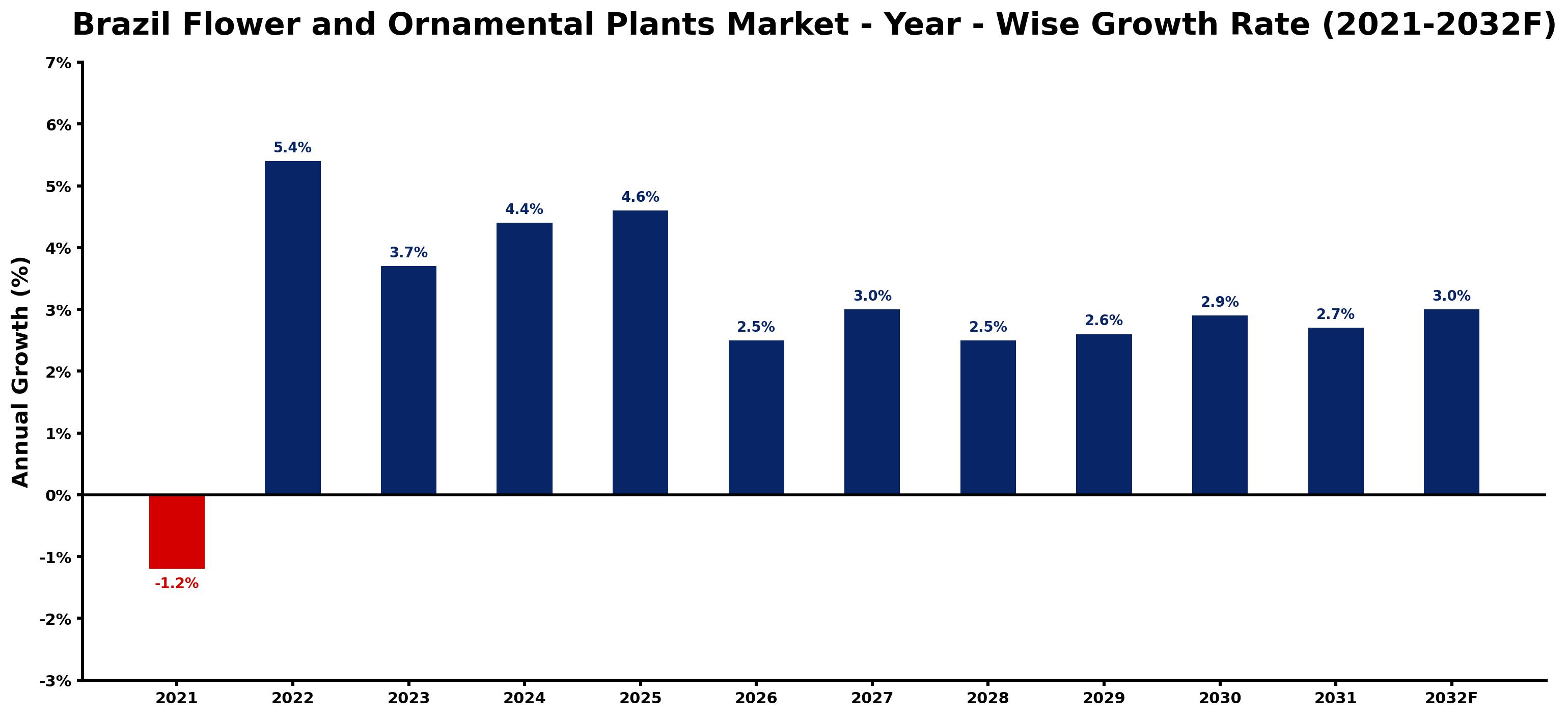
The table below presents the year wise growth rates along with the key drivers influencing the market
| Year | Growth Rate | Major Drivers |
| 2021 | -1.2% | Severe climate disruptions diminished harvest yields, negatively impacting supply and increasing prices in the floral market. |
| 2022 | 5.4% | Sustainable practices gained traction, influencing consumer preferences towards organic plants. |
| 2023 | 3.7% | Urbanization trends led to increased demand for indoor plants in metropolitan areas. |
| 2024 | 4.4% | E-commerce platforms expanded, making floral products accessible to a wider audience. |
| 2025 | 4.6% | Rising disposable incomes allowed consumers to invest more in home decor enhancements. |
| 2026 | 2.5% | Cultural celebrations linked to floral arrangements increased demand for seasonal flowers. |
| 2027 | 3.0% | Educational initiatives on gardening started influencing urban dwellers to embrace plant ownership. |
| 2028 | 2.5% | Partnerships between local nurseries and hotels boosted the use of ornamental plants. |
| 2029 | 2.6% | Innovative landscaping designs incorporating native plants attracted environmentally conscious buyers. |
| 2030 | 2.9% | Social media trends showcased exotic plants, spurring interest among younger consumers. |
| 2031 | 2.7% | Investments in green spaces by municipalities enhanced public appreciation for ornamental flora. |
| 2032 | 3.0% | Technological advancements in cultivation methods improved flower production efficiency dramatically. |
Note - Market size estimations and growth projections presented in this report are based on 6Wresearch's advanced forecasting approach, validated with industry datasets as of June 2026.
Brazil Flower and Ornamental Plants Market Synopsis
The Brazil Flower and Ornamental Plants Market is projected to reach 2.5% and witness significant growth during the forecast period (2026-2032). This growth trajectory is backed by several key factors, including a robust expansion in the hospitality industry, advancements in residential landscaping, and rising consumer spending power. The burgeoning demand for flowers for occasions such as weddings, parties, and festivals is creating lucrative opportunities for retailers and wholesalers throughout Brazil. Furthermore, the increasing consumer inclination towards indoor decorative plants—due to their recognized air purification benefits—is fostering greater household adoption of these products. The favorable policy landscape, particularly government initiatives such as tax reductions on floral product imports, has also been pivotal in bolstering market growth.
Brazil Flower and Ornamental Plants Market Growth Drivers
The key drivers of the Brazil Flower and Ornamental Plants Market are multifaceted, reflecting both consumer behavior and broader economic conditions. Notable growth drivers include:
- The expansion of the hospitality sector is significantly increasing demand for decorative plants and flowers, representing a lucrative opportunity for suppliers.
- Rising disposable incomes among consumers are creating a greater willingness to spend on luxury items, including ornamental plants and high-quality floral arrangements.
- Consumer trends favoring sustainable and eco-friendly products are pushing the demand for locally sourced flowers and plants, contributing to market growth.
- Increased awareness regarding the mental health benefits of greenery and indoor plants is driving consumers to invest in decorative solutions for their living spaces.
- Technological advances in horticulture and plant care are enhancing product quality and variety, making ornamental plants more appealing to a wider audience.
Brazil Flower and Ornamental Plants Market Trends and Opportunities
As the Brazil Flower and Ornamental Plants Market evolves, several notable trends are shaping its landscape:
- The rise of online retail channels is transforming how consumers access and purchase flowers and ornamental plants, adding convenience and variety.
- There is an increasing trend towards customization of floral arrangements for specific events, allowing consumers to express personal styles and preferences.
- Incorporation of technology, such as augmented reality for virtual plant placement, is creating a more interactive shopping experience for consumers.
- Growing interest in vertical gardening and hydroponics is opening new avenues for urban consumers to engage with gardening in limited spaces.
- Sustainability is becoming a cornerstone of product development, with increasing demand for organic and eco-friendly floral products.
Brazil Flower and Ornamental Plants Market Challenges and Restraints
Despite the promising growth, the Brazil Flower and Ornamental Plants Market faces specific challenges that could hinder its progress:
- Fluctuations in climate can adversely affect flower production, impacting supply chains and market stability.
- The high costs associated with importing certain exotic flower varieties can limit market accessibility for smaller retailers.
- Seasonal demand variations can create challenges in inventory management for wholesalers and retailers.
- Competition from synthetic flowers and decorations may divert consumer spending away from natural products.
- Potential regulatory changes related to agricultural practices and imports may complicate market operations.
Brazil Flower and Ornamental Plants Market Government Investment and Initiatives
The Brazilian government has recognized the potential of the flower and ornamental plants sector and has introduced several initiatives aimed at encouraging its growth. These include:
- Tax incentives for local producers to enhance competitiveness against imported floral products.
- Funding and grants aimed at promoting sustainable agricultural practices among flower growers.
- Support for research and development in horticulture to improve plant varieties and cultivation techniques.
- Initiatives aimed at boosting exports of Brazilian floral products to international markets.
- Public campaigns to educate consumers about the benefits of locally sourced and sustainable floral products.
Brazil Flower and Ornamental Plants Market Latest Developments (May 2025 - June 2026)
In the period from May 2025 to June 2026, the Brazil Flower and Ornamental Plants Market witnessed several developments that indicate the evolving dynamics of the industry:
- Increased collaborations between local growers and tech companies are leading to innovative approaches in plant care and sales.
- Prominent floral exhibitions and trade shows have gained popularity, facilitating greater networking and business opportunities across the sector.
- Heightened consumer engagement through social media platforms has transformed marketing strategies for flower retailers.
- The introduction of digital platforms for ordering and delivery of floral products has streamlined the purchasing process for consumers.
- Growing partnerships with environmental organizations are promoting awareness about the ecological benefits of maintaining greenery in urban settings.
Brazil Flower and Ornamental Plants Market - Key Attractiveness of the Report
- 10 Years of Market Numbers
- Historical Data Starting from 2022 to 2025
- Base Year: 2025
- Forecast Data until 2032
- Key Performance Indicators Impacting the Market
- Major Upcoming Developments and Projects
Key Highlights of the Report:
- Brazil Flower and Ornamental Plants Market Outlook
- Market Size of Brazil Flower and Ornamental Plants Market, 2025
- Forecast of Brazil Flower and Ornamental Plants Market, 2032F
- Historical Data and Forecast of Brazil Flower and Ornamental Plants Revenues & Volume for the Period 2022-2032F
- Brazil Flower and Ornamental Plants Market Trend Evolution
- Brazil Flower and Ornamental Plants Market Drivers and Challenges
- Brazil Flower and Ornamental Plants Price Trends
- Brazil Flower and Ornamental Plants Porter's Five Forces
- Brazil Flower and Ornamental Plants Industry Life Cycle
- Historical Data and Forecast of Brazil Flower and Ornamental Plants Market Revenues & Volume By Product Type for the Period 2022-2032F
- Historical Data and Forecast of Brazil Flower and Ornamental Plants Market Revenues & Volume By Potted Plants for the Period 2022-2032F
- Historical Data and Forecast of Brazil Flower and Ornamental Plants Market Revenues & Volume By Cut Flowers for the Period 2022-2032F
- Historical Data and Forecast of Brazil Flower and Ornamental Plants Market Revenues & Volume By Application for the Period 2022-2032F
- Historical Data and Forecast of Brazil Flower and Ornamental Plants Market Revenues & Volume By Home for the Period 2022-2032F
- Historical Data and Forecast of Brazil Flower and Ornamental Plants Market Revenues & Volume By Commercial for the Period 2022-2032F
- Brazil Flower and Ornamental Plants Import Export Trade Statistics
- Market Opportunity Assessment By Product Type
- Market Opportunity Assessment By Application
- Brazil Flower and Ornamental Plants Top Companies Market Share
- Brazil Flower and Ornamental Plants Competitive Benchmarking By Technical and Operational Parameters
- Brazil Flower and Ornamental Plants Company Profiles
- Brazil Flower and Ornamental Plants Key Strategic Recommendations






































