Colombia Flower and Ornamental Plants Market Summary
The colombia flower and ornamental plants market was estimated at USD 238 Million in 2025 and is projected to reach USD 323 Million by 2032, growing at a CAGR of 5.0% from 2026 to 2032.
Colombia Flower and Ornamental Plants Market Year-wise Growth Rate and Key Drivers
This graph highlights how the Colombia Flower and Ornamental Plants Market has steadily grown over the past five years, supported by major growth factors.
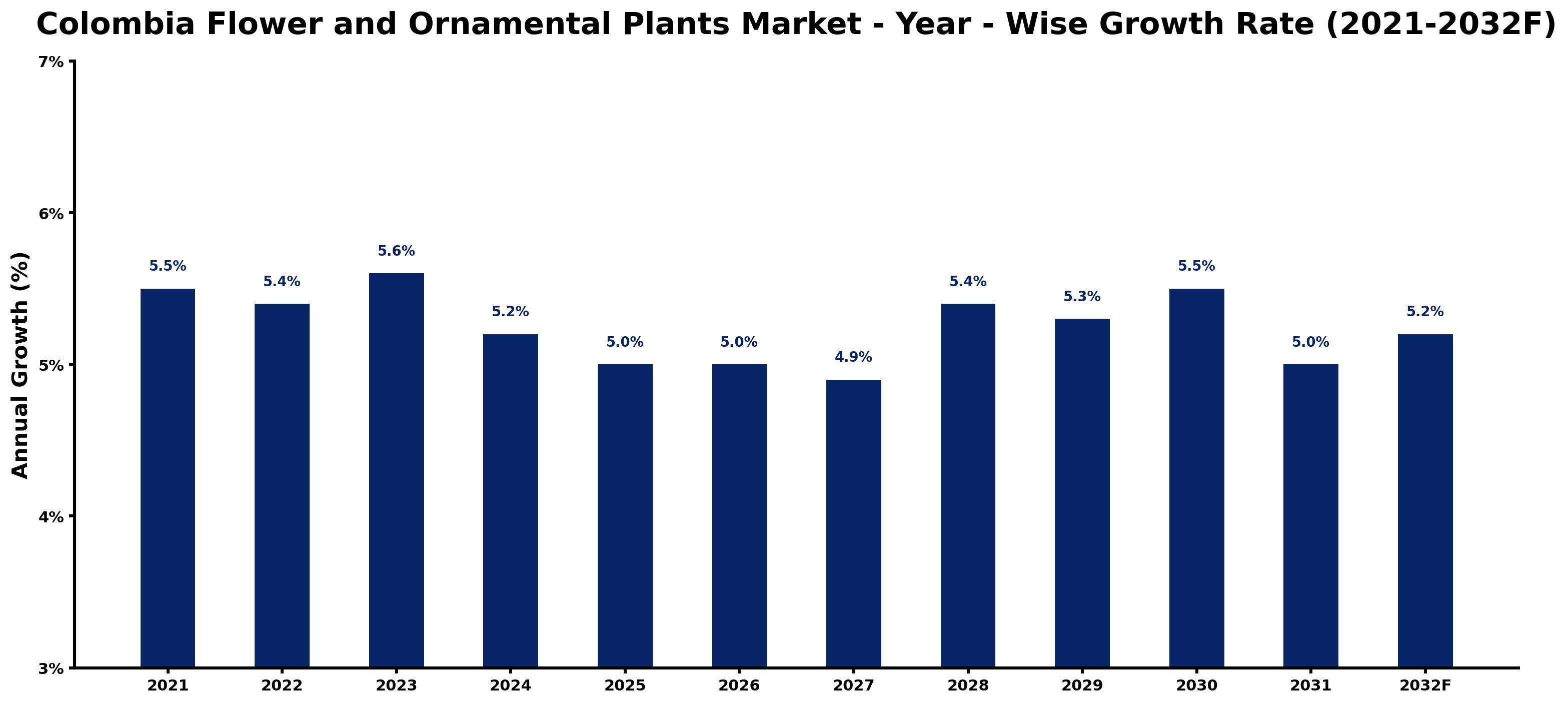
The table below presents the year wise growth rates along with the key drivers influencing the market
| Year | Growth Rate | Major Drivers |
| 2021 | 5.5% | Post-pandemic recovery saw increased interest in domestic ornamental plant cultivation. |
| 2022 | 5.4% | Urban gardens flourished as Colombians sought green spaces amid ongoing urbanization. |
| 2023 | 5.6% | Social media influencers highlighted flower arrangements, boosting consumer awareness significantly. |
| 2024 | 5.2% | Local festivals celebrated indigenous flowers, enhancing cultural appreciation and sales potential. |
| 2025 | 5.0% | Retail spaces began incorporating plant-centric decor, attracting a broader customer base. |
| 2026 | 5.0% | E-commerce platforms emerged, simplifying access to diverse flower and plant varieties. |
| 2027 | 4.9% | Sustainability trends pushed growers towards eco-friendly cultivation methods and packaging. |
| 2028 | 5.4% | International trade agreements opened doors for Colombian floriculture in global markets. |
| 2029 | 5.3% | Vertical farming techniques gained traction, optimizing urban agricultural spaces effectively. |
| 2030 | 5.5% | Consumer preferences shifted towards exotic and rare plant species, driving niche markets. |
| 2031 | 5.0% | Climate adaptation strategies became essential for growers amidst changing environmental conditions. |
| 2032 | 5.2% | Collaborations among local artisans and florists enhanced product offerings and market visibility. |
Note - Market size estimations and growth projections presented in this report are based on 6Wresearch's advanced forecasting approach, validated with industry datasets as of June 2026.
Colombia Flower and Ornamental Plants Market Synopsis
The Colombia Flower and Ornamental Plants Market is projected to reach 5.0% and witness significant growth during the forecast period (2026-2032). This growth trajectory can primarily be attributed to rising consumer expenditure on decorative plants, paired with heightened demand for cut flowers. The increasing number of events such as weddings and special occasions has further fueled this demand, solidifying the market's positive outlook. Additionally, Colombia's expanding export markets have positioned the country as a key player in the South American floral export sector, contributing to its robust market dynamics.
Colombia Flower and Ornamental Plants Market Growth Drivers
The Colombia Flower and Ornamental Plants Market is driven by several pivotal factors that enhance its growth potential. Firstly, consumer preferences are shifting toward the incorporation of ornamental plants as integral components of home decor, leading to increased sales in the sector. Secondly, the trend of celebrating various occasions with floral arrangements has surged, proving beneficial for cut flower sales. Moreover, as global markets continue to open up, Colombian exporters are benefitting from heightened trade opportunities. This is coupled with initiatives aimed at reducing costs, thereby increasing competitive advantage within international markets.
- The surge in consumer spending on decorative plants is a notable driver, as more individuals and businesses enhance their environments with greenery.
- Increasing demand for cut flowers during celebratory events further stimulates market growth, highlighting the cultural importance of flowers in Colombian society.
- Colombia's strategic location allows for efficient distribution of floral products to key international markets, enhancing export potential.
- Technological advancements in flower packaging are ensuring greater freshness during transit, appealing to international consumers.
- Cost reduction initiatives among exporters are empowering Colombian companies to penetrate new markets and bolster their competitive stance.
Colombia Flower and Ornamental Plants Market Challenges and Restraints
The Colombia Flower and Ornamental Plants Market faces certain challenges that could limit its growth trajectory. Fluctuations in climate conditions can significantly impact flower production, affecting supply chains and pricing structures. Additionally, competition from lower-priced imports poses a threat to local producers, necessitating strategic adjustments to maintain market share. Furthermore, logistical challenges associated with exporting flowers can result in increased costs and potential delays, affecting product quality. Understanding these challenges is crucial for stakeholders aiming to navigate the complexities of this dynamic market.
- Climate variability remains a significant challenge, as adverse weather conditions can directly impact flower production levels.
- Intense competition from international suppliers, particularly those offering lower prices, can undermine the competitiveness of local flower producers.
- Logistical inefficiencies in transportation and export can lead to increased costs, affecting overall profitability.
- Limited access to advanced technology and farming techniques may hinder productivity and innovation among small-scale producers.
- Economic fluctuations can impact consumer spending patterns, potentially reducing demand for ornamental plants and cut flowers during downturns.
Colombia Flower and Ornamental Plants Market Government Investment and Initiatives
To bolster the Colombia Flower and Ornamental Plants Market, the government has been actively investing in several initiatives aimed at enhancing the sector's competitiveness. These efforts include public funding for agricultural research and development, focused on improving flower cultivation techniques and sustainability practices. Additionally, the government has introduced various programs to support local farmers and exporters in navigating international markets, providing training and resources to enhance quality and production efficiency. Furthermore, initiatives aimed at promoting Colombian flowers abroad are contributing to the elevation of the country's brand in the global floral market.
- The government invests significantly in agricultural research, focusing on advanced cultivation techniques to boost productivity in the flower sector.
- Programs aimed at supporting local farmers enhance their ability to compete in international markets, ensuring their growth and sustainability.
- Public initiatives promote the export of Colombian flowers, helping to elevate the country's standing in the global floral market.
- Training programs for exporters are being implemented to improve their understanding of international market dynamics and quality standards.
- Government measures aimed at enhancing infrastructure for transportation are set to reduce logistical challenges in flower exports.
Colombia Flower and Ornamental Plants Market Latest Developments (May 2025 - June 2026)
Recent developments in the Colombia Flower and Ornamental Plants Market indicate a forward momentum driven by both technological and market adaptations. During this period, import/export regulations have been streamlined, facilitating smoother transactions for flower exporters. Additionally, advancements in sustainable farming practices have begun to gain traction, as producers seek to address global environmental concerns. Innovations in e-commerce have also emerged, allowing local flower businesses to reach broader consumer bases, both domestically and abroad. These trends highlight the sector's responsiveness to market demands and the continuous evolution within this vibrant industry.
- Streamlined import/export regulations are enhancing the operational efficiency of flower exporters in Colombia.
- Producers are increasingly adopting sustainable practices in response to rising environmental awareness among consumers.
- Technological innovations are being implemented to improve the production and packaging processes of ornamental plants and flowers.
- The growth of e-commerce platforms is enabling flower businesses to expand their market reach and improve customer engagement.
- Market players are increasingly focusing on quality assurance measures to meet international standards and enhance competitiveness.
Colombia Flower and Ornamental Plants Market - Key Attractiveness of the Report
- 10 Years of Market Numbers
- Historical Data Starting from 2022 to 2025
- Base Year: 2025
- Forecast Data until 2032
- Key Performance Indicators Impacting the Market
- Major Upcoming Developments and Projects
Key Highlights of the Report:
- Colombia Flower and Ornamental Plants Market Outlook
- Market Size of Colombia Flower and Ornamental Plants Market, 2025
- Forecast of Colombia Flower and Ornamental Plants Market, 2032F
- Historical Data and Forecast of Colombia Flower and Ornamental Plants Revenues & Volume for the Period 2022-2032F
- Colombia Flower and Ornamental Plants Market Trend Evolution
- Colombia Flower and Ornamental Plants Market Drivers and Challenges
- Colombia Flower and Ornamental Plants Price Trends
- Colombia Flower and Ornamental Plants Porter's Five Forces
- Colombia Flower and Ornamental Plants Industry Life Cycle
- Historical Data and Forecast of Colombia Flower and Ornamental Plants Market Revenues & Volume By Product Type for the Period 2022-2032F
- Historical Data and Forecast of Colombia Flower and Ornamental Plants Market Revenues & Volume By Potted Plants for the Period 2022-2032F
- Historical Data and Forecast of Colombia Flower and Ornamental Plants Market Revenues & Volume By Cut Flowers for the Period 2022-2032F
- Historical Data and Forecast of Colombia Flower and Ornamental Plants Market Revenues & Volume By Application for the Period 2022-2032F
- Historical Data and Forecast of Colombia Flower and Ornamental Plants Market Revenues & Volume By Home for the Period 2022-2032F
- Historical Data and Forecast of Colombia Flower and Ornamental Plants Market Revenues & Volume By Commercial for the Period 2022-2032F
- Colombia Flower and Ornamental Plants Import Export Trade Statistics
- Market Opportunity Assessment By Product Type
- Market Opportunity Assessment By Application
- Colombia Flower and Ornamental Plants Top Companies Market Share
- Colombia Flower and Ornamental Plants Competitive Benchmarking By Technical and Operational Parameters
- Colombia Flower and Ornamental Plants Company Profiles
- Colombia Flower and Ornamental Plants Key Strategic Recommendations






































