Brazil Grape Juice Market Size, Share & Growth Rate
The Brazil Grape Juice Market was estimated at USD 225 Million in 2025 and is projected to reach USD 267 Million by 2032, growing at a CAGR of 2.5% from 2026 to 2032. This upward trajectory is primarily fueled by a burgeoning awareness among consumers about the health benefits of grape juice, particularly its rich antioxidant content. Additionally, the market is witnessing an increase in demand for premium and organic options, further solidifying grape juice's position as a staple among health-conscious buyers in Brazil.
Brazil Grape Juice Market Year-wise Growth Rate and Key Drivers
This graph highlights how the Brazil Grape Juice Market has steadily grown over the years, supported by major growth factors.
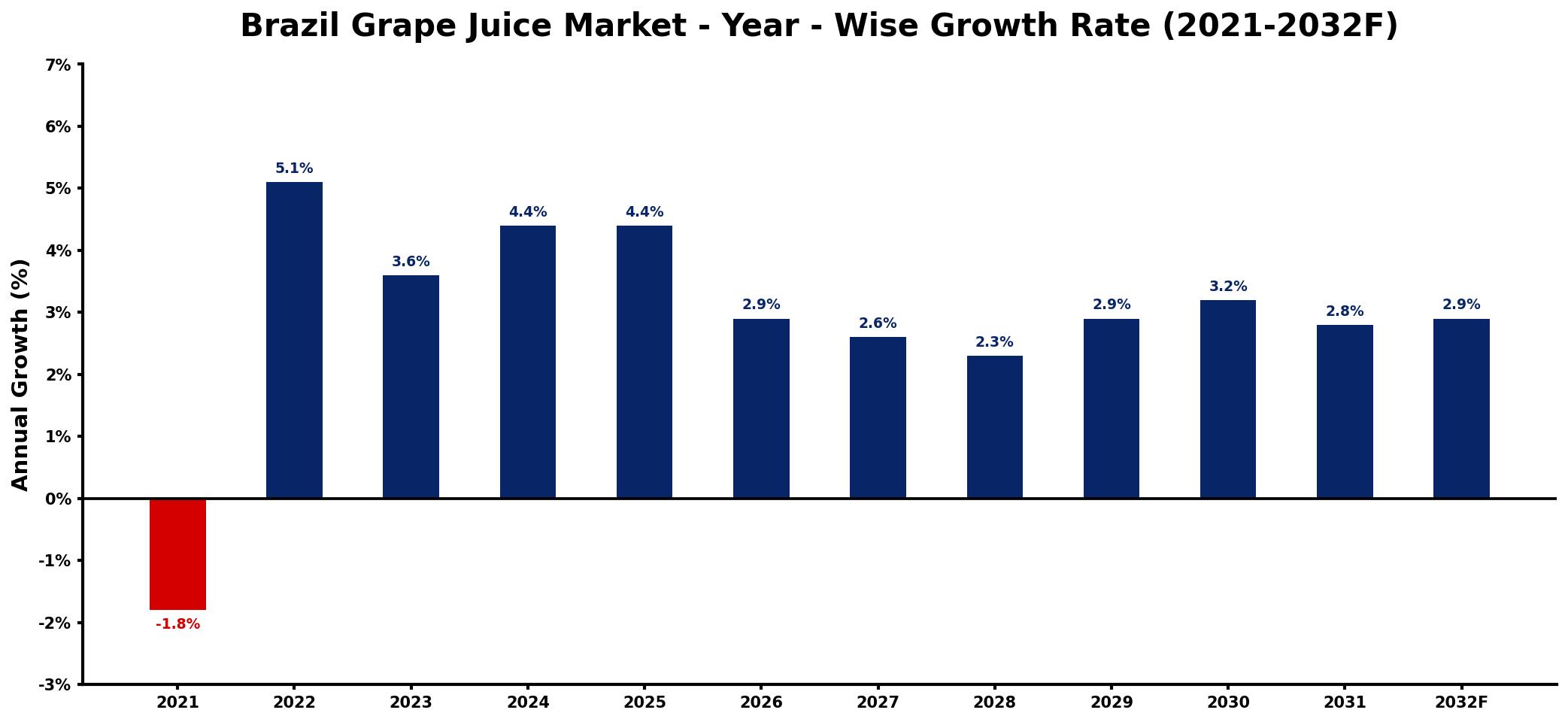
The table below presents the year‑wise growth rates along with the key drivers influencing the market
| Year | Growth Rate | Major Drivers |
| 2021 | -1.8% | decrease in consumer spending power |
| 2022 | 5.1% | rise in health consciousness trends |
| 2023 | 3.6% | expansion of distribution networks |
| 2024 | 4.4% | improved processing technologies adoption |
| 2025 | 4.4% | growth in private label offerings |
| 2026 | 2.9% | development of innovative flavors |
| 2027 | 2.6% | enhanced product visibility strategies |
| 2028 | 2.3% | increase in export opportunities |
| 2029 | 2.9% | growing demand for organic products |
| 2030 | 3.2% | emergence of new consumer segments |
| 2031 | 2.8% | stronger distribution network expansion |
| 2032 | 2.9% | strengthening of online sales channels |
Note: Market size estimations and growth projections presented in this report are based on 6Wresearch's proprietary forecasting methodology, utilizing the latest available industry data, government publications, and primary research inputs.
Brazil Grape Juice Market Synopsis
In Brazil, the grape juice market is currently marked by an expanding consumer base eager for natural beverages free from alcohol. As health trends evolve, more Brazilians are gravitating towards products that promise nutritional benefits without added sugars or artificial ingredients. This shift is compelling manufacturers to innovate and diversify their product offerings to satisfy changing consumer preferences.
Furthermore, the competitive landscape is increasingly robust, with brands striving to differentiate through unique flavors and organic certifications. As awareness grows regarding the positive impacts of grape juice on cardiovascular health, the market is likely to witness sustained demand, aligning with the overall trend towards healthier lifestyles.
Brazil Grape Juice Market Key Takeaways
- Increasing consumer interest in health-oriented products is propelling market growth.
- The demand for organic and premium grape juice variants is rising significantly.
- Quality assurance and effective vineyard management are vital for maintaining product standards.
- Market saturation poses challenges that necessitate innovation and strategic marketing efforts.
- Government regulations play a crucial role in shaping industry practices and maintaining product integrity.
Evaluation of Restraints in Brazil Grape Juice Market
Despite the positive outlook, the Brazil grape juice market faces significant restraints that could limit its growth. One primary concern is the challenge of vineyard management; ensuring a consistent supply of high-quality grapes is essential for juice production. Additionally, quality control measures must be stringent to meet the increasing expectations of health-conscious consumers. With the market approaching potential saturation, companies are pressed to find innovative ways to stand out, requiring both creative marketing strategies and unique product offerings. Collaboration with grape growers and rigorous quality assurance protocols are essential to navigating these challenges effectively.
Brazil Grape Juice Market Trends
A noticeable trend in the Brazil grape juice market is the surge in demand for functional beverages, where consumers are increasingly seeking out drinks that offer health benefits beyond basic nutrition. The integration of flavors, such as exotic fruits, is also becoming popular, appealing to adventurous palates. Moreover, the rise of eco-conscious consumers is steering brands towards sustainable packaging solutions, aligning with broader environmental trends. These shifts are shaping product development and marketing strategies within the industry.
Brazil Grape Juice Market Opportunities
There are significant growth opportunities in the Brazil grape juice market, particularly in the premium and organic segments. As consumers become more health-conscious, they are willing to pay a premium for high-quality, organic grape juice products. Additionally, expanding e-commerce channels offer a new avenue for distribution, enabling brands to reach a wider audience. Innovating with new flavors and formulations, such as blends that incorporate superfoods, can also capture the interest of health-focused consumers, opening further avenues for investment.
Government Initiatives in the Brazil Grape Juice Market
Government policies regarding the grape juice market in Brazil include regulations surrounding grape cultivation and processing standards, ensuring product quality and safety. Authorities actively oversee producers to maintain hygiene practices and quality adherence, fostering consumer trust. Additionally, there are government initiatives aimed at supporting grape growers through research and development programs designed to enhance grape quality and competitiveness in global markets. Such measures ensure that the Brazilian grape juice industry remains robust and capable of meeting both domestic and international demand.
Future Insights of the Brazil Grape Juice Market
Looking ahead to the period from 2026 to 2032, the Brazil grape juice market is set to evolve significantly. As awareness of health benefits continues to permeate consumer behavior, the growth in demand for grape juice is likely to persist. Innovations in product offerings and the expansion of distribution channels will play critical roles in market dynamics. Furthermore, as sustainability becomes an imperative for consumers, brands that prioritize eco-friendly practices will likely enhance their appeal. Overall, this market presents a landscape ripe with potential for growth and investment.
Brazil Grape Juice Market Latest Developments (2025 - 2026)
Recently, the Brazil grape juice market has witnessed increased efforts to promote organic and premium juice products, aligning with consumer preferences for healthier options. Brands are also experimenting with innovative flavors and blends, reflecting a growing trend towards diverse and functional beverages. Additionally, sustainability initiatives have gained traction, with producers focusing on reducing their environmental footprint through eco-friendly practices in both production and packaging. These developments indicate a vibrant and responsive market landscape.
Brazil Grape Juice Market - Key Attractiveness of the Report
- 10 Years of Market Numbers
- Historical Data Starting from 2022 to 2025
- Base Year: 2025
- Forecast Data until 2032
- Key Performance Indicators Impacting the Market
- Major Upcoming Developments and Projects
Key Highlights of the Report:
- Brazil Grape Juice Market Outlook
- Market Size of Brazil Grape Juice Market, 2025
- Forecast of Brazil Grape Juice Market, 2032
- Historical Data and Forecast of Brazil Grape Juice Revenues & Volume for the Period 2022-2032F
- Brazil Grape Juice Market Trend Evolution
- Brazil Grape Juice Market Drivers and Challenges
- Brazil Grape Juice Price Trends
- Brazil Grape Juice Porter's Five Forces
- Brazil Grape Juice Industry Life Cycle
- Historical Data and Forecast of Brazil Grape Juice Market Revenues & Volume By Type for the Period 2022-2032F
- Historical Data and Forecast of Brazil Grape Juice Market Revenues & Volume By Pure Juice for the Period 2022-2032F
- Historical Data and Forecast of Brazil Grape Juice Market Revenues & Volume By Mixed Juice for the Period 2022-2032F
- Historical Data and Forecast of Brazil Grape Juice Market Revenues & Volume By Application for the Period 2022-2032F
- Historical Data and Forecast of Brazil Grape Juice Market Revenues & Volume By 0-14 yrs for the Period 2022-2032F
- Historical Data and Forecast of Brazil Grape Juice Market Revenues & Volume By 15-34 yrs for the Period 2022-2032F
- Historical Data and Forecast of Brazil Grape Juice Market Revenues & Volume By 35-54 yrs for the Period 2022-2032F
- Historical Data and Forecast of Brazil Grape Juice Market Revenues & Volume By 55 yrs up for the Period 2022-2032F
- Brazil Grape Juice Import Export Trade Statistics
- Market Opportunity Assessment By Type
- Market Opportunity Assessment By Application
- Brazil Grape Juice Top Companies Market Share
- Brazil Grape Juice Competitive Benchmarking By Technical and Operational Parameters
- Brazil Grape Juice Company Profiles
- Brazil Grape Juice Key Strategic Recommendations






































