Brazil Hotel Furniture Market Summary
The brazil hotel furniture market was estimated at USD 98 Million in 2025 and is projected to reach USD 116 Million by 2032, growing at a CAGR of 3.1% from 2026 to 2032.
Brazil Hotel Furniture Market Year-wise Growth Rate and Key Drivers
This graph highlights how the Brazil Hotel Furniture Market has steadily grown over the past five years, supported by major growth factors.
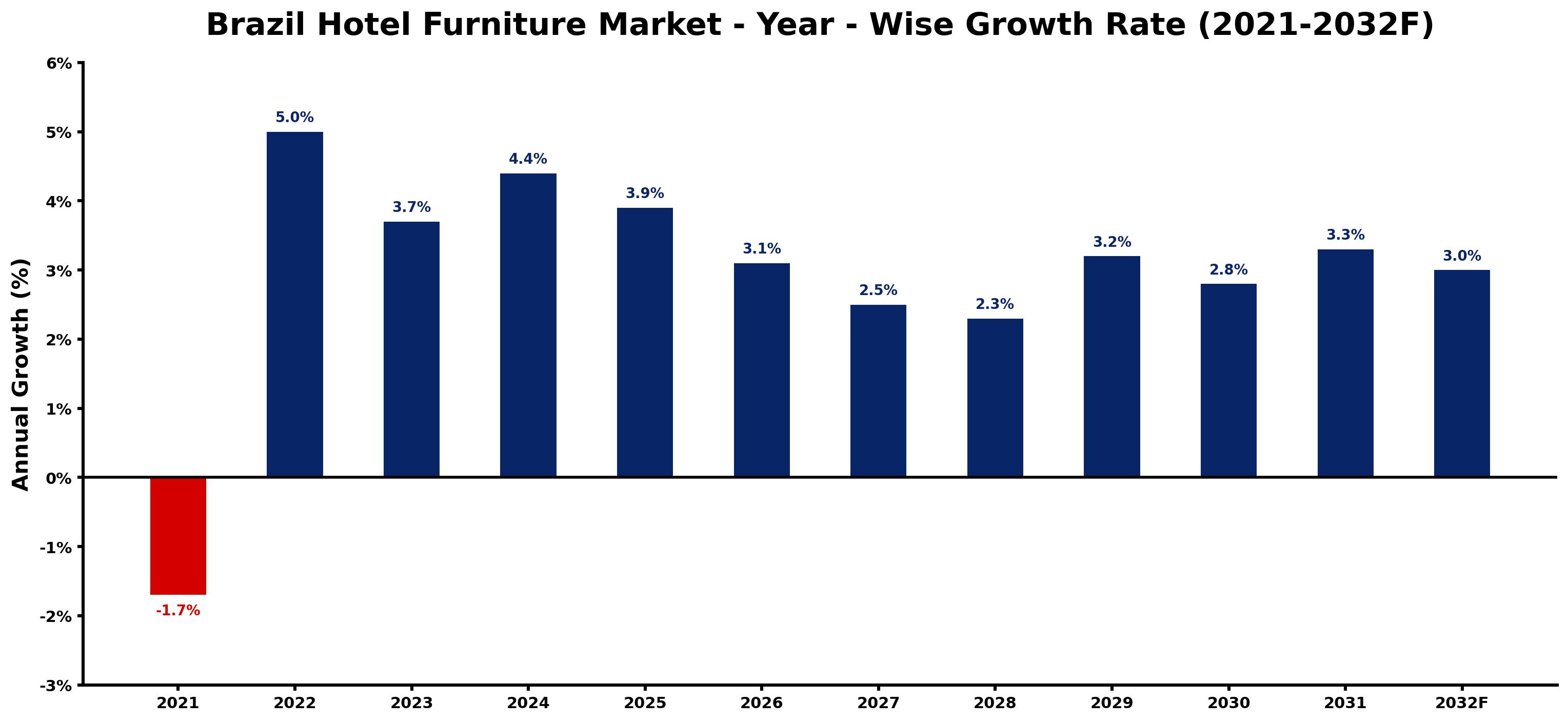
The table below presents the year wise growth rates along with the key drivers influencing the market
| Year | Growth Rate | Major Drivers |
| 2021 | -1.7% | Increased domestic travel restrictions significantly limited hotel occupancy rates, leading to diminished furniture investment. |
| 2022 | 5.0% | Luxury brands focused on sustainable materials, influencing hotel furniture purchasing decisions. |
| 2023 | 3.7% | Urban expansion in Brazilian cities led to increased hotel developments and furniture needs. |
| 2024 | 4.4% | Emerging boutique hotels prioritize unique furniture designs, shaping market trends in Brazil. |
| 2025 | 3.9% | Local craftspeople collaborate with designers, enriching hotel furniture aesthetics and functionality. |
| 2026 | 3.1% | Post-pandemic travel resurgence boosts occupancy rates, prompting furniture upgrades in hotels. |
| 2027 | 2.5% | Technological integration in hotels mandates modern furniture solutions for enhanced guest experiences. |
| 2028 | 2.3% | International events hosted in Brazil drive temporary hotel expansions and associated furniture demand. |
| 2029 | 3.2% | E-commerce platforms streamline furniture procurement, benefiting Brazil's hotel industry suppliers. |
| 2030 | 2.8% | Increased focus on wellness tourism motivates hotels to invest in ergonomic furniture solutions. |
| 2031 | 3.3% | Urban hotel spaces evolve, necessitating multifunctional furniture to optimize limited areas. |
| 2032 | 3.0% | Sustainability-focused initiatives attract eco-conscious travelers, influencing furniture sourcing in hotels. |
Note - Market size estimations and growth projections presented in this report are based on 6Wresearch's advanced forecasting approach, validated with industry datasets as of June 2026.
Brazil Hotel Furniture Market Synopsis
The Brazil Hotel Furniture Market is projected to reach 3.1% and witness significant growth during the forecast period (2026-2032). This growth mirrors the expansion of the tourism and hospitality sector in Brazil, characterized by a steady increase in hotel establishments and resort developments. The demand for furniture that not only fits aesthetically within hotel environments but also offers durability is on the rise, as industry stakeholders strive to enhance guest experiences.
Brazil Hotel Furniture Market Growth Drivers
The Brazil Hotel Furniture Market is propelled by several key growth drivers. Firstly, the continuous influx of domestic and international tourists has led to a corresponding growth in hotel establishments, prompting a surge in demand for high-quality furniture. Secondly, evolving consumer preferences are steering hotel operators towards furniture that combines style with functionality, thereby enhancing the overall guest experience. This trend is reflected in the increasing focus on customized designs tailored to specific hospitality themes.
- The rising popularity of boutique hotels is driving a demand for unique and locally-inspired furniture designs that reflect Brazil's rich cultural heritage.
- Renovation projects in older hotels are creating opportunities for manufacturers to provide modern solutions that align with contemporary interior design trends.
- There is a growing preference for multi-functional furniture that maximizes space efficiency in often compact hotel rooms.
- Sustainability trends are influencing purchasing decisions, as hotels seek eco-friendly furniture options made from renewable materials.
- The expansion of the luxury segment in the Brazilian hospitality market necessitates premium-grade furniture that meets high durability and aesthetic standards.
Brazil Hotel Furniture Market Trends and Opportunities
In the Brazil Hotel Furniture Market, several trends are emerging that present significant opportunities for growth. The trend towards experiential tourism is prompting hotels to invest in furniture that enhances the overall guest experience. This includes the use of innovative designs that facilitate social interaction within hotel spaces, such as communal lounges and dining areas.
- Smart furniture solutions that integrate technology are becoming increasingly popular, providing guests with enhanced comfort and connectivity.
- The demand for outdoor furniture is rising, reflecting a shift towards al fresco dining and leisure areas in hotel settings.
- Regional variations in design preferences are prompting manufacturers to adapt their offerings to meet local tastes and cultural nuances.
- Increased focus on wellness in hospitality is driving demand for furniture solutions that promote relaxation and comfort, such as ergonomic seating.
- The growing trend of personalization in hotel offerings encourages furniture designs that can be customized for individual guest preferences.
Brazil Hotel Furniture Market Challenges and Restraints
Despite its growth potential, the Brazil Hotel Furniture Market faces several challenges. Economic fluctuations and downturns in the tourism sector can lead to reduced spending on renovations and new furniture purchases. Additionally, the market must navigate complexities posed by regulatory compliance regarding safety and environmental standards, which can result in increased operational costs.
- Manufacturers are under pressure to innovate while also adhering to stringent environmental regulations that limit certain materials and processes.
- Supply chain disruptions, exacerbated by global and local economic conditions, can impede the timely delivery of furniture to hotel operators.
- Competition from low-cost international suppliers may threaten the presence of local furniture manufacturers in the market.
- Consumer preferences are rapidly evolving, making it challenging for manufacturers to keep pace with the latest design trends and functionality demands.
- The inherent challenges in meeting the high expectations of luxury hotel clients add an additional layer of complexity to market operations.
Brazil Hotel Furniture Market Government Investment and Initiatives
The Brazilian government plays a vital role in shaping the trajectory of the hotel furniture market through various investments and initiatives aimed at promoting sustainable practices and enhancing the overall quality of hotel offerings. Policies have been established to encourage the use of locally sourced materials, which not only supports local economies but also aligns with environmental sustainability goals.
- Government initiatives focus on establishing quality standards that ensure safety and durability in hotel furnishings, thereby upholding Brazil's reputation in the hospitality sector.
- Public investment in tourism infrastructure is creating an environment conducive to hotel development, subsequently increasing the demand for furniture.
- Ongoing collaboration between government bodies and industry stakeholders aims to develop a framework for sustainable design, influencing furniture manufacturers' product strategies.
- Incentives for eco-friendly practices foster innovation in materials and designs that meet both aesthetic and environmental demands.
- Training and resources provided by the government for manufacturers help improve skill levels and advance production capabilities in alignment with international market standards.
Brazil Hotel Furniture Market Latest Developments (May 2025 - June 2026)
The period from May 2025 to June 2026 has witnessed notable developments in the Brazil Hotel Furniture Market. Industry dynamics are shifting towards enhanced customization, with manufacturers increasingly emphasizing bespoke designs tailored to the distinct themes of hospitality venues. Innovation in materials continues to be a focal point, with a growing number of furniture designers exploring sustainable alternatives to traditional materials.
- Industry stakeholders are navigating supply chain adjustments, aiming to optimize efficiency while addressing the global challenges posed by logistics.
- Collaborative projects between design firms and hotels are emerging, allowing for a more integrated approach to interior design and furniture selection.
- The expanding influence of digital technology is facilitating a shift towards virtual solutions for furniture design, enabling real-time customization and visualization.
- Emerging trends indicate a rising demand for adaptable furniture solutions, reflecting changing consumer preferences for multi-use spaces.
- As luxury hotel segments expand, the focus on high-end, custom furniture is increasing, demanding greater innovation and craftsmanship from manufacturers.
Brazil Hotel Furniture Market - Key Attractiveness of the Report
- 10 Years of Market Numbers
- Historical Data Starting from 2022 to 2025
- Base Year: 2025
- Forecast Data until 2032
- Key Performance Indicators Impacting the Market
- Major Upcoming Developments and Projects
Key Highlights of the Report:
- Brazil Hotel Furniture Market Outlook
- Market Size of Brazil Hotel Furniture Market, 2025
- Forecast of Brazil Hotel Furniture Market, 2032
- Historical Data and Forecast of Brazil Hotel Furniture Revenues & Volume for the Period 2022-2032F
- Brazil Hotel Furniture Market Trend Evolution
- Brazil Hotel Furniture Market Drivers and Challenges
- Brazil Hotel Furniture Price Trends
- Brazil Hotel Furniture Porter's Five Forces
- Brazil Hotel Furniture Industry Life Cycle
- Historical Data and Forecast of Brazil Hotel Furniture Market Revenues & Volume By Product Types for the Period 2022-2032F
- Historical Data and Forecast of Brazil Hotel Furniture Market Revenues & Volume By Table and Chairs for the Period 2022-2032F
- Historical Data and Forecast of Brazil Hotel Furniture Market Revenues & Volume By Hotel Beds for the Period 2022-2032F
- Historical Data and Forecast of Brazil Hotel Furniture Market Revenues & Volume By Hotel Casegoods for the Period 2022-2032F
- Historical Data and Forecast of Brazil Hotel Furniture Market Revenues & Volume By Other for the Period 2022-2032F
- Historical Data and Forecast of Brazil Hotel Furniture Market Revenues & Volume By Applications for the Period 2022-2032F
- Historical Data and Forecast of Brazil Hotel Furniture Market Revenues & Volume By Business Hotel for the Period 2022-2032F
- Historical Data and Forecast of Brazil Hotel Furniture Market Revenues & Volume By Luxury Hotel for the Period 2022-2032F
- Historical Data and Forecast of Brazil Hotel Furniture Market Revenues & Volume By Boutique Hotel for the Period 2022-2032F
- Historical Data and Forecast of Brazil Hotel Furniture Market Revenues & Volume By Other for the Period 2022-2032F
- Brazil Hotel Furniture Import Export Trade Statistics
- Market Opportunity Assessment By Product Types
- Market Opportunity Assessment By Applications
- Brazil Hotel Furniture Top Companies Market Share
- Brazil Hotel Furniture Competitive Benchmarking By Technical and Operational Parameters
- Brazil Hotel Furniture Company Profiles
- Brazil Hotel Furniture Key Strategic Recommendations






































