Brazil Kids Footwear Market Summary
The brazil kids footwear market was estimated at USD 180 Million in 2025 and is projected to reach USD 215 Million by 2032, growing at a CAGR of 2.8% from 2026 to 2032.
Brazil Kids Footwear Market Year-wise Growth Rate and Key Drivers
This graph highlights how the Brazil Kids Footwear Market has steadily grown over the past five years, supported by major growth factors.
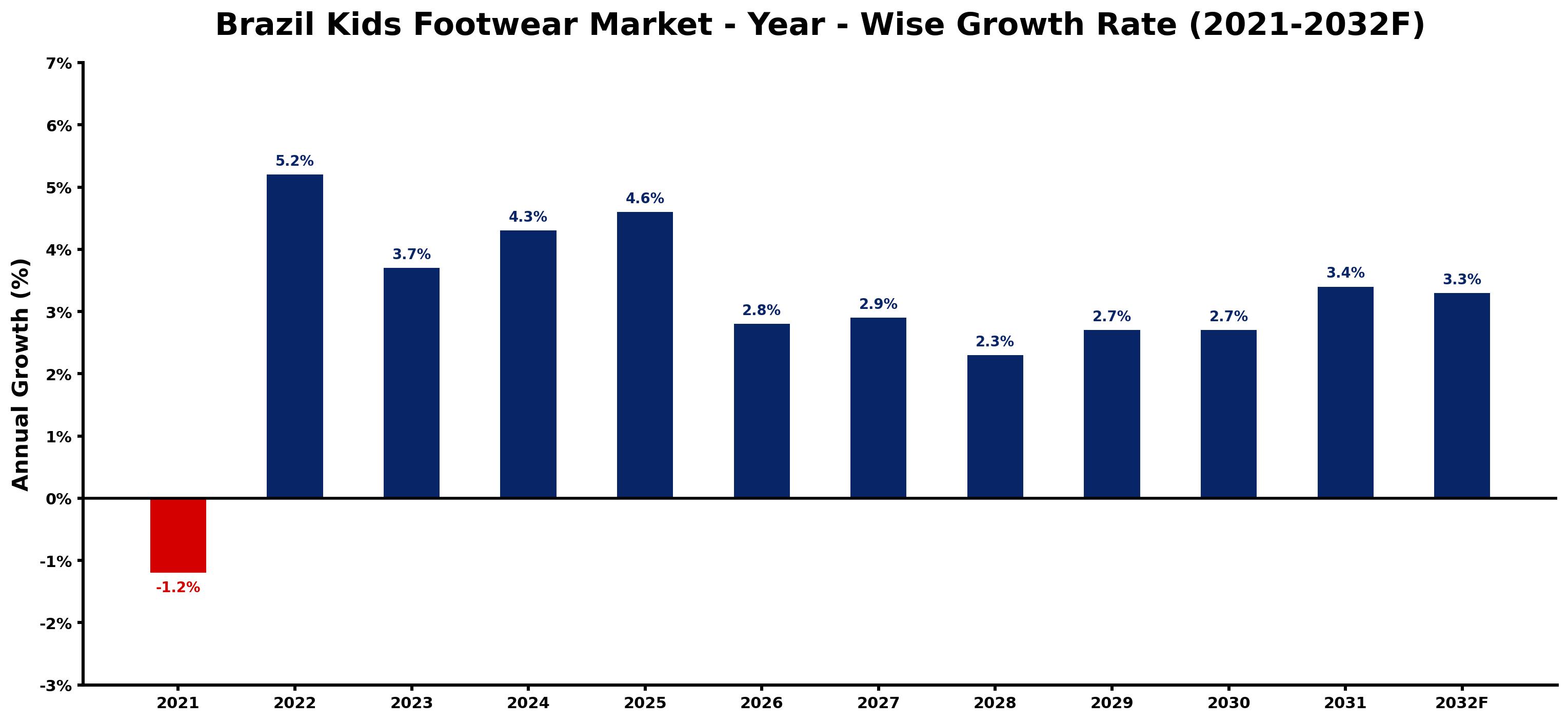
The table below presents the year wise growth rates along with the key drivers influencing the market
| Year | Growth Rate | Major Drivers |
| 2021 | -1.2% | Increased competition from international brands intensified price wars, squeezing profit margins and hindering local sales growth. |
| 2022 | 5.2% | Brand collaborations with popular children's characters enhance market visibility and appeal. |
| 2023 | 3.7% | Shifts towards sustainable materials resonate with eco-conscious parents seeking footwear options. |
| 2024 | 4.3% | E-commerce platforms facilitate wider access to diverse kids' footwear collections. |
| 2025 | 4.6% | Urbanization leads to increased purchasing power among young families in metropolitan areas. |
| 2026 | 2.8% | Diverse fashion trends among children inspire brands to innovate with unique designs. |
| 2027 | 2.9% | Technological advancements enable customized footwear solutions tailored for children's needs. |
| 2028 | 2.3% | Efforts toward gender-neutral designs reflect evolving societal norms in children's fashion. |
| 2029 | 2.7% | Social media influencers highlight trendy footwear, significantly shaping consumer preferences. |
| 2030 | 2.7% | Health awareness campaigns emphasize the importance of proper footwear for child development. |
| 2031 | 3.4% | The rise of online subscription models transforms how parents purchase kids' shoes. |
| 2032 | 3.3% | Expansion of local manufacturing boosts economic growth and supports regional footwear brands. |
Note - Market size estimations and growth projections presented in this report are based on 6Wresearch's advanced forecasting approach, validated with industry datasets as of June 2026.
Brazil Kids Footwear Market Synopsis
The Brazil Kids Footwear Market is projected to reach 2.8% and witness significant growth during the forecast period (2026-2032). This growth is primarily driven by a combination of increasing disposable incomes, evolving consumer lifestyles, and the introduction of innovative and fashionable products tailored specifically for children. As Brazil continues to evolve, the kids' footwear segment is experiencing heightened demand, fueled by the nation's booming young population and the preferences of middle-class families seeking stylish yet comfortable options for their children.
Brazil Kids Footwear Market Growth Drivers
The Brazil Kids Footwear Market is experiencing robust growth, influenced by several key drivers:
- Rising Disposable Incomes: The increase in household incomes in Brazil has allowed families to allocate more budget toward purchasing quality footwear for children, facilitating growth in the market.
- Innovative Product Offerings: Manufacturers are responding to consumer demands by introducing a diverse range of designs that incorporate both style and functionality, appealing to modern parents.
- Digital Retail Expansion: The growing prevalence of e-commerce and digitalized retail environments is enabling brands to reach a wider audience, enhancing sales opportunities and customer engagement.
- Demographic Trends: Brazil's youthful population presents a significant market for children's apparel and footwear, fostering ongoing growth in this sector.
- Shift towards Fashionable Options: Parents increasingly prioritize style in their children's footwear, leading to heightened demand for trendy designs and brands that resonate with their values.
Brazil Kids Footwear Market Trends and Opportunities
The Brazil Kids Footwear Market is characterized by several emerging trends that present both challenges and opportunities:
- Emphasis on Sustainability: As environmental awareness grows, consumers are seeking sustainable footwear options, prompting manufacturers to develop eco-friendly products.
- Technological Integration: Advances in technology are being incorporated into product designs, such as moisture-wicking materials and ergonomic fittings, enhancing comfort and performance.
- Brand Loyalty: With a competitive market landscape, manufacturers are focusing on building brand loyalty through marketing campaigns and community engagement, particularly among younger consumers.
- Personalization Trends: Parents are increasingly interested in personalized footwear options, leading to a new niche market for customizable designs tailored to individual preferences.
- Health and Wellness Considerations: Growing awareness of children's foot health has led to an increase in demand for supportive footwear that blends style with orthopedic benefits.
Brazil Kids Footwear Market Challenges and Restraints
Despite its growth, the Brazil Kids Footwear Market faces several challenges that need addressing:
- Economic Volatility: Fluctuations in the Brazilian economy can impact consumer spending patterns, affecting demand for non-essential items like fashionable footwear.
- Competition from Unorganized Sector: The presence of unorganized local players in the market, offering lower-priced alternatives, poses a significant challenge to established brands focused on quality.
- Supply Chain Disruptions: Global supply chain issues can lead to delayed product launches and increased costs, impacting the market's ability to meet consumer demand promptly.
- Changing Consumer Preferences: The swift evolution of parent and child preferences may require manufacturers to adapt quickly to stay relevant.
- Health Regulations: Compliance with health and safety regulations can present additional operational challenges, particularly for new and upcoming brands.
Brazil Kids Footwear Market Government Investment and Initiatives
The Brazilian government has been actively promoting various initiatives aimed at bolstering domestic manufacturing and consumer spending, which indirectly supports the growth of the kids footwear sector. Key government policies include:
- Support for Local Manufacturing: The government has implemented incentives to promote local production, which aids manufacturers in reducing costs while boosting the economy.
- Investment in Retail Infrastructure: Continued investment in retail spaces, including malls and shopping centers, contributes to a better shopping experience and increased foot traffic for footwear brands.
- Consumer Awareness Campaigns: Government-led initiatives aimed at educating consumers about health and safety standards for children's products help promote better-quality purchasing decisions.
- Promotion of Sustainable Practices: Policies that encourage sustainable manufacturing practices are gaining traction, aligning with global trends that favor environmentally friendly products.
- Support for Small and Medium Enterprises: The government is providing support to small and medium-sized footwear manufacturers, facilitating their growth and contribution to the broader economy.
Brazil Kids Footwear Market Latest Developments (May 2025 - June 2026)
Recent developments in the Brazil Kids Footwear Market from May 2025 to June 2026 indicate a dynamic industry landscape:
- Increased Product Launches: The period has seen a surge in new product launches that focus on style, comfort, and innovative design features aimed at capturing the interest of both parents and children.
- Collaborations and Partnerships: Brands are increasingly collaborating with designers and influencers, expanding their reach and enhancing brand visibility among target demographics.
- Digitalization Efforts: Retailers are investing in digital platforms to enhance online shopping experiences, allowing for seamless transactions and personalized customer journeys.
- Focus on Health and Safety: In light of ongoing concerns about health, brands are prioritizing the development of footwear that meets rigorous safety standards, ensuring both parental and consumer confidence.
- Market Recovery Trends: Following challenges posed by the COVID-19 pandemic, the market has shown signs of recovery, particularly in the latter part of this timeframe, as consumer confidence gradually returns.
Brazil Kids Footwear Market - Key Attractiveness of the Report
- 10 Years of Market Numbers
- Historical Data Starting from 2022 to 2025
- Base Year: 2025
- Forecast Data until 2032
- Key Performance Indicators Impacting the Market
- Major Upcoming Developments and Projects
Key Highlights of the Report:
- Brazil Kids Footwear Market Outlook
- Market Size of Brazil Kids Footwear Market, 2025
- Forecast of Brazil Kids Footwear Market, 2032F
- Historical Data and Forecast of Brazil Kids Footwear Revenues & Volume for the Period 2022-2032F
- Brazil Kids Footwear Market Trend Evolution
- Brazil Kids Footwear Market Drivers and Challenges
- Brazil Kids Footwear Price Trends
- Brazil Kids Footwear Porter's Five Forces
- Brazil Kids Footwear Industry Life Cycle
- Historical Data and Forecast of Brazil Kids Footwear Market Revenues & Volume By Product Type for the Period 2022-2032F
- Historical Data and Forecast of Brazil Kids Footwear Market Revenues & Volume By Casual for the Period 2022-2032F
- Historical Data and Forecast of Brazil Kids Footwear Market Revenues & Volume By Sports for the Period 2022-2032F
- Historical Data and Forecast of Brazil Kids Footwear Market Revenues & Volume By Formal for the Period 2022-2032F
- Historical Data and Forecast of Brazil Kids Footwear Market Revenues & Volume By Others for the Period 2022-2032F
- Historical Data and Forecast of Brazil Kids Footwear Market Revenues & Volume By End-users for the Period 2022-2032F
- Historical Data and Forecast of Brazil Kids Footwear Market Revenues & Volume By Boys for the Period 2022-2032F
- Historical Data and Forecast of Brazil Kids Footwear Market Revenues & Volume By Girls for the Period 2022-2032F
- Historical Data and Forecast of Brazil Kids Footwear Market Revenues & Volume By Unisex for the Period 2022-2032F
- Brazil Kids Footwear Import Export Trade Statistics
- Market Opportunity Assessment By Product Type
- Market Opportunity Assessment By End-users
- Brazil Kids Footwear Top Companies Market Share
- Brazil Kids Footwear Competitive Benchmarking By Technical and Operational Parameters
- Brazil Kids Footwear Company Profiles
- Brazil Kids Footwear Key Strategic Recommendations






































