Brazil Leather wearing apparel Market Summary
The brazil leather wearing apparel market was estimated at USD 307 Million in 2025 and is projected to reach USD 368 Million by 2032, growing at a CAGR of 3.2% from 2026 to 2032.
Brazil Leather wearing apparel Market Year-wise Growth Rate and Key Drivers
This graph highlights how the Brazil Leather wearing apparel Market has steadily grown over the past five years, supported by major growth factors.
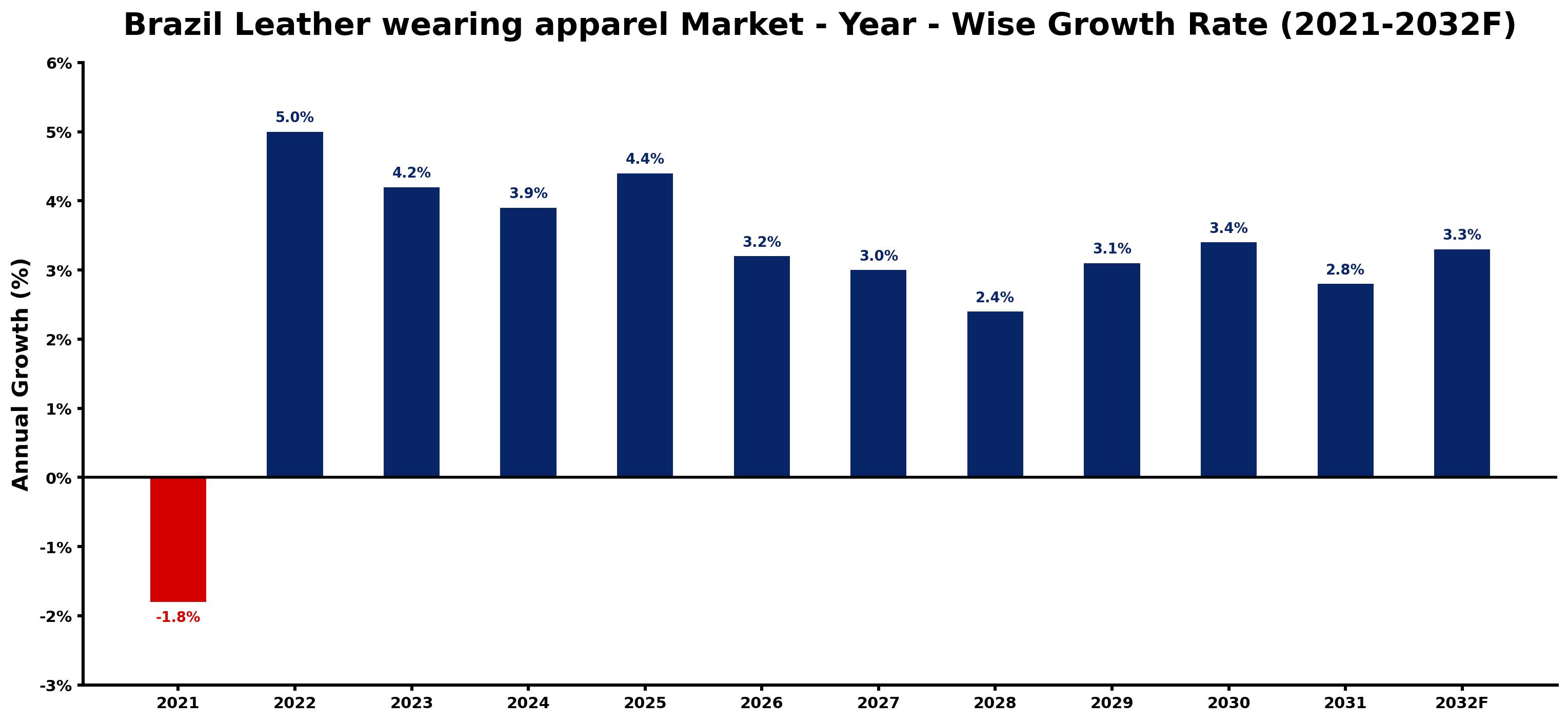
The table below presents the year wise growth rates along with the key drivers influencing the market
| Year | Growth Rate | Major Drivers |
| 2021 | -1.8% | Supply chain disruptions stemming from the pandemic limited availability of essential leather materials, hindering production. |
| 2022 | 5.0% | Increased interest in sustainable materials sparked innovation in leather production techniques. |
| 2023 | 4.2% | Brand collaborations with local artisans highlighted Brazil's cultural heritage and craftsmanship. |
| 2024 | 3.9% | Emerging e-commerce platforms expanded access to quality leather apparel across regions. |
| 2025 | 4.4% | Shifting fashion trends towards casual wear bolstered demand for versatile leather pieces. |
| 2026 | 3.2% | Investment in eco-friendly tanning processes attracted environmentally conscious consumers seeking leather. |
| 2027 | 3.0% | Influencer marketing campaigns promoted leather apparel as a staple for various lifestyles. |
| 2028 | 2.4% | Expanding urban centers influenced preferences for stylish yet functional leather garments. |
| 2029 | 3.1% | Rising disposable incomes enabled more consumers to invest in luxury leather items. |
| 2030 | 3.4% | Technological improvements in manufacturing increased efficiency and reduced production costs. |
| 2031 | 2.8% | Consumer awareness campaigns highlighted quality and durability, enhancing leather's market appeal. |
| 2032 | 3.3% | International fashion events showcased Brazilian leather, drawing global attention and interest. |
Note - Market size estimations and growth projections presented in this report are based on 6Wresearch's advanced forecasting approach, validated with industry datasets as of June 2026.
Brazil Leather wearing apparel Market Synopsis
The Brazil Leather wearing apparel Market is projected to reach 3.2% and witness significant growth during the forecast period (2026-2032). This market reflects Brazil's rich cultural heritage intertwined with modern fashion trends, characterized by a wide array of leather products that cater to diverse consumer preferences. As sustainability becomes increasingly pivotal, both production methodologies and consumer purchasing behaviors are evolving, emphasizing eco-friendly practices and ethical considerations.
Brazil Leather wearing apparel Market Growth Drivers
The dynamics of the Brazil Leather wearing apparel Market are driven by several interrelated factors:
- The rising middle-class population in Brazil is expanding the consumer base for leather apparel, contributing to increasing demand and sales.
- The integration of sustainable practices within the leather industry is resonating well with environmentally conscious consumers, further supporting market expansion.
- Fashion trends that favor leather products, such as jackets and accessories, enhance the desirability and appeal of leather apparel across various demographics.
- Brazil's unique blend of traditional craftsmanship and contemporary design elevates the quality of leather apparel, fostering consumer loyalty and continued interest.
- Increased accessibility to leather products through online retail platforms is driving sales and making Brazilian leather apparel more widely available to consumers.
Brazil Leather wearing apparel Market Challenges and Restraints
Despite its growth potential, the Brazil Leather wearing apparel Market faces certain challenges:
- Issues related to sustainability and ethical sourcing of raw materials present significant challenges, as consumers demand transparency in production processes.
- Rising awareness regarding the environmental impact of leather production compels manufacturers to adapt their practices, which may involve higher costs.
- Fluctuations in leather prices can disrupt supply chains, affecting profitability and market stability.
- The ever-evolving trends in fashion create uncertainty, necessitating adaptability from manufacturers to meet consumer expectations.
- Government regulations surrounding environmental protection and animal welfare can impose additional compliance costs on producers, impacting overall market operations.
Brazil Leather wearing apparel Market Trends and Opportunities
The Brazil Leather wearing apparel Market is witnessing several trends that present opportunities for growth:
- The drive towards eco-friendly materials is fostering innovation in product development, leading to the introduction of sustainable leather options.
- Collaborations between designers and artisans are enhancing product differentiation, offering unique items tailored to niche markets.
- The growth of the e-commerce sector is enabling brands to reach a broader audience, facilitating the expansion of international markets beyond Brazil.
- Increased focus on lifestyle branding is creating an emotional connection with consumers, encouraging brand loyalty and repeat purchases.
- The adoption of technology in manufacturing processes, such as automation, is expected to improve efficiency and reduce costs in the leather apparel production.
Brazil Leather wearing apparel Market Government Investment and Initiatives
Government policy plays a pivotal role in shaping the Brazil Leather wearing apparel Market. Recent initiatives focus on promoting sustainable practices and addressing environmental issues:
- Regulatory frameworks have been established to ensure ethical sourcing of raw materials, requiring manufacturers to comply with specific environmental standards.
- Public investments in training and development programs for local artisans are designed to enhance craftsmanship and support traditional methods.
- Government incentives for companies adopting eco-friendly technologies are encouraging investment in sustainable production processes.
- Collaboration with international organizations aims to align Brazilian leather production with global sustainability standards, enhancing the market's competitiveness.
- Support for research and innovation in sustainable materials is fostering a culture of innovation within the leather industry, paving the way for future growth.
Brazil Leather wearing apparel Market Latest Developments (May 2025 - June 2026)
In the latest developments from May 2025 to June 2026, the Brazil Leather wearing apparel Market has seen a notable shift towards sustainability. Many manufacturers are investing in eco-friendly production methods, reflecting a broader commitment to addressing environmental concerns. Additionally, the rise of online shopping has significantly influenced sales channels, with more consumers opting for e-commerce platforms to purchase leather products. During this period, collaborations between designers and environmental organizations have emerged, enhancing product offerings that prioritize sustainability without compromising style. Furthermore, there have been efforts to improve transparency in supply chains, as consumers increasingly demand information on sourcing and production practices.
Brazil Leather wearing apparel Market - Key Attractiveness of the Report
- 10 Years of Market Numbers
- Historical Data Starting from 2022 to 2025
- Base Year: 2025
- Forecast Data until 2032
- Key Performance Indicators Impacting the Market
- Major Upcoming Developments and Projects
Key Highlights of the Report:
- Brazil Leather wearing apparel Market Outlook
- Market Size of Brazil Leather wearing apparel Market, 2025
- Forecast of Brazil Leather wearing apparel Market, 2032
- Historical Data and Forecast of Brazil Leather wearing apparel Revenues & Volume for the Period 2022-2032F
- Brazil Leather wearing apparel Market Trend Evolution
- Brazil Leather wearing apparel Market Drivers and Challenges
- Brazil Leather wearing apparel Price Trends
- Brazil Leather wearing apparel Porter's Five Forces
- Brazil Leather wearing apparel Industry Life Cycle
- Historical Data and Forecast of Brazil Leather wearing apparel Market Revenues & Volume By Type for the Period 2022-2032F
- Historical Data and Forecast of Brazil Leather wearing apparel Market Revenues & Volume By Women's Wear for the Period 2022-2032F
- Historical Data and Forecast of Brazil Leather wearing apparel Market Revenues & Volume By Men's Wear for the Period 2022-2032F
- Historical Data and Forecast of Brazil Leather wearing apparel Market Revenues & Volume By Kid's Wear for the Period 2022-2032F
- Historical Data and Forecast of Brazil Leather wearing apparel Market Revenues & Volume By Distribution Channel for the Period 2022-2032F
- Historical Data and Forecast of Brazil Leather wearing apparel Market Revenues & Volume By Online for the Period 2022-2032F
- Historical Data and Forecast of Brazil Leather wearing apparel Market Revenues & Volume By Offline for the Period 2022-2032F
- Brazil Leather wearing apparel Import Export Trade Statistics
- Market Opportunity Assessment By Type
- Market Opportunity Assessment By Distribution Channel
- Brazil Leather wearing apparel Top Companies Market Share
- Brazil Leather wearing apparel Competitive Benchmarking By Technical and Operational Parameters
- Brazil Leather wearing apparel Company Profiles
- Brazil Leather wearing apparel Key Strategic Recommendations






































