Brazil Organic Shampoo Market Top 5 Importing Countries and Market Competition (HHI) Analysis
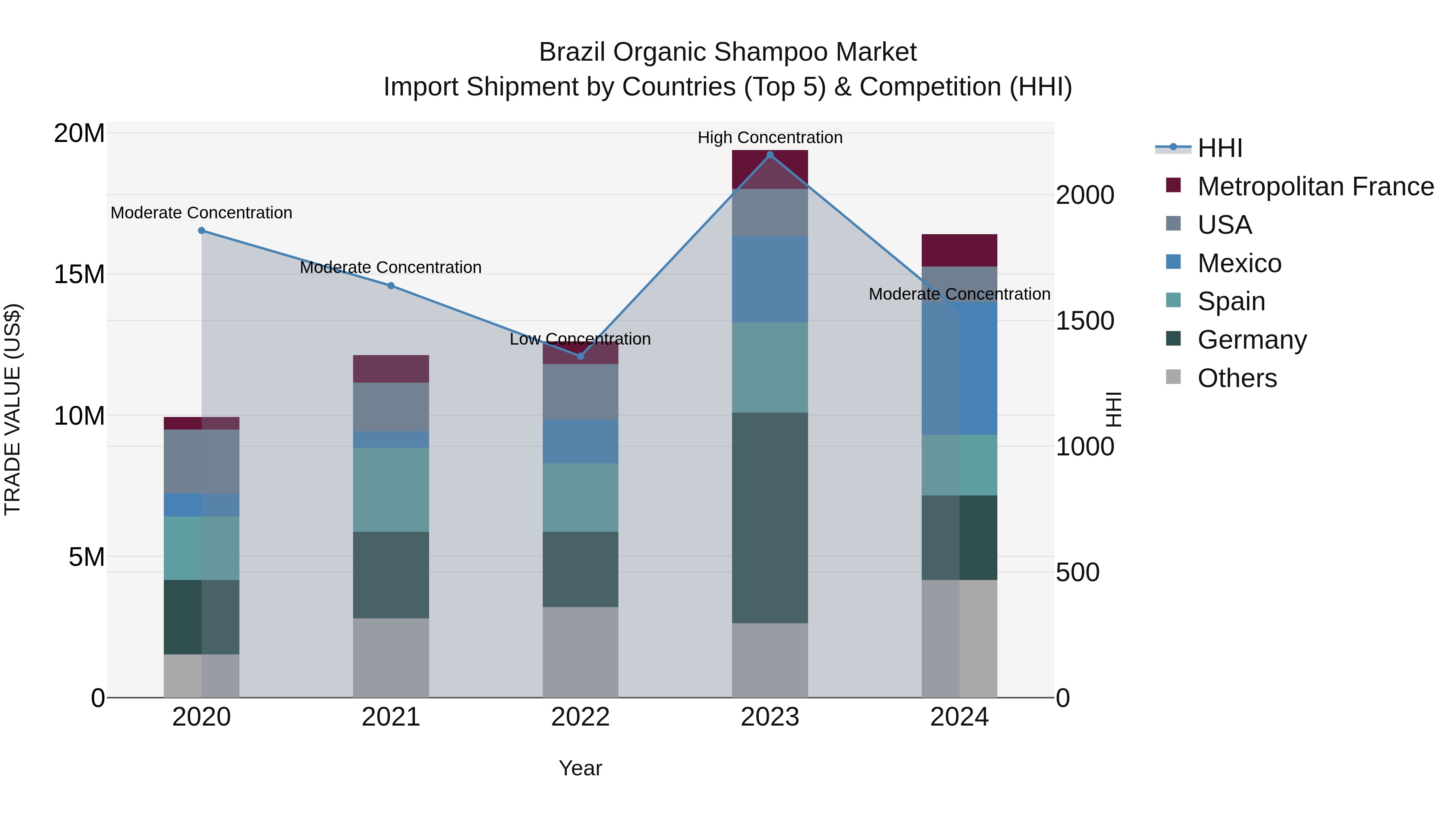
Brazil`s organic shampoo import market saw a shift in concentration levels from high to moderate in 2024, signaling a more diversified supplier base. Top exporting countries include Mexico, Germany, Spain, USA, and Metropolitan France. The compound annual growth rate (CAGR) from 2020 to 2024 was a robust 13.37%, although there was a slight decline in growth rate from 2023 to 2024 at -15.34%. This dynamic market presents opportunities for exporters to capitalize on Brazil`s growing demand for organic hair care products.
Brazil Organic Shampoo Market Overview
The Brazil organic shampoo market is experiencing steady growth driven by increasing consumer awareness of the benefits of organic and natural products. Factors such as rising disposable income, concerns about harmful chemicals in traditional shampoos, and a growing emphasis on sustainability have contributed to the market`s expansion. Key players are focusing on product innovations, such as sulfate-free formulas, plant-based ingredients, and biodegradable packaging, to meet the evolving preferences of consumers. Distribution channels like e-commerce platforms and specialty stores are gaining popularity for organic shampoo sales, offering a convenient shopping experience for customers. With a strong demand for environmentally friendly and safe personal care products, the Brazil organic shampoo market is projected to continue its upward trajectory in the coming years.
Brazil Organic Shampoo Market Trends and Opportunities
In the Brazil Organic Shampoo Market, there is a growing demand for natural and sustainable hair care products, driven by increased consumer awareness of the benefits of organic ingredients and their impact on personal health and the environment. Key trends include the use of plant-based ingredients, such as aloe vera and coconut oil, to cater to the rising preference for clean beauty products. Additionally, the market is witnessing a surge in product innovations, such as sulfate-free formulas and biodegradable packaging, to align with eco-conscious consumer preferences. Opportunities lie in expanding product offerings to target specific hair care needs, leveraging online platforms for enhanced visibility and accessibility, and engaging in partnerships with retailers or salons to reach a wider customer base. Overall, the Brazil Organic Shampoo Market presents promising prospects for brands that prioritize sustainability and natural ingredients in their product offerings.
Brazil Organic Shampoo Market Challenges
In the Brazil Organic Shampoo Market, challenges exist primarily due to the competitive landscape and consumer perception. One of the main obstacles is the presence of well-established conventional shampoo brands that have a strong market share and brand recognition, making it difficult for organic shampoo brands to stand out. Additionally, there is a general lack of awareness and education among consumers about the benefits of using organic shampoos, leading to lower demand compared to traditional products. Moreover, pricing can be a challenge as organic shampoos tend to be priced higher, which may deter cost-conscious consumers. Overcoming these challenges requires effective marketing strategies to differentiate organic shampoos, targeted education campaigns to raise awareness, and potentially exploring avenues to improve affordability without compromising on quality.
Brazil Organic Shampoo Market Drivers
The Brazil Organic Shampoo Market is primarily driven by increasing consumer awareness and preference for natural and organic products due to growing concerns about the harmful effects of chemicals on hair and scalp health. The demand for organic shampoos is also fueled by rising disposable incomes, changing lifestyles, and a shift towards sustainable and eco-friendly products. Additionally, the presence of key market players offering a wide range of organic shampoo products, along with aggressive marketing strategies and product innovations, further contribute to the market growth. The trend of clean beauty and a strong focus on personal care and grooming among the Brazilian population are key factors driving the organic shampoo market in the country.
Brazil Organic Shampoo Market Government Policies
In Brazil, the government has implemented various policies to regulate the organic shampoo market. The Ministry of Agriculture, Livestock, and Supply (MAPA) oversees the certification process for organic products, including shampoos, ensuring they meet the required standards set by the National Organic Program (NOP). Additionally, the Brazilian Health Regulatory Agency (ANVISA) monitors and enforces regulations related to product labeling, ingredients, and safety standards for organic shampoos. The government also promotes sustainable practices in the production and distribution of organic shampoos through initiatives to support organic farming and environmental conservation. Overall, these policies aim to foster consumer confidence in organic shampoos, promote sustainable agriculture, and protect the environment.
Brazil Organic Shampoo Market Future Outlook
The Brazil Organic Shampoo Market is expected to experience steady growth in the coming years due to increasing consumer awareness about the harmful effects of chemicals in traditional shampoos. The growing trend towards sustainable and eco-friendly products is driving the demand for organic shampoos in the Brazilian market. With a focus on natural ingredients and environmentally friendly packaging, organic shampoo brands are likely to gain popularity among environmentally conscious consumers. Additionally, the government`s initiatives to promote organic agriculture and the rising disposable income of the population are also expected to contribute to the market growth. Overall, the future outlook for the Brazil Organic Shampoo Market appears promising, with opportunities for new entrants and existing players to capitalize on the growing demand for organic personal care products.
Key Highlights of the Report:
- Brazil Organic Shampoo Market Outlook
- Market Size of Brazil Organic Shampoo Market, 2024
- Forecast of Brazil Organic Shampoo Market, 2031
- Historical Data and Forecast of Brazil Organic Shampoo Revenues & Volume for the Period 2021- 2031
- Brazil Organic Shampoo Market Trend Evolution
- Brazil Organic Shampoo Market Drivers and Challenges
- Brazil Organic Shampoo Price Trends
- Brazil Organic Shampoo Porter's Five Forces
- Brazil Organic Shampoo Industry Life Cycle
- Historical Data and Forecast of Brazil Organic Shampoo Market Revenues & Volume By Distribution Channel for the Period 2021- 2031
- Historical Data and Forecast of Brazil Organic Shampoo Market Revenues & Volume By Supermarkets/hypermarkets for the Period 2021- 2031
- Historical Data and Forecast of Brazil Organic Shampoo Market Revenues & Volume By Specialty stores for the Period 2021- 2031
- Historical Data and Forecast of Brazil Organic Shampoo Market Revenues & Volume By Online for the Period 2021- 2031
- Brazil Organic Shampoo Import Export Trade Statistics
- Market Opportunity Assessment By Distribution Channel
- Brazil Organic Shampoo Top Companies Market Share
- Brazil Organic Shampoo Competitive Benchmarking By Technical and Operational Parameters
- Brazil Organic Shampoo Company Profiles
- Brazil Organic Shampoo Key Strategic Recommendations






































