Brazil Plastic Building Materials Market Summary
The brazil plastic building materials market was estimated at USD 478 Million in 2025 and is projected to reach USD 572 Million by 2032, growing at a CAGR of 3.2% from 2026 to 2032.
Brazil Plastic Building Materials Market Year-wise Growth Rate and Key Drivers
This graph highlights how the Brazil Plastic Building Materials Market has steadily grown over the past five years, supported by major growth factors.
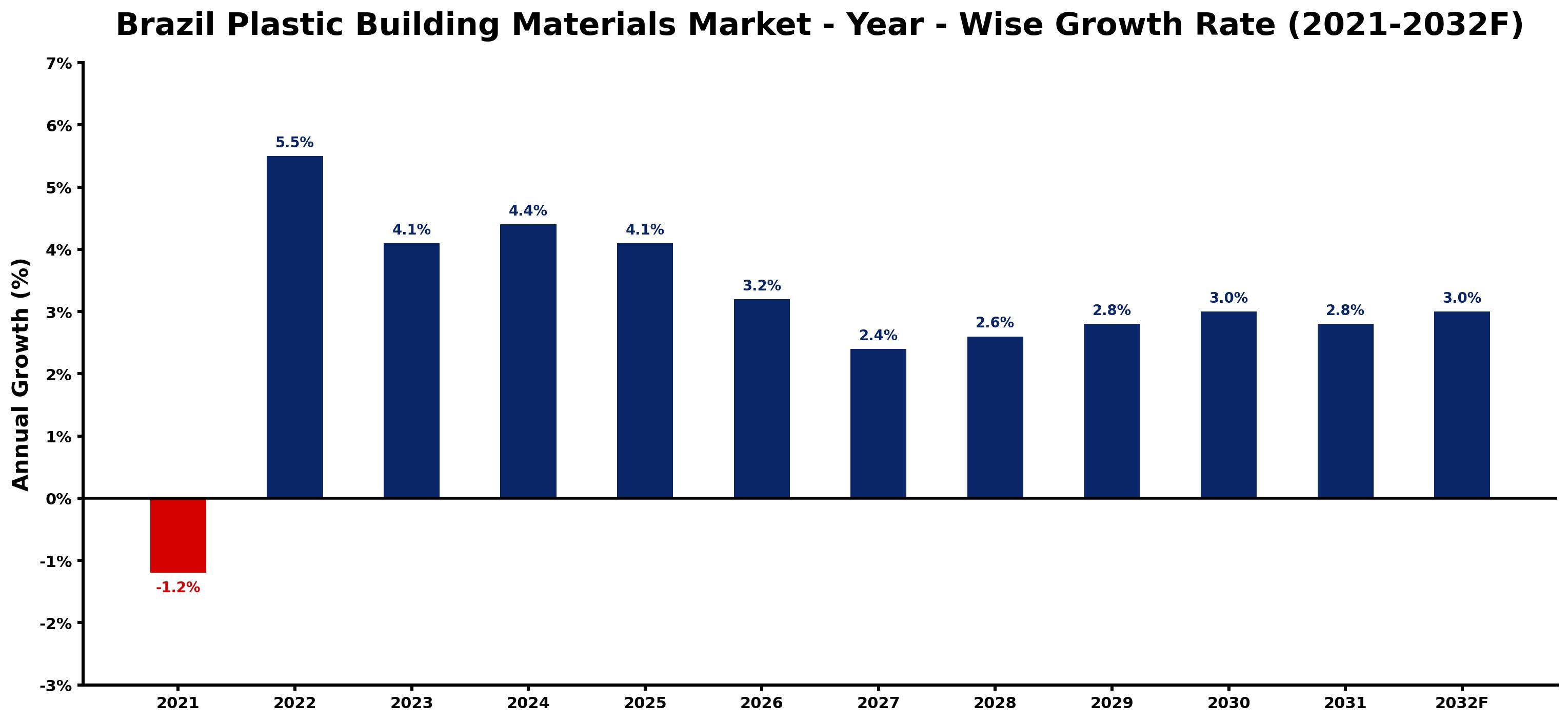
The table below presents the year wise growth rates along with the key drivers influencing the market
| Year | Growth Rate | Major Drivers |
| 2021 | -1.2% | Supply chain disruptions caused by the pandemic hindered construction projects, leading to decreased demand for plastic building materials. |
| 2022 | 5.5% | Sustainable building materials gained traction, aligning with global environmental expectations. |
| 2023 | 4.1% | Emerging technologies in manufacturing improved the quality of plastic building materials significantly. |
| 2024 | 4.4% | Urbanization trends accelerated demand for innovative construction solutions in Brazilian cities. |
| 2025 | 4.1% | Real estate developments focused on affordability, highlighting the importance of plastic materials. |
| 2026 | 3.2% | Supply chain enhancements reduced costs, fostering greater market penetration for plastic products. |
| 2027 | 2.4% | Emerging architects increasingly emphasized eco-friendly materials in their design specifications. |
| 2028 | 2.6% | Local production facilities expanded, minimizing import reliance and boosting regional employment. |
| 2029 | 2.8% | Increased awareness of climate change prompted buyers to prefer sustainable construction options. |
| 2030 | 3.0% | Technological collaborations led to innovative applications of plastic materials in construction. |
| 2031 | 2.8% | Resilient infrastructure projects drove significant investments in durable construction alternatives. |
| 2032 | 3.0% | Market consolidation among manufacturers streamlined offerings, enhancing customer choice and competition. |
Note - Market size estimations and growth projections presented in this report are based on 6Wresearch's advanced forecasting approach, validated with industry datasets as of June 2026.
Brazil Plastic Building Materials Market Synopsis
The Brazil Plastic Building Materials Market is projected to reach 3.2% and witness significant growth during the forecast period (2026-2032). This market plays a crucial role in the construction sector, where products such as PVC pipes, plastic panels, and insulation materials are vital for enhancing construction efficiency and sustainability. As urbanization and infrastructure development continue to rise in Brazil, the plastic building materials market is responding with innovative solutions that prioritize both quality and environmental responsibility.
Brazil Plastic Building Materials Market Growth Drivers
The growth of the Brazil Plastic Building Materials Market is primarily fueled by several key drivers:
- A significant shift towards sustainable building practices is prompting the construction industry to adopt plastic materials that are both cost-effective and durable. These materials are increasingly recognized for their longevity and performance in various applications.
- The increasing demand for energy-efficient building solutions is a notable trend. Plastic materials, such as insulation panels and thermoplastics, are essential in achieving energy conservation in buildings, aligning with global efforts towards reducing carbon footprints.
- Technological advancements in manufacturing processes contribute to the enhanced properties of plastic building materials. Innovations have led to products with better strength, flexibility, and environmental performance, appealing to modern construction demands.
- A growing focus on improving urban infrastructure, particularly in metropolitan areas, is driving the need for robust and versatile building materials. The ability of plastic materials to withstand harsh weather conditions makes them an ideal choice for various construction applications.
- The rising awareness and adoption of green construction practices are encouraging builders and developers to seek alternatives to traditional materials. The preference for recyclable and eco-friendly options is shaping purchasing decisions in the construction sector.
Brazil Plastic Building Materials Market Challenges and Restraints
While the Brazil Plastic Building Materials Market presents numerous opportunities, it also faces significant challenges:
- Environmental concerns remain a pressing issue. The production and disposal of plastic materials can lead to landfill accumulation and pollution, prompting scrutiny from environmental groups and policymakers.
- The market is subject to stringent government regulations aimed at promoting sustainable practices. Compliance with these regulations can pose challenges for manufacturers, particularly smaller companies lacking resources.
- Consumer preferences are shifting towards eco-friendly materials, which may limit the market potential for traditional plastic building products. Manufacturers need to adapt their offerings to match these evolving demands.
- Global economic fluctuations and supply chain disruptions can impact the availability and cost of raw materials necessary for the production of plastic building materials, affecting pricing strategies.
- The perception of plastics as inferior compared to conventional materials like wood or metal may hinder wider acceptance within specific segments of the construction industry, necessitating greater awareness-raising efforts.
Brazil Plastic Building Materials Market Government Investment and Initiatives
Government policies and initiatives significantly influence the Brazil Plastic Building Materials Market. In recent years, the Brazilian government has prioritized sustainability in construction through various regulations and initiatives:
- The government encourages the adoption of recycled plastic materials in construction projects. Initiatives aimed at increasing the use of recycled content help to minimize waste and promote circular economy practices.
- Public investments in infrastructure development often include guidelines that support using sustainable materials, thus indirectly bolstering the market for plastic building materials.
- Safety regulations are being enforced to ensure that plastic building materials meet specific durability and performance standards, promoting consumer confidence and market growth.
- The government is promoting energy-efficient building regulations, creating a favorable environment for plastic insulation materials and other energy-saving products to thrive in the market.
- Collaboration between public and private sectors is encouraged to advance research and development in sustainable building materials, strengthening the market's potential for future innovations.
Brazil Plastic Building Materials Market Latest Developments (May 2025 - June 2026)
Between May 2025 and June 2026, the Brazil Plastic Building Materials Market has seen notable developments that reflect its adaptive nature in a rapidly changing construction landscape:
- Increased investment in research and development has led to the introduction of advanced plastic composites that combine sustainability with enhanced performance, catering to evolving consumer preferences.
- The market has witnessed a rise in partnerships between manufacturers and construction firms aimed at promoting the benefits of plastic materials in building projects, resulting in more widespread adoption in various sectors.
- Regulatory updates have been introduced to incentivize the transition towards sustainable construction practices, including the introduction of grants and tax incentives for projects using eco-friendly building materials.
- Consumer awareness campaigns focusing on the benefits of plastic building materials have gained momentum, positively influencing public perception and encouraging their use in residential and commercial projects.
- A heightened focus on urban renewal projects has increased the demand for plastic building materials, emphasizing their advantages in terms of flexibility, efficiency, and sustainability in redevelopment initiatives.
Brazil Plastic Building Materials Market - Key Attractiveness of the Report
- 10 Years of Market Numbers
- Historical Data Starting from 2022 to 2025
- Base Year: 2025
- Forecast Data until 2032
- Key Performance Indicators Impacting the Market
- Major Upcoming Developments and Projects
Key Highlights of the Report:
- Brazil Plastic Building Materials Market Outlook
- Market Size of Brazil Plastic Building Materials Market, 2025
- Forecast of Brazil Plastic Building Materials Market, 2032
- Historical Data and Forecast of Brazil Plastic Building Materials Revenues & Volume for the Period 2022-2032F
- Brazil Plastic Building Materials Market Trend Evolution
- Brazil Plastic Building Materials Market Drivers and Challenges
- Brazil Plastic Building Materials Price Trends
- Brazil Plastic Building Materials Porter's Five Forces
- Brazil Plastic Building Materials Industry Life Cycle
- Historical Data and Forecast of Brazil Plastic Building Materials Market Revenues & Volume By Product Type for the Period 2022-2032F
- Historical Data and Forecast of Brazil Plastic Building Materials Market Revenues & Volume By Thermoplastic for the Period 2022-2032F
- Historical Data and Forecast of Brazil Plastic Building Materials Market Revenues & Volume By Thermosetting Plastic for the Period 2022-2032F
- Historical Data and Forecast of Brazil Plastic Building Materials Market Revenues & Volume By Applications for the Period 2022-2032F
- Historical Data and Forecast of Brazil Plastic Building Materials Market Revenues & Volume By Flooring for the Period 2022-2032F
- Historical Data and Forecast of Brazil Plastic Building Materials Market Revenues & Volume By Window and Door Panel for the Period 2022-2032F
- Historical Data and Forecast of Brazil Plastic Building Materials Market Revenues & Volume By Siding for the Period 2022-2032F
- Historical Data and Forecast of Brazil Plastic Building Materials Market Revenues & Volume By Piping for the Period 2022-2032F
- Historical Data and Forecast of Brazil Plastic Building Materials Market Revenues & Volume By Roofing for the Period 2022-2032F
- Historical Data and Forecast of Brazil Plastic Building Materials Market Revenues & Volume By Insulation for the Period 2022-2032F
- Historical Data and Forecast of Brazil Plastic Building Materials Market Revenues & Volume By Others for the Period 2022-2032F
- Brazil Plastic Building Materials Import Export Trade Statistics
- Market Opportunity Assessment By Product Type
- Market Opportunity Assessment By Applications
- Brazil Plastic Building Materials Top Companies Market Share
- Brazil Plastic Building Materials Competitive Benchmarking By Technical and Operational Parameters
- Brazil Plastic Building Materials Company Profiles
- Brazil Plastic Building Materials Key Strategic Recommendations






































