Mexico Plastic Building Materials Market Summary
The mexico plastic building materials market was estimated at USD 98 Million in 2025 and is projected to reach USD 113 Million by 2032, growing at a CAGR of 1.2% from 2026 to 2032.
Mexico Plastic Building Materials Market Year-wise Growth Rate and Key Drivers
This graph highlights how the Mexico Plastic Building Materials Market has steadily grown over the past five years, supported by major growth factors.
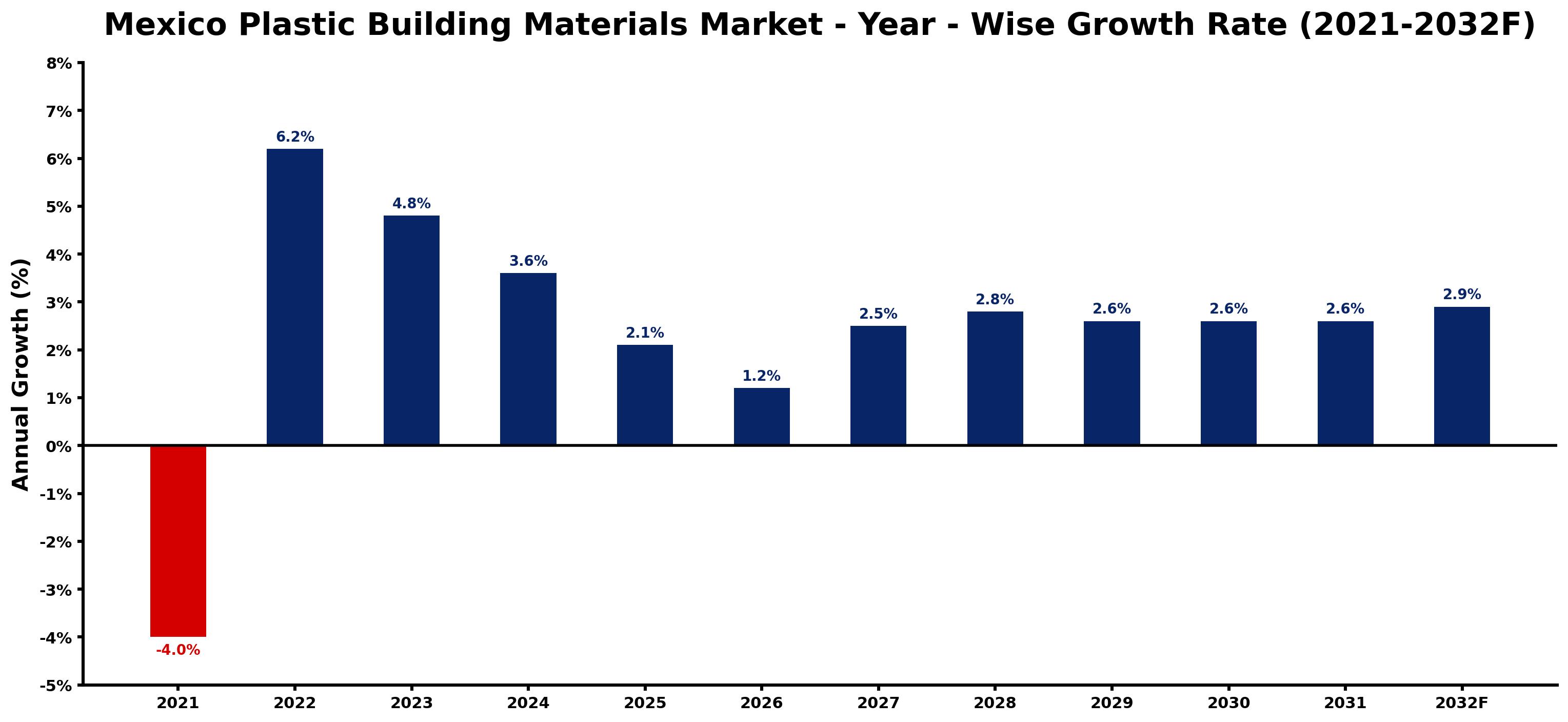
The table below presents the year wise growth rates along with the key drivers influencing the market
| Year | Growth Rate | Major Drivers |
| 2021 | -4.0% | Supply chain disruptions significantly hampered manufacturing capabilities, leading to decreased availability of plastic building materials. |
| 2022 | 6.2% | Local manufacturers began offering innovative, sustainable plastic solutions for construction. |
| 2023 | 4.8% | Increasing urbanization in Mexico City fueled residential and commercial construction projects. |
| 2024 | 3.6% | Sustainable practices gained traction, driving interest in recycled plastic building materials. |
| 2025 | 2.1% | Corporate investments in green technologies reshaped the competitive landscape for materials suppliers. |
| 2026 | 1.2% | Affordable housing initiatives prompted demand for cost-effective, lightweight building options. |
| 2027 | 2.5% | Emerging technologies enabled more efficient production processes, lowering costs for manufacturers. |
| 2028 | 2.8% | Climate resilience strategies led to a surge in demand for weather-resistant building materials. |
| 2029 | 2.6% | Partnerships between construction firms and material providers enhanced product offerings in the market. |
| 2030 | 2.6% | Consumer preferences shifted towards eco-friendly products, impacting design choices in construction. |
| 2031 | 2.6% | Increased exports of Mexican plastic building materials opened new international markets. |
| 2032 | 2.9% | Industry consolidation created stronger players, enhancing innovation and market stability. |
Note - Market size estimations and growth projections presented in this report are based on 6Wresearch's advanced forecasting approach, validated with industry datasets as of June 2026.
Mexico Plastic Building Materials Market Synopsis
The Mexico Plastic Building Materials Market is projected to reach 1.2% and witness significant growth during the forecast period (2026-2032). This market encompasses a variety of plastic materials utilized in construction, aimed at enhancing durability, sustainability, and cost-efficiency within the sector. The increasing demand for innovative solutions that mitigate energy consumption and environmental impact underscores the crucial role of plastic building materials in the evolving construction landscape in Mexico.
Mexico Plastic Building Materials Market Growth Drivers
Several key factors are propelling growth in the Mexico Plastic Building Materials Market.
- The construction industry's shift toward cost-effective solutions is driving the adoption of plastic materials such as PVC pipes and panels, which are favored for their competitive pricing and versatility.
- Ongoing advancements in manufacturing technologies have led to the development of high-quality plastic building materials that exhibit enhanced durability and longevity, thereby attracting more contractors and builders.
- The growing emphasis on sustainability within the construction sector is increasing the demand for eco-friendly plastic materials, including those made from recycled content.
- Energy efficiency mandates and certifications are influencing construction practices, resulting in a preference for plastics that contribute to improved thermal insulation and lower energy costs.
- The rising volume of construction projects in urban areas is boosting the need for innovative materials that meet the rapidly evolving requirements of urbanization and infrastructure development.
Mexico Plastic Building Materials Market Challenges and Restraints
Despite the positive growth trajectory, the Mexico Plastic Building Materials Market faces several challenges that could hinder its development.
- Increased scrutiny regarding the environmental impact of conventional plastic materials poses a significant challenge, as stakeholders demand more sustainable options.
- The complexity of complying with stringent environmental regulations exacerbates market dynamics, pressuring companies to innovate continuously in order to remain relevant.
- Consumer awareness surrounding plastic waste and environmental conservation is rising, which could lead to increased resistance against plastic materials in construction projects.
- The volatility of raw material prices can adversely affect the cost structure of plastic building materials, impacting profitability and investment in this sector.
- Limited recycling infrastructure in Mexico could hinder the development of a circular economy around plastic building materials, affecting supply chains and sustainability efforts.
Mexico Plastic Building Materials Market Government Investment and Initiatives
The Mexican government has enacted various policies aimed at fostering sustainable construction practices, which have a direct impact on the plastic building materials market. These initiatives include increased public spending on infrastructure projects that prioritize environmentally responsible materials. Specific incentives are being offered for the use of recycled plastics, contributing to a growing market for eco-friendly building materials.
Additionally, government regulations aimed at minimizing the environmental impact of construction processes are shaping market dynamics. These policies are focused on reducing plastic waste and promoting the use of materials that adhere to sustainability criteria. The ongoing commitment to sustainable urban development is further driving investment in research and development for innovative plastic building materials.
Mexico Plastic Building Materials Market Latest Developments (May 2025 - June 2026)
Recent developments in the Mexico Plastic Building Materials Market indicate a pronounced shift towards sustainability and innovation. The industry is witnessing an increased focus on the research and development of biodegradable and recyclable plastic materials. This trend aligns with both consumer demand for environmentally friendly options and regulatory pressures to reduce plastic waste.
Moreover, collaborations between industry stakeholders are enhancing the supply chain for recycled materials, facilitating greater integration of sustainability practices within the construction sector. A number of initiatives are being launched to educate builders and consumers about the benefits of using sustainable building materials, promoting a broader acceptance of plastics that meet eco-friendly standards.
Mexico Plastic Building Materials Market - Key Attractiveness of the Report
- 10 Years of Market Numbers
- Historical Data Starting from 2022 to 2025
- Base Year: 2025
- Forecast Data until 2032
- Key Performance Indicators Impacting the Market
- Major Upcoming Developments and Projects
Key Highlights of the Report:
- Mexico Plastic Building Materials Market Outlook
- Market Size of Mexico Plastic Building Materials Market, 2025
- Forecast of Mexico Plastic Building Materials Market, 2032
- Historical Data and Forecast of Mexico Plastic Building Materials Revenues & Volume for the Period 2022-2032F
- Mexico Plastic Building Materials Market Trend Evolution
- Mexico Plastic Building Materials Market Drivers and Challenges
- Mexico Plastic Building Materials Price Trends
- Mexico Plastic Building Materials Porter's Five Forces
- Mexico Plastic Building Materials Industry Life Cycle
- Historical Data and Forecast of Mexico Plastic Building Materials Market Revenues & Volume By Product Type for the Period 2022-2032F
- Historical Data and Forecast of Mexico Plastic Building Materials Market Revenues & Volume By Thermoplastic for the Period 2022-2032F
- Historical Data and Forecast of Mexico Plastic Building Materials Market Revenues & Volume By Thermosetting Plastic for the Period 2022-2032F
- Historical Data and Forecast of Mexico Plastic Building Materials Market Revenues & Volume By Applications for the Period 2022-2032F
- Historical Data and Forecast of Mexico Plastic Building Materials Market Revenues & Volume By Flooring for the Period 2022-2032F
- Historical Data and Forecast of Mexico Plastic Building Materials Market Revenues & Volume By Window and Door Panel for the Period 2022-2032F
- Historical Data and Forecast of Mexico Plastic Building Materials Market Revenues & Volume By Siding for the Period 2022-2032F
- Historical Data and Forecast of Mexico Plastic Building Materials Market Revenues & Volume By Piping for the Period 2022-2032F
- Historical Data and Forecast of Mexico Plastic Building Materials Market Revenues & Volume By Roofing for the Period 2022-2032F
- Historical Data and Forecast of Mexico Plastic Building Materials Market Revenues & Volume By Insulation for the Period 2022-2032F
- Historical Data and Forecast of Mexico Plastic Building Materials Market Revenues & Volume By Others for the Period 2022-2032F
- Mexico Plastic Building Materials Import Export Trade Statistics
- Market Opportunity Assessment By Product Type
- Market Opportunity Assessment By Applications
- Mexico Plastic Building Materials Top Companies Market Share
- Mexico Plastic Building Materials Competitive Benchmarking By Technical and Operational Parameters
- Mexico Plastic Building Materials Company Profiles
- Mexico Plastic Building Materials Key Strategic Recommendations






































