Brazil Rattan Products Market Top 5 Importing Countries and Market Competition (HHI) Analysis
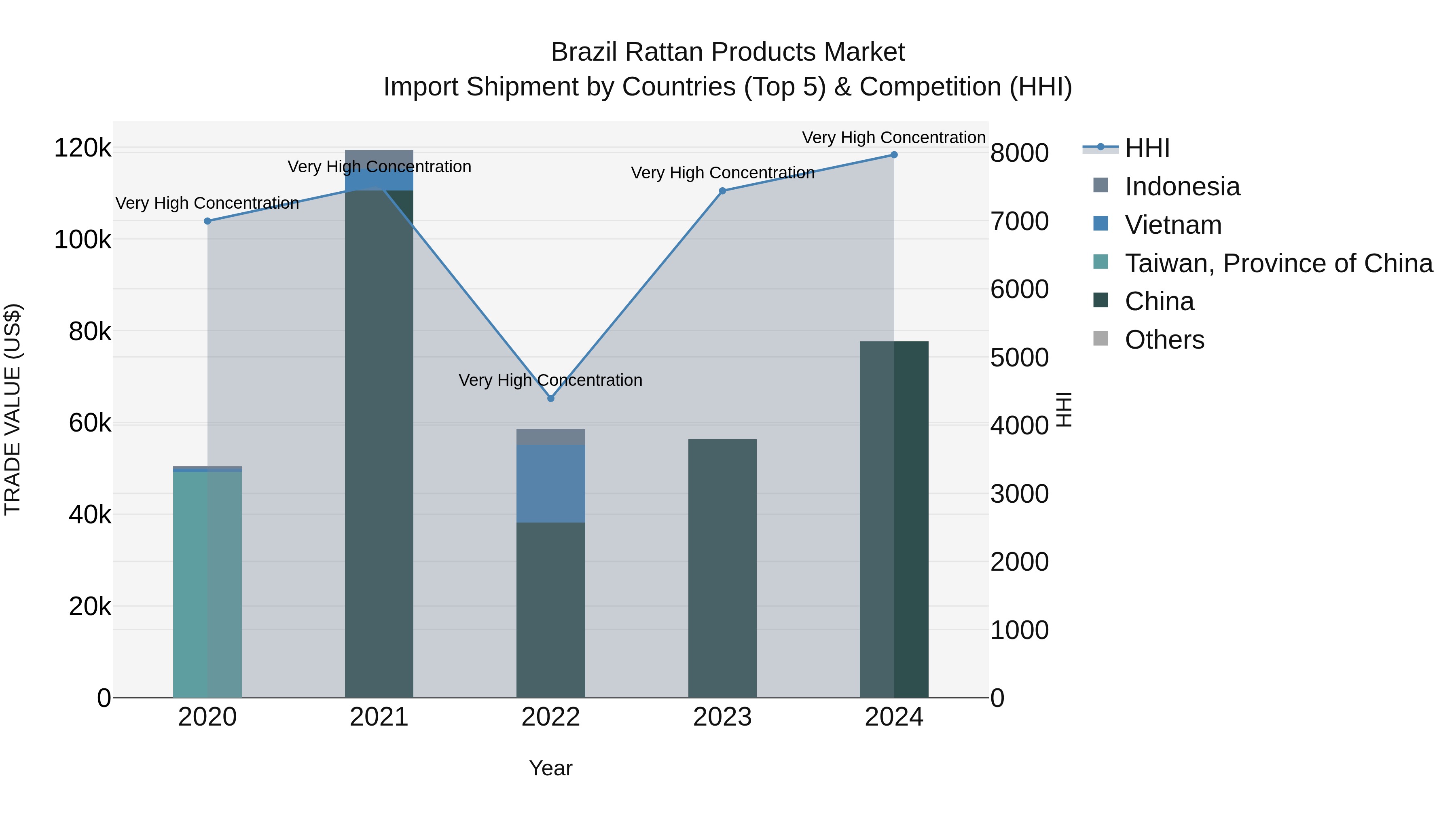
Brazil continues to be a key market for rattan products import shipments, with top exporting countries in 2024 being China, Indonesia, Taiwan, Province of China, and Vietnam. The industry shows a high level of market concentration, as indicated by the high HHI in 2024. The compound annual growth rate (CAGR) from 2020 to 2024 stands at a robust 11.41%, with a notable growth rate of 37.99% in 2023-24. This signifies a strong demand for rattan products in Brazil, driven by quality offerings from these key exporting countries.
Brazil Rattan Products Market Overview
The rattan products market in Brazil embodies the country`s rich tradition of craftsmanship and natural resource utilization. From furniture to home decor, rattan products showcase a blend of tradition and contemporary design. Sustainability and the appeal of natural materials drive consumer preferences in this market.
Drivers of the market
The Brazil Rattan Products Market experiences growth due to the increasing demand for sustainable and eco-friendly furniture and home decor. Rattan, being a natural and renewable material, aligns with consumer preferences for environmentally conscious choices. The market is also influenced by the rising popularity of bohemian and tropical design trends.
Challenges of the market
The Brazil Rattan Products Market faces challenges associated with the sustainability and sourcing of rattan. Environmental concerns and the need for ethical and responsible production practices pose challenges for market players. Moreover, the market must address changing consumer preferences for alternative materials, requiring innovation in design and marketing strategies.
Government Policy of the market
Government policies may involve sustainable sourcing of rattan, environmental conservation, and fair trade practices. Regulations may be in place to ensure that rattan products meet quality and ethical standards.
Key Highlights of the Report:
- Brazil Rattan Products Market Outlook
- Market Size of Brazil Rattan Products Market, 2024
- Forecast of Brazil Rattan Products Market, 2031
- Historical Data and Forecast of Brazil Rattan Products Revenues & Volume for the Period 2021-2031
- Brazil Rattan Products Market Trend Evolution
- Brazil Rattan Products Market Drivers and Challenges
- Brazil Rattan Products Price Trends
- Brazil Rattan Products Porter's Five Forces
- Brazil Rattan Products Industry Life Cycle
- Historical Data and Forecast of Brazil Rattan Products Market Revenues & Volume By Type for the Period 2021-2031
- Historical Data and Forecast of Brazil Rattan Products Market Revenues & Volume By Chair for the Period 2021-2031
- Historical Data and Forecast of Brazil Rattan Products Market Revenues & Volume By Table for the Period 2021-2031
- Historical Data and Forecast of Brazil Rattan Products Market Revenues & Volume By Storage for the Period 2021-2031
- Historical Data and Forecast of Brazil Rattan Products Market Revenues & Volume By Bed for the Period 2021-2031
- Historical Data and Forecast of Brazil Rattan Products Market Revenues & Volume By Others for the Period 2021-2031
- Historical Data and Forecast of Brazil Rattan Products Market Revenues & Volume By Application for the Period 2021-2031
- Historical Data and Forecast of Brazil Rattan Products Market Revenues & Volume By Household for the Period 2021-2031
- Historical Data and Forecast of Brazil Rattan Products Market Revenues & Volume By Commerical for the Period 2021-2031
- Brazil Rattan Products Import Export Trade Statistics
- Market Opportunity Assessment By Type
- Market Opportunity Assessment By Application
- Brazil Rattan Products Top Companies Market Share
- Brazil Rattan Products Competitive Benchmarking By Technical and Operational Parameters
- Brazil Rattan Products Company Profiles
- Brazil Rattan Products Key Strategic Recommendations






































