Peru Rattan Products Market Growth Rate Analysis (2025 - 2031)
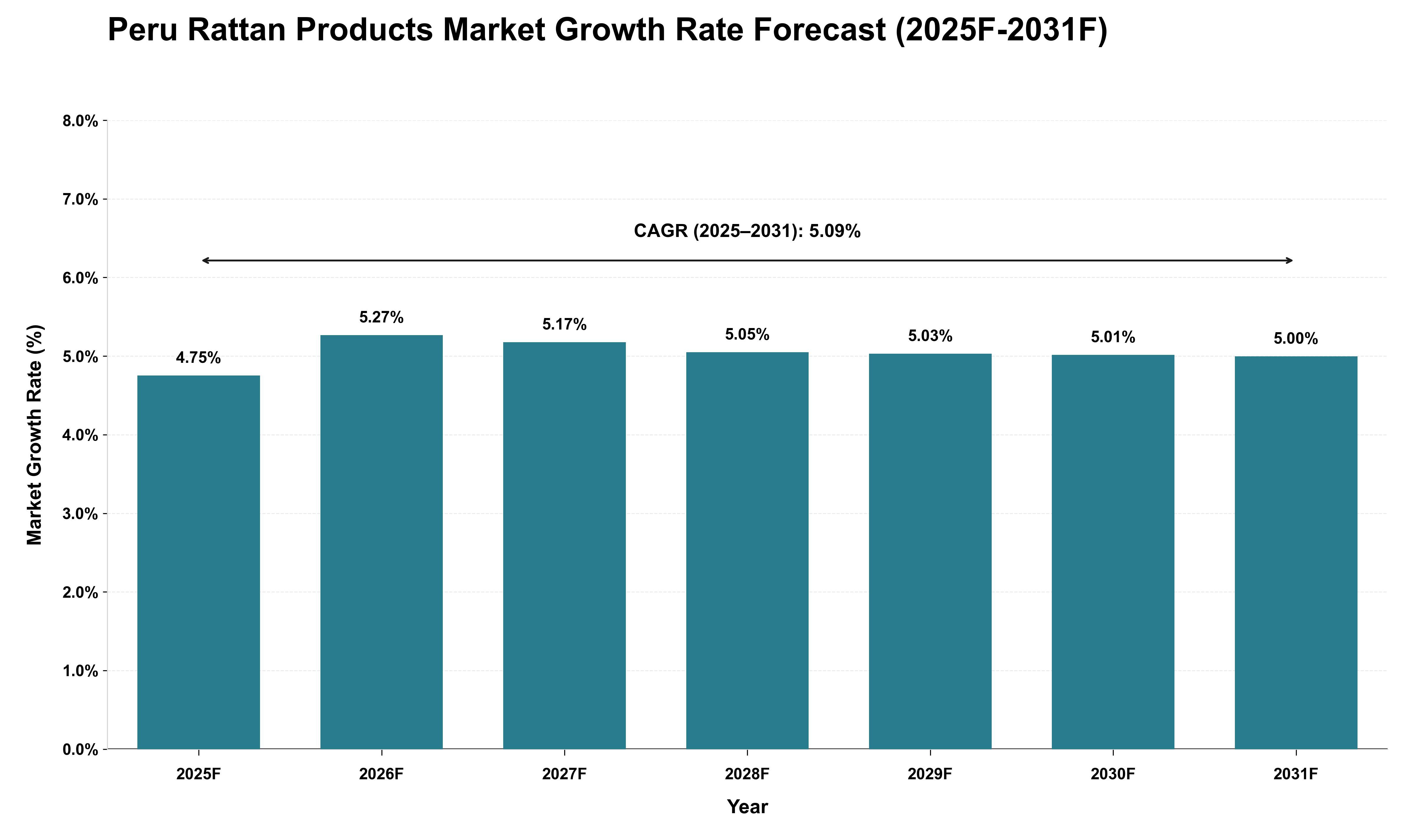
The Peru rattan products market will experience a robust growth trajectory driven by evolving consumer preferences and increasing demand for sustainable materials. The forecasted CAGR of 5.09% reflects a consistent annual growth pattern, with rates peaking at 5.27% in 2026 before gradually stabilizing around the 5% mark by 2031. This trend will be influenced by macroeconomic factors such as rising disposable incomes and urbanization, which will enhance the purchasing power of consumers seeking eco-friendly furnishings. Additionally, import dependencies on raw rattan materials may create fluctuations in supply chains, impacting pricing dynamics and production costs. As global markets increasingly prioritize sustainability, Peru's positioning as a supplier of rattan products will likely benefit from favorable trade policies and international demand shifts, reinforcing its competitive edge in the global marketplace throughout this forecast period.
Key Highlights of the Report:
- Peru Rattan Products Market Outlook
- Market Size of Peru Rattan Products Market, 2024
- Forecast of Peru Rattan Products Market, 2031
- Historical Data and Forecast of Peru Rattan Products Revenues & Volume for the Period 2021 - 2031
- Peru Rattan Products Market Trend Evolution
- Peru Rattan Products Market Drivers and Challenges
- Peru Rattan Products Price Trends
- Peru Rattan Products Porter's Five Forces
- Peru Rattan Products Industry Life Cycle
- Historical Data and Forecast of Peru Rattan Products Market Revenues & Volume By Type for the Period 2021 - 2031
- Historical Data and Forecast of Peru Rattan Products Market Revenues & Volume By Chair for the Period 2021 - 2031
- Historical Data and Forecast of Peru Rattan Products Market Revenues & Volume By Table for the Period 2021 - 2031
- Historical Data and Forecast of Peru Rattan Products Market Revenues & Volume By Storage for the Period 2021 - 2031
- Historical Data and Forecast of Peru Rattan Products Market Revenues & Volume By Bed for the Period 2021 - 2031
- Historical Data and Forecast of Peru Rattan Products Market Revenues & Volume By Others for the Period 2021 - 2031
- Historical Data and Forecast of Peru Rattan Products Market Revenues & Volume By Application for the Period 2021 - 2031
- Historical Data and Forecast of Peru Rattan Products Market Revenues & Volume By Household for the Period 2021 - 2031
- Historical Data and Forecast of Peru Rattan Products Market Revenues & Volume By Commerical for the Period 2021 - 2031
- Peru Rattan Products Import Export Trade Statistics
- Market Opportunity Assessment By Type
- Market Opportunity Assessment By Application
- Peru Rattan Products Top Companies Market Share
- Peru Rattan Products Competitive Benchmarking By Technical and Operational Parameters
- Peru Rattan Products Company Profiles
- Peru Rattan Products Key Strategic Recommendations






































