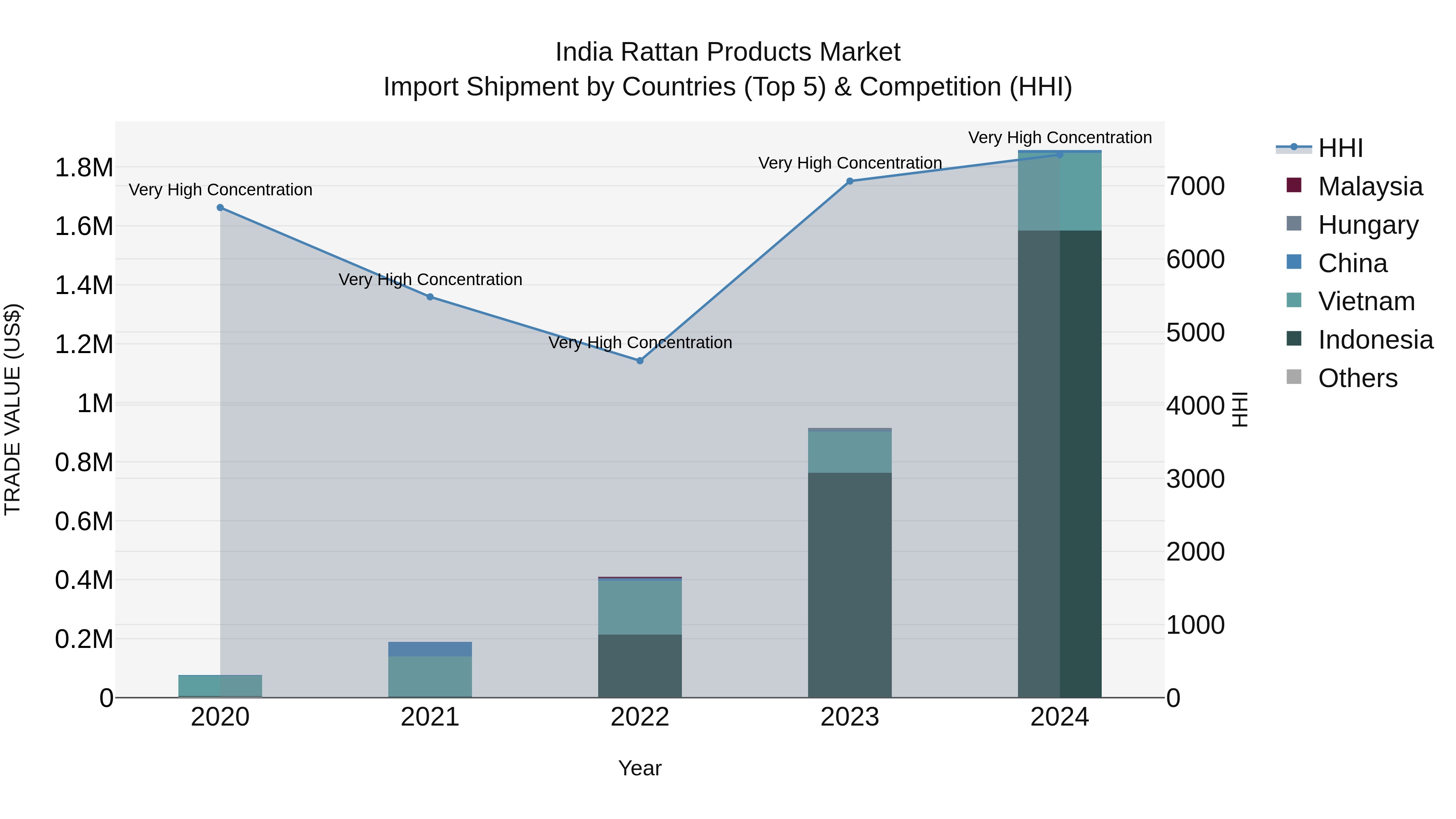
India Rattan Products Market Top 5 Importing Countries and Market Competition (HHI) Analysis
India`s import shipments of rattan products in 2024 saw significant contributions from top exporting countries such as Indonesia, Vietnam, China, Poland, and Bangladesh. The high Herfindahl-Hirschman Index (HHI) indicates a concentrated market in 2024. With a remarkable compound annual growth rate (CAGR) of 122.2% from 2020 to 2024, the industry is experiencing rapid expansion. The impressive growth rate of 102.95% from 2023 to 2024 highlights the increasing demand for rattan products in the Indian market.
India Rattan Products Market Synopsis
The India rattan products market is a niche segment of the furniture and home decor industry. Rattan products are made from natural rattan fibers and are known for their durability, flexibility, and aesthetic appeal. The market is driven by factors such as the growing demand for eco-friendly and sustainable furniture options, the popularity of rattan in bohemian and tropical interior design trends, and the preference for handcrafted and artisanal home decor products. The demand for outdoor furniture and decor items also contributes to the growth of the rattan products market in India. Manufacturers in this market focus on delivering unique and innovative rattan products that cater to the preferences of design-conscious consumers.
Market Drivers of the market
The India rattan products market is influenced by several factors. Firstly, the rising awareness of sustainable and eco-friendly materials has led to an increased demand for rattan products, as rattan is a renewable and natural resource. Rattan furniture and home d?cor items are popular for their rustic charm and environmentally friendly attributes. Secondly, the growth of the home and interior design industry in India has driven the market for rattan products, as consumers seek unique and aesthetically pleasing furniture and d?cor options. Moreover, the influence of global interior design trends, including the Bohemian and tropical themes, has further boosted the demand for rattan products in the market.
Challenges of the Market
The India rattan products market faces challenges that influence its growth and market reach. One significant challenge is the competition from alternative natural and synthetic materials used for furniture and home decor, such as wood, plastic, and metal. Manufacturers of rattan products need to focus on product differentiation, design aesthetics, and durability to attract consumers and maintain a competitive edge. Additionally, the availability of low-cost and lower-quality imported rattan products can pose challenges for domestic manufacturers, leading to price competition and quality concerns. Ensuring product quality, craftsmanship, and compliance with sustainability standards is crucial for maintaining a reputable brand image. Moreover, the market`s reliance on traditional retail channels and informal distribution networks can impact the accessibility and distribution reach of branded rattan products. Strengthening distribution networks and embracing e-commerce and online sales channels can help reach a broader consumer base. The market also faces challenges related to sustainable sourcing and environmental concerns, with increasing demands for eco-friendly and ethically-produced rattan products. Embracing sustainable harvesting practices and responsible sourcing can help brands align with consumer values and drive loyalty in the market.
Covid-19 Impact on the Market
The rattan products market faced challenges as export and import restrictions impacted the supply chain. However, the market witnessed increased interest in sustainable and eco-friendly products.
Key Players of the Market
The India rattan products market involves manufacturers and suppliers of furniture and home decor made from rattan material. Some key players include Cane Boutique, Amour Furniture, Wicker World, and Duroplast Furniture Systems Pvt. Ltd. These companies offer a variety of rattan furniture and decor items. Their focus on craftsmanship, innovative designs, and sustainable materials has positioned them as key players in the rattan products market in India.
Key Highlights of the Report:
- India Rattan Products Market Outlook
- Market Size of India Rattan Products Market, 2024
- Forecast of India Rattan Products Market, 2031
- Historical Data and Forecast of India Rattan Products Revenues & Volume for the Period 2021-2031
- India Rattan Products Market Trend Evolution
- India Rattan Products Market Drivers and Challenges
- India Rattan Products Price Trends
- India Rattan Products Porter's Five Forces
- India Rattan Products Industry Life Cycle
- Historical Data and Forecast of India Rattan Products Market Revenues & Volume By Type for the Period 2021-2031
- Historical Data and Forecast of India Rattan Products Market Revenues & Volume By Chair for the Period 2021-2031
- Historical Data and Forecast of India Rattan Products Market Revenues & Volume By Table for the Period 2021-2031
- Historical Data and Forecast of India Rattan Products Market Revenues & Volume By Storage for the Period 2021-2031
- Historical Data and Forecast of India Rattan Products Market Revenues & Volume By Bed for the Period 2021-2031
- Historical Data and Forecast of India Rattan Products Market Revenues & Volume By Others for the Period 2021-2031
- Historical Data and Forecast of India Rattan Products Market Revenues & Volume By Application for the Period 2021-2031
- Historical Data and Forecast of India Rattan Products Market Revenues & Volume By Household for the Period 2021-2031
- Historical Data and Forecast of India Rattan Products Market Revenues & Volume By Commerical for the Period 2021-2031
- India Rattan Products Import Export Trade Statistics
- Market Opportunity Assessment By Type
- Market Opportunity Assessment By Application
- India Rattan Products Top Companies Market Share
- India Rattan Products Competitive Benchmarking By Technical and Operational Parameters
- India Rattan Products Company Profiles
- India Rattan Products Key Strategic Recommendations






































