Thailand Rattan Products Market: Import Trend Analysis
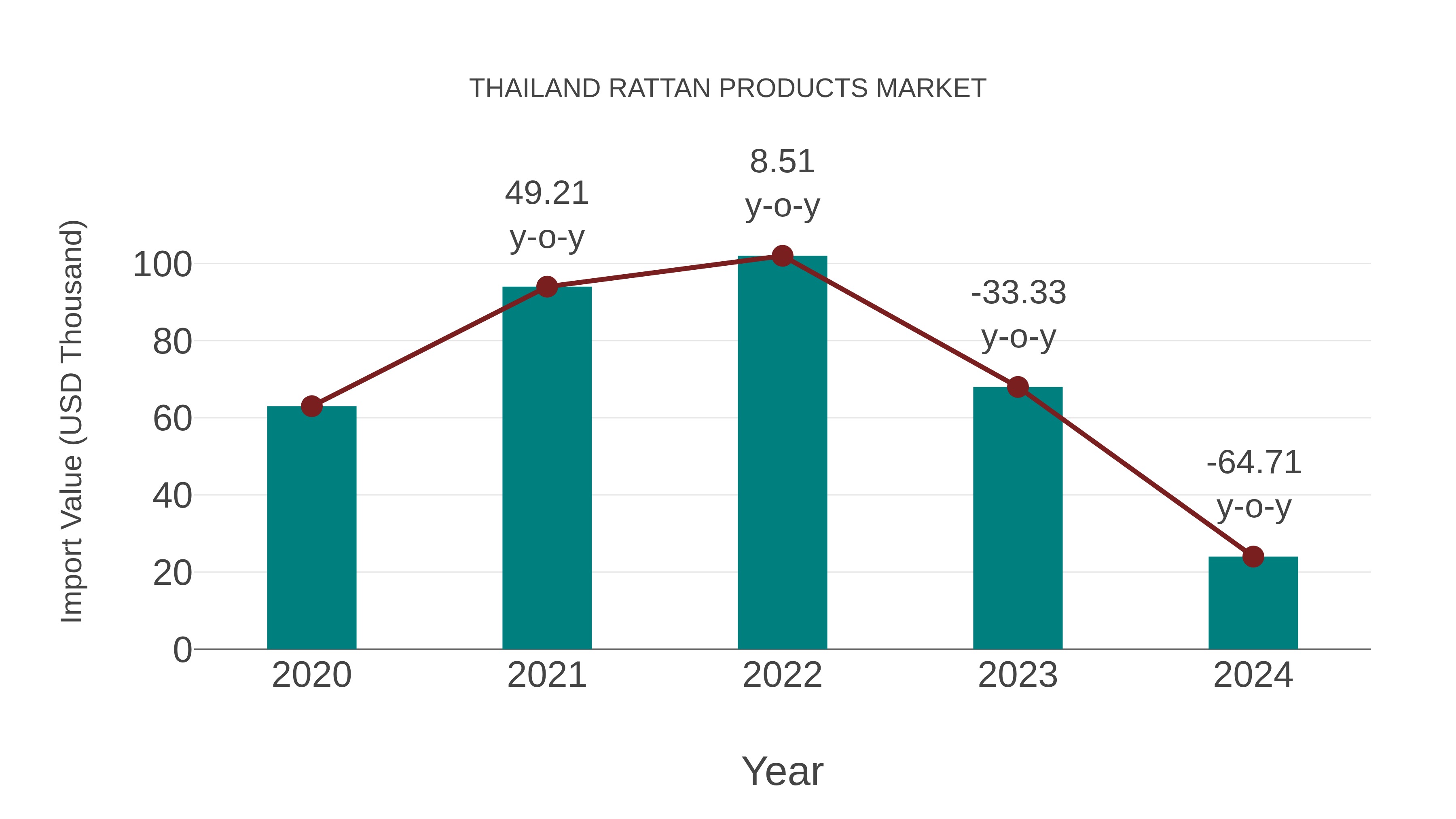
Thailand import trend for rattan products experienced a notable decline from 2023 to 2024, with a growth rate of -64.71%, and a compound annual growth rate (CAGR) of -21.44% from 2020 to 2024. This significant decrease may be attributed to shifting consumer preferences, changes in trade policies, or challenges in market recovery.
Thailand Rattan Products Market Synopsis
Rattan products are deeply rooted in Thai culture and are in demand both domestically and internationally. The Thailand Rattan Products market includes furniture, handicrafts, and home decor items made from rattan. The industry benefits from skilled craftsmanship and a rich tradition of rattan weaving. Export opportunities have expanded the market`s reach beyond Thailand`s borders.
Drivers of the Market
The Thailand Rattan Products market is driven by a combination of cultural heritage and eco-conscious consumer preferences. Rattan has been traditionally used in Thailand for crafting furniture, baskets, and decorative items. The global trend towards sustainable and natural materials has revived interest in rattan products, making them popular both domestically and internationally. Additionally, government initiatives to promote traditional crafts and the expansion of e-commerce platforms for handicraft sales have provided opportunities for market growth.
Challenges of the Market
The Thailand Rattan Products market faces several challenges in today`s competitive business environment. One of the major issues is the sustainability of rattan as a resource. Overharvesting and unsustainable practices threaten the supply chain, as rattan is a natural material. Additionally, there are concerns related to the working conditions of rattan harvesters and artisans who create these products, which can impact the market`s reputation. Moreover, the market faces competition from synthetic and alternative materials, which require strategies to differentiate rattan products and emphasize their eco-friendliness and uniqueness.
COVID-19 Impact on the Market
The COVID-19 pandemic had a mixed impact on the Thailand rattan products market. While there was a temporary disruption in the supply chain and export-oriented businesses faced challenges due to global restrictions, domestic demand for rattan furniture and home d?cor products increased as people spent more time at home. E-commerce channels also played a crucial role in boosting sales during the pandemic.
Key Players in the Market
In the Thailand Rattan Products market, key players include Thai Nakhon Ratchasima Public Co., Ltd. and Bangkok Rattanawadee Co., Ltd. These companies specialize in the manufacturing and distribution of rattan furniture and accessories, catering to both domestic and international markets.
Key Highlights of the Report:
- Thailand Rattan Products Market Outlook
- Market Size of Thailand Rattan Products Market, 2025
- Forecast of Thailand Rattan Products Market, 2032
- Historical Data and Forecast of Thailand Rattan Products Revenues & Volume for the Period 2022-2032F
- Thailand Rattan Products Market Trend Evolution
- Thailand Rattan Products Market Drivers and Challenges
- Thailand Rattan Products Price Trends
- Thailand Rattan Products Porter's Five Forces
- Thailand Rattan Products Industry Life Cycle
- Historical Data and Forecast of Thailand Rattan Products Market Revenues & Volume By Type for the Period 2022-2032F
- Historical Data and Forecast of Thailand Rattan Products Market Revenues & Volume By Chair for the Period 2022-2032F
- Historical Data and Forecast of Thailand Rattan Products Market Revenues & Volume By Table for the Period 2022-2032F
- Historical Data and Forecast of Thailand Rattan Products Market Revenues & Volume By Storage for the Period 2022-2032F
- Historical Data and Forecast of Thailand Rattan Products Market Revenues & Volume By Bed for the Period 2022-2032F
- Historical Data and Forecast of Thailand Rattan Products Market Revenues & Volume By Others for the Period 2022-2032F
- Historical Data and Forecast of Thailand Rattan Products Market Revenues & Volume By Application for the Period 2022-2032F
- Historical Data and Forecast of Thailand Rattan Products Market Revenues & Volume By Household for the Period 2022-2032F
- Historical Data and Forecast of Thailand Rattan Products Market Revenues & Volume By Commerical for the Period 2022-2032F
- Thailand Rattan Products Import Export Trade Statistics
- Market Opportunity Assessment By Type
- Market Opportunity Assessment By Application
- Thailand Rattan Products Top Companies Market Share
- Thailand Rattan Products Competitive Benchmarking By Technical and Operational Parameters
- Thailand Rattan Products Company Profiles
- Thailand Rattan Products Key Strategic Recommendations






































