Brazil Rice Flour Market Top 5 Importing Countries and Market Competition (HHI) Analysis
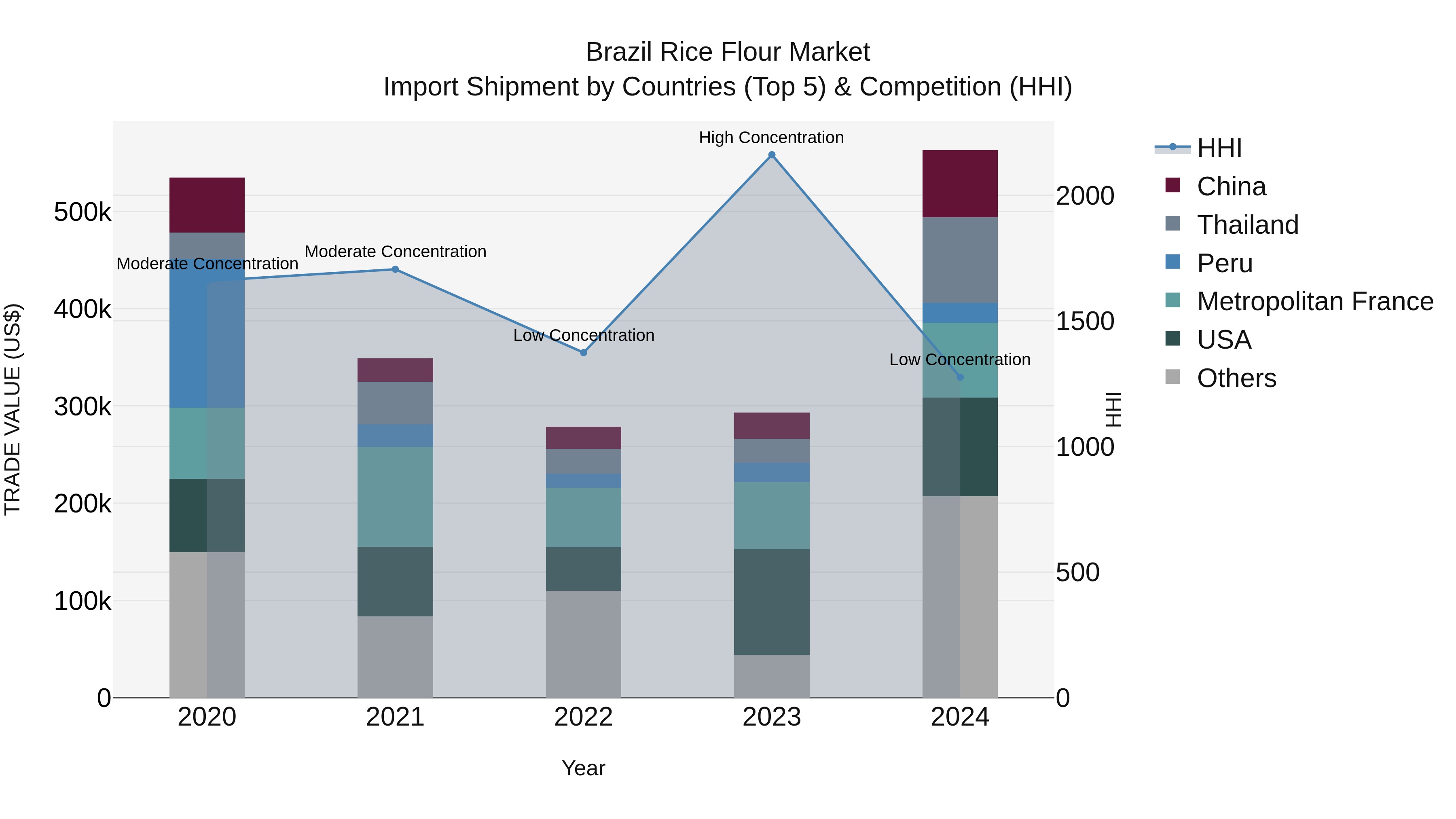
Brazil`s rice flour import market saw a significant shift in concentration levels from high to low in 2024, with the top exporting countries being the USA, Finland, Thailand, Metropolitan France, and China. The market demonstrated a steady growth with a CAGR of 1.29% from 2020 to 2024. The impressive growth rate of 92.08% from 2023 to 2024 indicates a surge in demand. This data suggests a dynamic and evolving market landscape, presenting opportunities for both domestic and international players in the rice flour industry.
Brazil Rice Flour Market Synopsis
The Brazil rice flour market is experiencing steady growth driven by factors such as the increasing adoption of gluten-free diets, rising health consciousness among consumers, and the versatile applications of rice flour in various food products. The market is witnessing a surge in demand due to the growing preference for rice flour as a healthier alternative to wheat flour. Additionally, the market is benefiting from the expanding food processing industry in Brazil, which is incorporating rice flour in a wide range of products, including bakery goods, snacks, and ready-to-eat meals. Key players in the Brazil rice flour market are focusing on product innovation, quality enhancement, and strategic partnerships to capitalize on the growing consumer demand and strengthen their market presence.
Brazil Rice Flour Market Trends
The Brazil Rice Flour Market is experiencing a growing demand due to the rising popularity of gluten-free products and the increasing awareness of the health benefits associated with rice flour consumption. With the expanding market for gluten-free and healthier alternatives in the food industry, there is a significant opportunity for manufacturers to innovate and introduce new rice flour-based products to cater to this consumer segment. Additionally, the versatility of rice flour in various culinary applications, such as baking, cooking, and thickening, further enhances its market potential. Collaborations with food service providers and retailers to offer a wider range of rice flour products, as well as investing in marketing strategies to educate consumers about the benefits of rice flour, are key strategies for companies to capitalize on the current trends in the Brazil Rice Flour Market.
Brazil Rice Flour Market Challenges
In the Brazil Rice Flour Market, some challenges include increasing competition from other gluten-free flour alternatives, such as cassava flour and almond flour, which are gaining popularity among health-conscious consumers. Additionally, fluctuations in rice prices due to weather conditions and environmental factors can impact the cost of rice flour production, potentially leading to pricing challenges for manufacturers. Furthermore, issues related to quality control and consistency in rice flour production processes can also pose obstacles for market players in maintaining a reliable supply chain. Adapting to changing consumer preferences, ensuring sustainable sourcing practices, and differentiating products in a crowded market are key challenges that companies need to address to stay competitive in the Brazil Rice Flour Market.
Brazil Rice Flour Market Investment Opportunities
The Brazil Rice Flour Market is primarily driven by the increasing consumer demand for gluten-free products due to rising health awareness and the growing prevalence of gluten-related disorders. Rice flour is a popular alternative to wheat flour in gluten-free baking and cooking, fueling its demand among health-conscious consumers. Additionally, the increasing adoption of rice flour in various food applications such as bakery products, snacks, and baby food due to its nutritional benefits and versatility is also driving market growth. The expanding food and beverage industry in Brazil, coupled with the rising trend of clean label and natural ingredients, further contribute to the growth of the rice flour market in the country. Overall, the market is poised for steady growth driven by changing consumer preferences and dietary requirements.
Brazil Rice Flour Market Government Policie
The Brazil Rice Flour Market is influenced by government policies aimed at supporting domestic production and ensuring food security. The Brazilian government provides subsidies and incentives to rice farmers to boost production levels and maintain price stability. Additionally, regulations are in place to control imports and promote local consumption of rice flour. Government programs also focus on promoting sustainable agricultural practices and increasing productivity in the rice sector. Overall, government policies in Brazil play a significant role in shaping the dynamics of the rice flour market by supporting local producers and ensuring a steady supply of rice flour to meet domestic demand.
Brazil Rice Flour Market Future Outlook
The Brazil Rice Flour Market is poised for steady growth in the coming years due to increasing consumer awareness about gluten-free and healthier food options. The market is expected to benefit from the rising demand for rice flour as a versatile ingredient in various food products, including baked goods, snacks, and gluten-free alternatives. Additionally, the growing popularity of ethnic cuisines that utilize rice flour as a key ingredient is further driving market growth. Manufacturers are likely to focus on product innovation, such as introducing fortified or organic rice flour variants, to cater to evolving consumer preferences. Overall, with a favorable consumer shift towards healthier and gluten-free options, coupled with ongoing product development efforts, the Brazil Rice Flour Market is expected to expand steadily in the foreseeable future.
Key Highlights of the Report:
- Brazil Rice Flour Market Outlook
- Market Size of Brazil Rice Flour Market, 2024
- Forecast of Brazil Rice Flour Market, 2031
- Historical Data and Forecast of Brazil Rice Flour Revenues & Volume for the Period 2021- 2031
- Brazil Rice Flour Market Trend Evolution
- Brazil Rice Flour Market Drivers and Challenges
- Brazil Rice Flour Price Trends
- Brazil Rice Flour Porter's Five Forces
- Brazil Rice Flour Industry Life Cycle
- Historical Data and Forecast of Brazil Rice Flour Market Revenues & Volume By Type for the Period 2021- 2031
- Historical Data and Forecast of Brazil Rice Flour Market Revenues & Volume By Long Grain for the Period 2021- 2031
- Historical Data and Forecast of Brazil Rice Flour Market Revenues & Volume By Medium & Short Grain for the Period 2021- 2031
- Historical Data and Forecast of Brazil Rice Flour Market Revenues & Volume By End-use for the Period 2021- 2031
- Historical Data and Forecast of Brazil Rice Flour Market Revenues & Volume By Bakery & Confectionery for the Period 2021- 2031
- Historical Data and Forecast of Brazil Rice Flour Market Revenues & Volume By Breakfast Solutions for the Period 2021- 2031
- Historical Data and Forecast of Brazil Rice Flour Market Revenues & Volume By Baby Food for the Period 2021- 2031
- Historical Data and Forecast of Brazil Rice Flour Market Revenues & Volume By Others for the Period 2021- 2031
- Brazil Rice Flour Import Export Trade Statistics
- Market Opportunity Assessment By Type
- Market Opportunity Assessment By End-use
- Brazil Rice Flour Top Companies Market Share
- Brazil Rice Flour Competitive Benchmarking By Technical and Operational Parameters
- Brazil Rice Flour Company Profiles
- Brazil Rice Flour Key Strategic Recommendations






































