Brazil Transport Packaging Market Summary
The brazil transport packaging market was estimated at USD 201 Million in 2025 and is projected to reach USD 238 Million by 2032, growing at a CAGR of 3.1% from 2026 to 2032.
Brazil Transport Packaging Market Year-wise Growth Rate and Key Drivers
This graph highlights how the Brazil Transport Packaging Market has steadily grown over the years, supported by major growth factors.
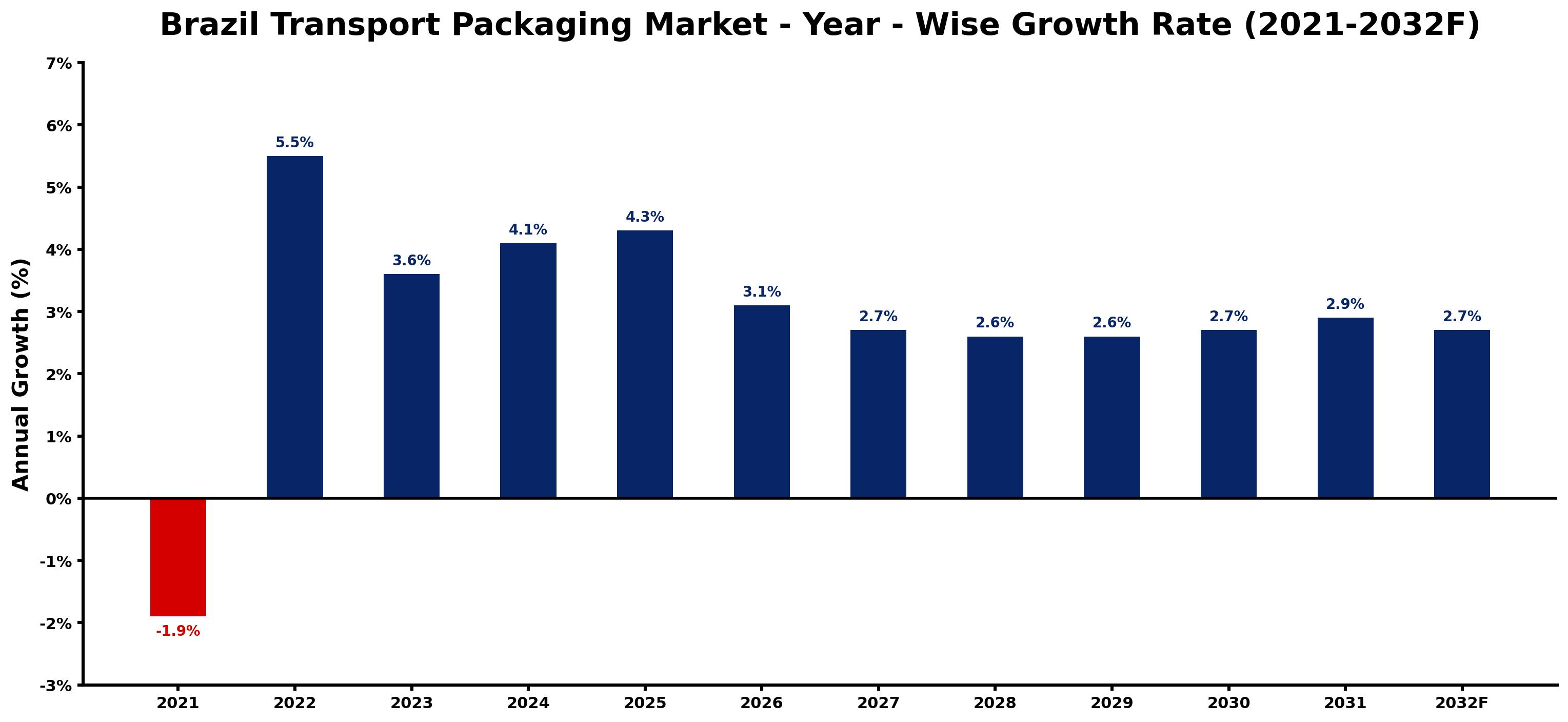
The table below presents the year wise growth rates along with the key drivers influencing the market
| Year | Growth Rate | Major Drivers |
| 2021 | -1.9% | Supply chain disruptions caused by the pandemic hindered timely delivery and increased operational costs for transport packaging. |
| 2022 | 5.5% | E-commerce expansion necessitates innovative packaging solutions, emphasizing speed and sustainability. |
| 2023 | 3.6% | Brazil's manufacturing sector focuses on improving supply chain efficiencies through enhanced packaging. |
| 2024 | 4.1% | Rising consumer expectations for product safety lead to advanced protective packaging materials. |
| 2025 | 4.3% | Technological innovations streamline the production of lightweight yet durable packaging options. |
| 2026 | 3.1% | Sustainability initiatives encourage companies to adopt eco-friendly packaging alternatives widely. |
| 2027 | 2.7% | Increased urbanization drives the need for specialized packaging to cater to metropolitan consumers. |
| 2028 | 2.6% | Collaborations between retailers and packaging suppliers enhance customization and consumer engagement. |
| 2029 | 2.6% | Logistics improvements contribute to a more efficient distribution network, impacting packaging demand. |
| 2030 | 2.7% | Shift towards circular economy principles influences packaging design and material selection significantly. |
| 2031 | 2.9% | Emerging startups disrupt traditional packaging markets with innovative solutions and technologies. |
| 2032 | 2.7% | Consumer awareness regarding sustainability shapes long-term strategies for packaging companies. |
Note - Market size estimations and growth projections presented in this report are based on 6Wresearch's advanced forecasting approach, validated with industry datasets as of June 2026.
Brazil Transport Packaging Market Synopsis
The Brazil Transport Packaging Market is projected to reach 3.1% and witness significant growth during the forecast period (2026-2032). This expansion is primarily driven by the thriving logistics sector and the increasing prevalence of e-commerce across the country. As Brazilian industries, including manufacturing, pharmaceuticals, and agriculture, focus on secure and efficient goods transportation, the demand for innovative and robust transport packaging solutions is on the rise. This report provides an in-depth analysis of the key factors shaping the market landscape.
Brazil Transport Packaging Market Growth Drivers
The growth of the Brazil Transport Packaging Market is influenced by several key drivers:
- The logistics sector in Brazil is experiencing rapid expansion, driven by advancements in infrastructure and technology, which enhances the efficiency of goods movement.
- Additionally, the surge in e-commerce has increased the volume of goods requiring transport packaging, necessitating durable and secure solutions to protect products during transit.
- Brazil's diverse industrial landscape, including sectors such as pharmaceuticals and agriculture, further drives demand for specialized packaging that meets the unique requirements of each industry.
- The global shift towards sustainability pressures companies to adopt eco-friendly packaging options, consequently influencing the market dynamics.
- Furthermore, innovations in materials science are leading to the development of advanced packaging solutions that offer improved protection and reduce waste, attracting additional investment in the sector.
Brazil Transport Packaging Market Challenges and Restraints
Despite the promising growth, the Brazil Transport Packaging Market faces several challenges that could hinder its progress:
- Strict regulatory requirements regarding packaging materials and safety standards can complicate compliance for companies, creating a barrier to market entry.
- Volatility in raw material prices, particularly concerning plastic and paper products, poses a significant challenge in maintaining production cost stability.
- As consumer expectations for sustainable practices rise, companies must navigate the complexities of integrating biodegradable and recyclable materials into their product lines.
- The necessity to balance cost-effectiveness with the durability and safety of transport packaging solutions often puts pressure on manufacturers.
- Moreover, maintaining the integrity of packaged goods during transportation becomes increasingly difficult as logistics networks expand and diversify.
Brazil Transport Packaging Market Government Investment and Initiatives
Government policies pertaining to the Brazil Transport Packaging Market focus on enhancing logistics efficiency and promoting environmental responsibility. These policies are aimed at standardizing packaging materials to streamline transportation processes across the country.
The Brazilian government has introduced various incentives for businesses that adopt sustainable packaging practices, which aligns with national objectives of reducing environmental impact and waste. Public investment in transportation infrastructure, including roads and railways, supports the logistics sector, creating a favorable environment for the growth of the transport packaging market. Additionally, research and development grants encourage innovation in sustainable materials and practices within the packaging industry.
Brazil Transport Packaging Market Trends and Opportunities
Current trends indicate a strong shift towards sustainability and technological integration in the Brazil Transport Packaging Market. Companies are increasingly investing in research to develop eco-friendly packaging solutions that meet both regulatory requirements and consumer preferences.
- The application of smart packaging technologies, such as QR codes and anti-counterfeit features, is gaining traction, allowing for enhanced tracking and product integrity during transportation.
- Collaborations between industry stakeholders are fostering innovation and efficiency, enabling companies to share best practices and develop standardized solutions that meet diverse market needs.
- As Brazil's logistics infrastructure continues to improve, there are significant opportunities for manufacturers specializing in customized transport packaging solutions tailored to specific industries.
- The rise of online shopping will likely drive demand for smaller, consumer-focused packaging solutions that ensure product safety and attractiveness.
- Investment in biodegradable materials will likely present new market opportunities, catering to the demand for reduced environmental impact from packaging waste.
Brazil Transport Packaging Market Latest Developments (May 2025 - June 2026)
From May 2025 to June 2026, the Brazil Transport Packaging Market witnessed notable developments driven by ongoing trends in sustainability and technological advancements. Companies began integrating more advanced materials that not only improve product safety but also address environmental concerns.
Furthermore, the logistics sector is increasingly focusing on implementing smarter solutions, such as automated packaging lines and enhanced inventory management systems, allowing for streamlined operations. Regulatory bodies have introduced new guidelines aimed at promoting sustainable practices, thereby influencing market dynamics and forcing stakeholders to adapt accordingly. Investment in public transport infrastructure has also seen a boost, improving overall logistics capabilities which directly benefit the transport packaging sector.
Brazil Transport Packaging Market - Key Attractiveness of the Report
- 10 Years of Market Numbers
- Historical Data Starting from 2022 to 2025
- Base Year: 2025
- Forecast Data until 2032
- Key Performance Indicators Impacting the Market
- Major Upcoming Developments and Projects
Key Highlights of the Report:
- Brazil Transport Packaging Market Outlook
- Market Size of Brazil Transport Packaging Market, 2025
- Forecast of Brazil Transport Packaging Market, 2032
- Historical Data and Forecast of Brazil Transport Packaging Revenues & Volume for the Period 2022-2032F
- Brazil Transport Packaging Market Trend Evolution
- Brazil Transport Packaging Market Drivers and Challenges
- Brazil Transport Packaging Price Trends
- Brazil Transport Packaging Porter's Five Forces
- Brazil Transport Packaging Industry Life Cycle
- Historical Data and Forecast of Brazil Transport Packaging Market Revenues & Volume By Material Type for the Period 2022-2032F
- Historical Data and Forecast of Brazil Transport Packaging Market Revenues & Volume By Plastic for the Period 2022-2032F
- Historical Data and Forecast of Brazil Transport Packaging Market Revenues & Volume By Polyethylene (PE) for the Period 2022-2032F
- Historical Data and Forecast of Brazil Transport Packaging Market Revenues & Volume By Polypropylene (PP) for the Period 2022-2032F
- Historical Data and Forecast of Brazil Transport Packaging Market Revenues & Volume By Polyethylene Terephthalate (PET) for the Period 2022-2032F
- Historical Data and Forecast of Brazil Transport Packaging Market Revenues & Volume By Paper & Paperboard for the Period 2022-2032F
- Historical Data and Forecast of Brazil Transport Packaging Market Revenues & Volume By Metal for the Period 2022-2032F
- Historical Data and Forecast of Brazil Transport Packaging Market Revenues & Volume By Wood for the Period 2022-2032F
- Historical Data and Forecast of Brazil Plastic Transport Packaging Market Revenues & Volume By Others for the Period 2022-2032F
- Historical Data and Forecast of Brazil Transport Packaging Market Revenues & Volume By Packaging Types for the Period 2022-2032F
- Historical Data and Forecast of Brazil Transport Packaging Market Revenues & Volume By Cartons for the Period 2022-2032F
- Historical Data and Forecast of Brazil Transport Packaging Market Revenues & Volume By Wooden crates for the Period 2022-2032F
- Historical Data and Forecast of Brazil Transport Packaging Market Revenues & Volume By Containers for the Period 2022-2032F
- Historical Data and Forecast of Brazil Transport Packaging Market Revenues & Volume By Corrugated boxes for the Period 2022-2032F
- Historical Data and Forecast of Brazil Transport Packaging Market Revenues & Volume By Barrels for the Period 2022-2032F
- Historical Data and Forecast of Brazil Transport Packaging Market Revenues & Volume By IBCs for the Period 2022-2032F
- Historical Data and Forecast of Brazil Transport Packaging Market Revenues & Volume By Strapping for the Period 2022-2032F
- Historical Data and Forecast of Brazil Transport Packaging Market Revenues & Volume By Others for the Period 2022-2032F
- Historical Data and Forecast of Brazil Transport Packaging Market Revenues & Volume By End-users for the Period 2022-2032F
- Historical Data and Forecast of Brazil Transport Packaging Market Revenues & Volume By Agriculture for the Period 2022-2032F
- Historical Data and Forecast of Brazil Transport Packaging Market Revenues & Volume By Automotive for the Period 2022-2032F
- Historical Data and Forecast of Brazil Transport Packaging Market Revenues & Volume By Building & Construction for the Period 2022-2032F
- Historical Data and Forecast of Brazil Transport Packaging Market Revenues & Volume By Chemicals & Pharmaceuticals for the Period 2022-2032F
- Historical Data and Forecast of Brazil Transport Packaging Market Revenues & Volume By Food & Beverages for the Period 2022-2032F
- Historical Data and Forecast of Brazil Transport Packaging Market Revenues & Volume By Metallurgical for the Period 2022-2032F
- Historical Data and Forecast of Brazil Transport Packaging Market Revenues & Volume By Electrical & Electronics for the Period 2022-2032F
- Historical Data and Forecast of Brazil Transport Packaging Market Revenues & Volume By Others for the Period 2022-2032F
- Brazil Transport Packaging Import Export Trade Statistics
- Market Opportunity Assessment By Material Type
- Market Opportunity Assessment By Packaging Types
- Market Opportunity Assessment By End-users
- Brazil Transport Packaging Top Companies Market Share
- Brazil Transport Packaging Competitive Benchmarking By Technical and Operational Parameters
- Brazil Transport Packaging Company Profiles
- Brazil Transport Packaging Key Strategic Recommendations






































