Brazil Women Swimwear Market Growth Rate Analysis (2025 - 2031)
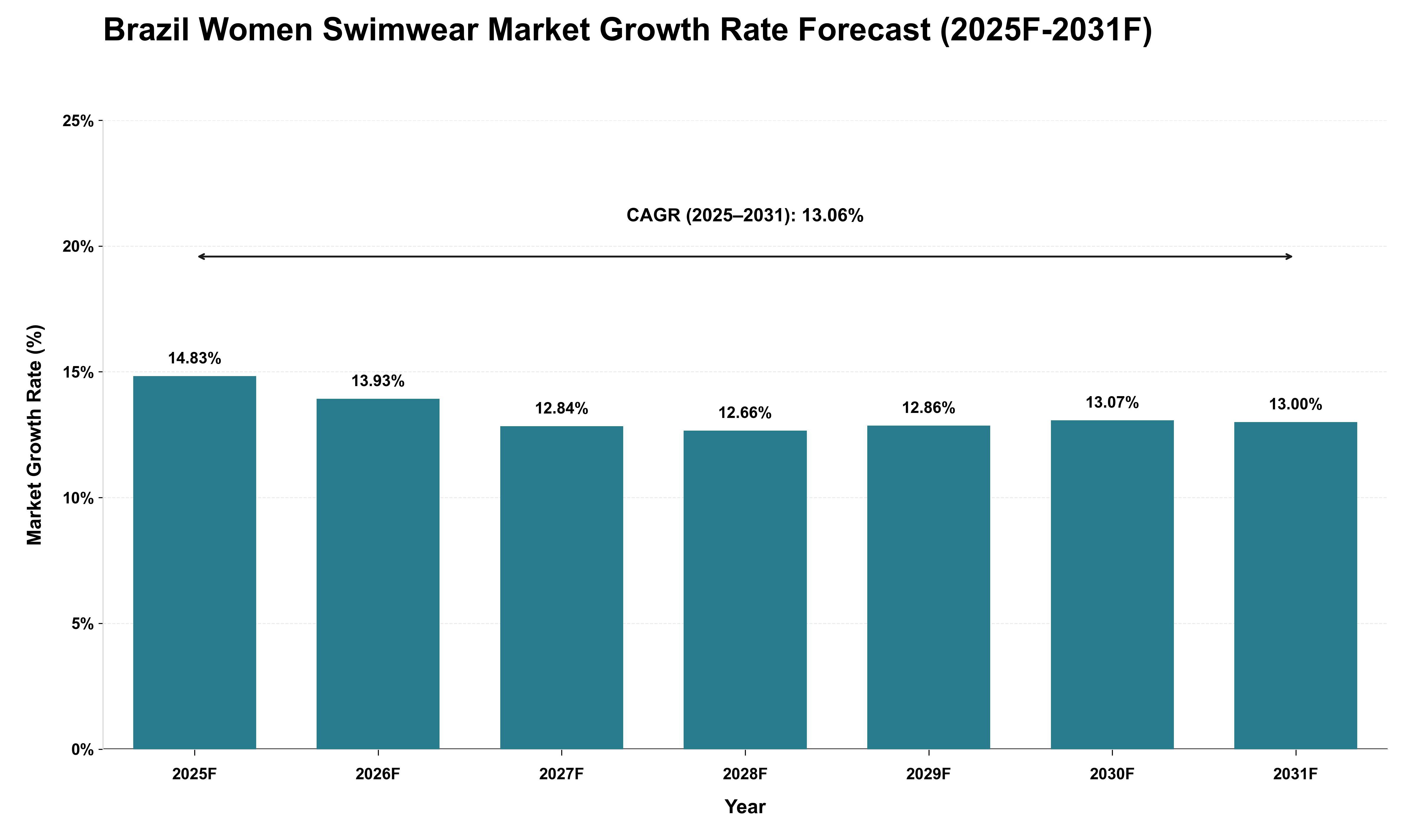
The Brazil women swimwear market will experience robust growth driven by evolving consumer preferences and increasing disposable incomes, projected to expand at a CAGR of 13.06% from 2025 to 2031. Regulatory frameworks favoring sustainable practices will likely enhance market dynamics, as brands adapt to eco-conscious consumer demands. Import dependencies may fluctuate due to potential trade policy shifts, impacting pricing strategies and supply chain efficiencies. The annual growth rates indicate a gradual decline in momentum, with peaks in 2025 (14.83%) and a slight stabilization around 13% by 2031, reflecting cyclical trends typical of fashion-related sectors influenced by seasonal demand patterns. As Brazil's economy continues to recover post-pandemic, the swimwear segment is expected to benefit from increased domestic production capabilities alongside strategic international partnerships that could mitigate import risks and enhance competitive positioning in the global market.
Key Highlights of the Report:
- Brazil Women Swimwear Market Outlook
- Market Size of Brazil Women Swimwear Market,2024
- Forecast of Brazil Women Swimwear Market, 2031
- Historical Data and Forecast of Brazil Women Swimwear Revenues & Volume for the Period 2021-2031
- Brazil Women Swimwear Market Trend Evolution
- Brazil Women Swimwear Market Drivers and Challenges
- Brazil Women Swimwear Price Trends
- Brazil Women Swimwear Porter's Five Forces
- Brazil Women Swimwear Industry Life Cycle
- Historical Data and Forecast of Brazil Women Swimwear Market Revenues & Volume By Product Type for the Period 2021-2031
- Historical Data and Forecast of Brazil Women Swimwear Market Revenues & Volume By One-Piece for the Period 2021-2031
- Historical Data and Forecast of Brazil Women Swimwear Market Revenues & Volume By Bikinis for the Period 2021-2031
- Historical Data and Forecast of Brazil Women Swimwear Market Revenues & Volume By Others for the Period 2021-2031
- Historical Data and Forecast of Brazil Women Swimwear Market Revenues & Volume By Distribution Channel for the Period 2021-2031
- Historical Data and Forecast of Brazil Women Swimwear Market Revenues & Volume By Online for the Period 2021-2031
- Historical Data and Forecast of Brazil Women Swimwear Market Revenues & Volume By Offline for the Period 2021-2031
- Brazil Women Swimwear Import Export Trade Statistics
- Market Opportunity Assessment By Product Type
- Market Opportunity Assessment By Distribution Channel
- Brazil Women Swimwear Top Companies Market Share
- Brazil Women Swimwear Competitive Benchmarking By Technical and Operational Parameters
- Brazil Women Swimwear Company Profiles
- Brazil Women Swimwear Key Strategic Recommendations






































