Brazil Yacht Market Size, Share & Growth Rate
The Brazil Yacht Market was estimated at USD 113 Million in 2025 and is projected to reach USD 134 Million by 2032, growing at a CAGR of 2.5% from 2026 to 2032. This growth trajectory reflects the increasing disposable incomes among the affluent Brazilian population who are seeking luxury leisure experiences on water. The rising interest in marine tourism and exclusive recreational activities further stimulates the demand for yachts, highlighting the market's potential as a lucrative segment in Brazil's luxury goods landscape.
Brazil Yacht Market Year-wise Growth Rate and Key Drivers
This graph highlights how the Brazil Yacht Market has steadily grown over the years, supported by major growth factors.
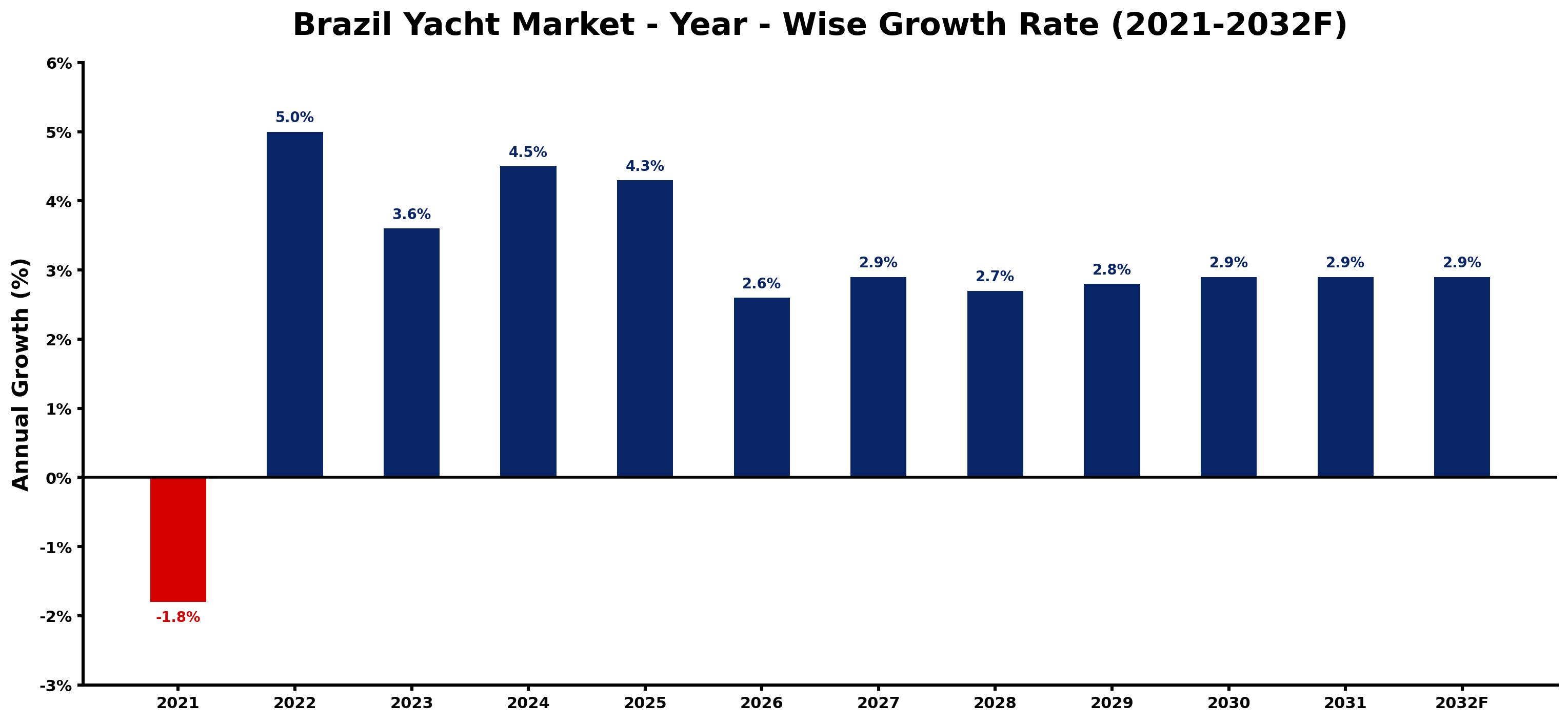
The table below presents the year‑wise growth rates along with the key drivers influencing the market
| Year | Growth Rate | Major Drivers |
| 2021 | -1.8% | Increasing industrial automation investments |
| 2022 | 5.0% | Expansion of transportation and logistics networks |
| 2023 | 3.6% | Increasing industrial automation investments |
| 2024 | 4.5% | Growing renewable energy integration projects |
| 2025 | 4.3% | Government infrastructure modernization initiatives |
| 2026 | 2.6% | Expansion of manufacturing activities |
| 2027 | 2.9% | Expansion of commercial construction activities |
| 2028 | 2.7% | Increasing industrial automation investments |
| 2029 | 2.8% | Expansion of manufacturing activities |
| 2030 | 2.9% | Increasing industrial infrastructure investments |
| 2031 | 2.9% | Increasing industrial infrastructure investments |
| 2032 | 2.9% | Rising electricity demand across industries |
Note - Market size estimations and growth projections presented in this report are based on 6Wresearch's advanced forecasting approach, validated with industry datasets as of June 2026.
Brazil Yacht Market Synopsis
The demand for yachts in Brazil is heavily influenced by the country's stunning coastline and favorable weather, making it an attractive destination for leisure boating. With a growing number of yacht clubs and marinas, there is a rising interest in both ownership and charter services, particularly among Brazil's elite and affluent tourists.
Sailing and motor yachts have become more than mere vessels; they are symbols of prestige and a reflection of a luxurious lifestyle. This growing market segment is characterized by a demand for customization and high-end amenities, showcasing the evolving preferences of Brazilian consumers towards unique and exclusive marine experiences.
Brazil Yacht Market Key Takeaways
- The market caters to a niche segment of affluent consumers seeking luxury experiences.
- Growing interest in leisure activities and marine tourism drives yacht demand.
- Economic conditions significantly impact consumer spending on luxury items like yachts.
- High import tariffs pose a barrier to yacht purchases and market growth.
- Insufficient coastal infrastructure may restrict the yacht market's expansion.
Evaluation of Restraints in Brazil Yacht Market
Several factors are limiting the growth of the yacht market in Brazil. Economic fluctuations and currency instability can diminish purchasing power, leading potential buyers to postpone or forgo yacht acquisitions. Furthermore, Brazil's high import tariffs and taxes on luxury goods dramatically inflate purchase prices, deterring some consumers from entering the market. The lack of adequate coastal infrastructure, including limited marina spaces and maintenance facilities, also poses a significant challenge, potentially restricting the expansion and accessibility of yachting experiences for the burgeoning clientele.
Brazil Yacht Market Trends
A notable trend shaping the Brazilian yacht market is the increasing emphasis on sustainability and eco-friendly design among luxury yacht manufacturers. Consumers are increasingly interested in vessels that incorporate green technologies, such as hybrid engines and materials sourced responsibly. Additionally, the digital transformation is influencing the way consumers approach yacht purchases, with online platforms facilitating easier access to purchasing and chartering options.
Brazil Yacht Market Opportunities
The Brazilian yacht market presents a multitude of opportunities for growth, particularly in the realm of customized yacht experiences and charters. As the wealth of the Brazilian population continues to rise, there is an increasing appetite for bespoke services that cater to individual preferences. Moreover, expanding marina developments and enhancing coastal infrastructure can bolster the market by making yachting more accessible, ultimately leading to greater participation in the marine leisure sector.
Government Initiatives in the Brazil Yacht Market
The Brazilian government plays an active role in regulating the yacht market, focusing on maritime safety, environmental protection, and enhancing marine tourism. Policies are in place to ensure that yacht design and construction meet safety standards and comply with environmental regulations. Furthermore, the government supports initiatives aimed at improving port infrastructure, which can enhance the overall experience for yacht owners and tourists alike, thereby promoting sustainable growth in the industry.
Future Insights of the Brazil Yacht Market
Looking ahead to the period from 2026 to 2032, the Brazil Yacht Market is anticipated to continue on its growth trajectory, driven by the confluence of rising disposable incomes and an increasing cultural inclination towards luxury leisure activities. The focus on sustainability will likely become more pronounced, prompting manufacturers to innovate in terms of eco-friendly designs. With targeted government support for infrastructure improvements and tourism initiatives, the market is set to capitalize on Brazil's rich maritime potential, positioning itself as a vital player within the global yacht industry.
Brazil Yacht Market Latest Developments (May 2025 - June 2026)
Recent developments in the Brazilian yacht market have seen a surge in interest for eco-conscious vessels, as consumers demand more sustainable options. Alongside this trend, there has been an uptick in luxury yacht charter services, catering to both domestic and international tourists. The government is also making strides in enhancing coastal infrastructure to support this growth, focusing on increasing the number of available mooring spaces and improving maintenance facilities to meet rising demand.
Brazil Yacht Market - Key Attractiveness of the Report
- 10 Years of Market Numbers
- Historical Data Starting from 2022 to 2025
- Base Year: 2025
- Forecast Data until 2032
- Key Performance Indicators Impacting the Market
- Major Upcoming Developments and Projects
Key Highlights of the Report:
- Brazil Yacht Market Outlook
- Market Size of Brazil Yacht Market, 2025
- Forecast of Brazil Yacht Market, 2032
- Historical Data and Forecast of Brazil Yacht Revenues & Volume for the Period 2022-2032F
- Brazil Yacht Market Trend Evolution
- Brazil Yacht Market Drivers and Challenges
- Brazil Yacht Price Trends
- Brazil Yacht Porter's Five Forces
- Brazil Yacht Industry Life Cycle
- Historical Data and Forecast of Brazil Yacht Market Revenues & Volume By Types for the Period 2022-2032F
- Historical Data and Forecast of Brazil Yacht Market Revenues & Volume By Super yacht for the Period 2022-2032F
- Historical Data and Forecast of Brazil Yacht Market Revenues & Volume By Flybridge yacht for the Period 2022-2032F
- Historical Data and Forecast of Brazil Yacht Market Revenues & Volume By Sport yacht for the Period 2022-2032F
- Historical Data and Forecast of Brazil Yacht Market Revenues & Volume By Long range yacht for the Period 2022-2032F
- Historical Data and Forecast of Brazil Yacht Market Revenues & Volume By Others for the Period 2022-2032F
- Historical Data and Forecast of Brazil Yacht Market Revenues & Volume By Length for the Period 2022-2032F
- Historical Data and Forecast of Brazil Yacht Market Revenues & Volume By Up to 20 ft for the Period 2022-2032F
- Historical Data and Forecast of Brazil Yacht Market Revenues & Volume By 20 to 50 ft for the Period 2022-2032F
- Historical Data and Forecast of Brazil Yacht Market Revenues & Volume By Above 50 ft for the Period 2022-2032F
- Brazil Yacht Import Export Trade Statistics
- Market Opportunity Assessment By Types
- Market Opportunity Assessment By Length
- Brazil Yacht Top Companies Market Share
- Brazil Yacht Competitive Benchmarking By Technical and Operational Parameters
- Brazil Yacht Company Profiles
- Brazil Yacht Key Strategic Recommendations






































