Bulgaria Perfume Market Size (2020-2030)
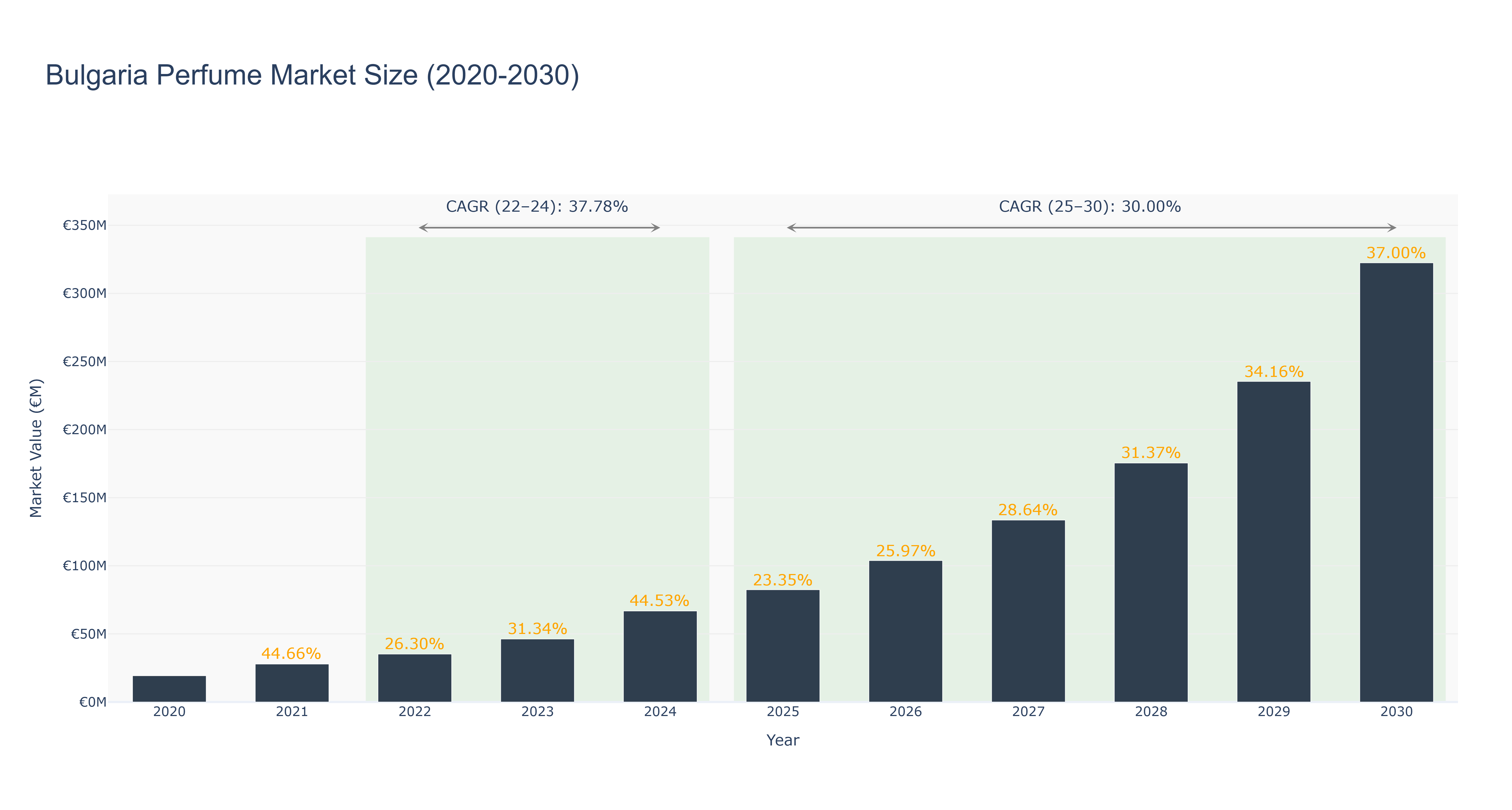
Bulgaria Perfume Market has shown a notable growth trajectory over the years. The peak market size was at €322.44 million in 2030, with a steady increase from €19.26 million in 2020. The market experienced significant growth from 2020 to 2024, driven by increasing consumer demand and expanding product offerings. The forecasted market size from 2025 to 2030 indicates a continued upward trend, with a CAGR of 30.0% between 2025-30. The market's CAGR from 2022-24 was 37.78%, reflecting a period of accelerated growth. Industry drivers such as rising disposable incomes and a growing preference for premium fragrances have contributed to the market's expansion. Looking ahead, upcoming collaborations between local perfumeries and international brands are set to enhance product innovation and market competitiveness in Bulgaria's perfume sector.
Bulgaria Perfume Market: Production & Trade Performance (2019-2025)
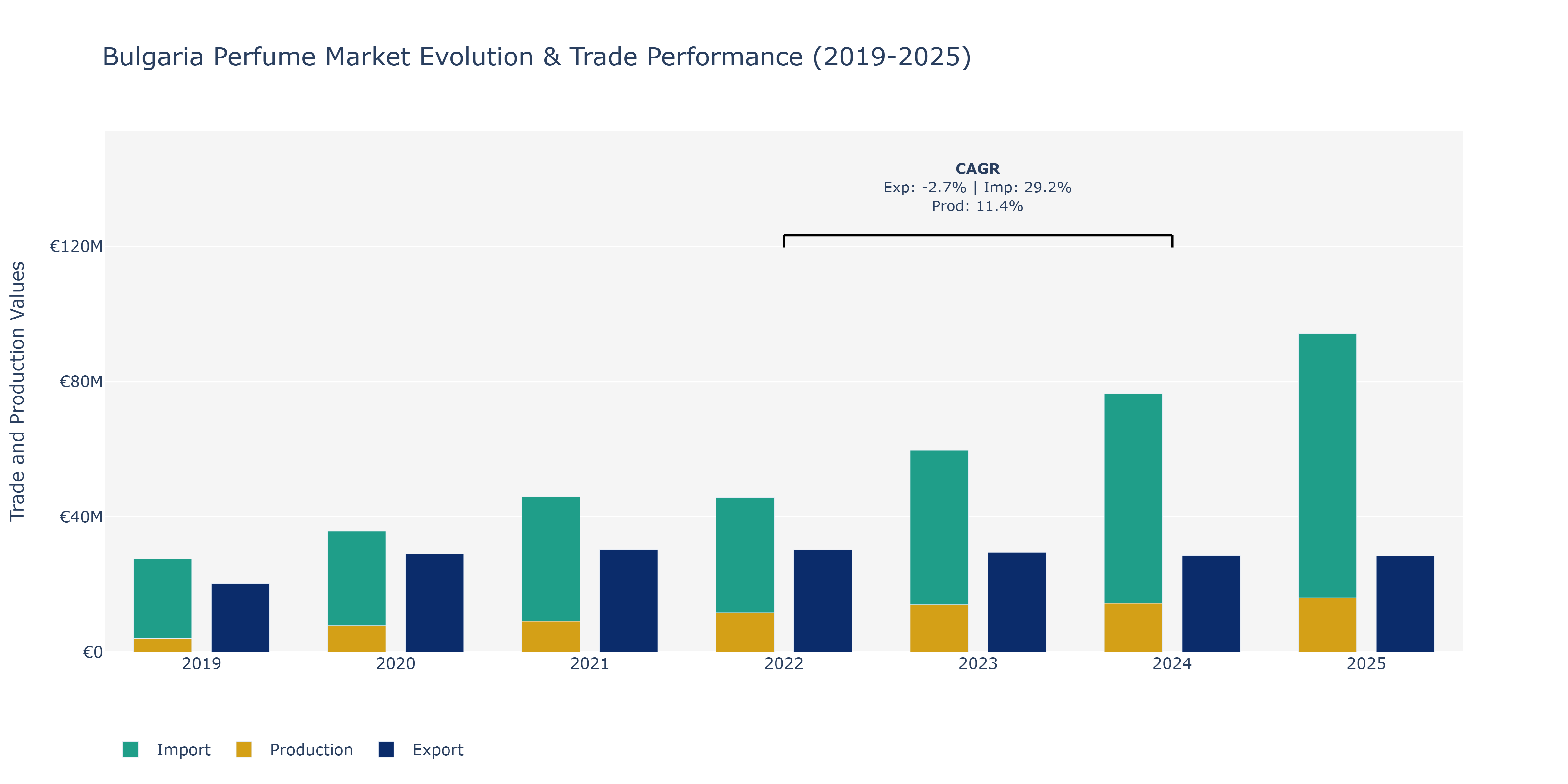
Between 2019 and 2025, the Bulgaria Perfume Market displayed notable dynamics in exports, imports, and production. Exports saw a modest decline from €20.2 million in 2019 to €28.42 million in 2025. Conversely, imports experienced a substantial growth trajectory, escalating from €27.55 million to €94.21 million during the same period. Production mirrored this upward trend, soaring from €3.98 million in 2019 to €15.97 million in 2025. The peak point for production was seen in 2025, indicating a robust expansion. The surge in imports can be attributed to the increasing consumer demand for a wide range of perfume products and the entry of new global brands into the Bulgarian market, driving up the need for imports. The upward trend in production signifies the country's growing capacity to meet domestic and potential export demands, supported by advancements in manufacturing technologies and processes within the industry.
Key Highlights of the Report:
- Bulgaria Perfume Market Outlook
- Market Size of Bulgaria Perfume Market, 2025
- Forecast of Bulgaria Perfume Market, 2032
- Historical Data and Forecast of Bulgaria Perfume Revenues & Volume for the Period 2022 - 2032
- Bulgaria Perfume Market Trend Evolution
- Bulgaria Perfume Market Drivers and Challenges
- Bulgaria Perfume Price Trends
- Bulgaria Perfume Porter's Five Forces
- Bulgaria Perfume Industry Life Cycle
- Historical Data and Forecast of Bulgaria Perfume Market Revenues & Volume By Perfume Type for the Period 2022 - 2032
- Historical Data and Forecast of Bulgaria Perfume Market Revenues & Volume By Premium Perfume Products for the Period 2022 - 2032
- Historical Data and Forecast of Bulgaria Perfume Market Revenues & Volume By Mass Perfume Products for the Period 2022 - 2032
- Historical Data and Forecast of Bulgaria Perfume Market Revenues & Volume By Category for the Period 2022 - 2032
- Historical Data and Forecast of Bulgaria Perfume Market Revenues & Volume By Female Fragrances for the Period 2022 - 2032
- Historical Data and Forecast of Bulgaria Perfume Market Revenues & Volume By Male Fragrances for the Period 2022 - 2032
- Historical Data and Forecast of Bulgaria Perfume Market Revenues & Volume By Unisex Fragrances for the Period 2022 - 2032
- Bulgaria Perfume Import Export Trade Statistics
- Market Opportunity Assessment By Perfume Type
- Market Opportunity Assessment By Category
- Bulgaria Perfume Top Companies Market Share
- Bulgaria Perfume Competitive Benchmarking By Technical and Operational Parameters
- Bulgaria Perfume Company Profiles
- Bulgaria Perfume Key Strategic Recommendations






































