Bulgaria Retinol Market Top 5 Importing Countries and Market Competition (HHI) Analysis
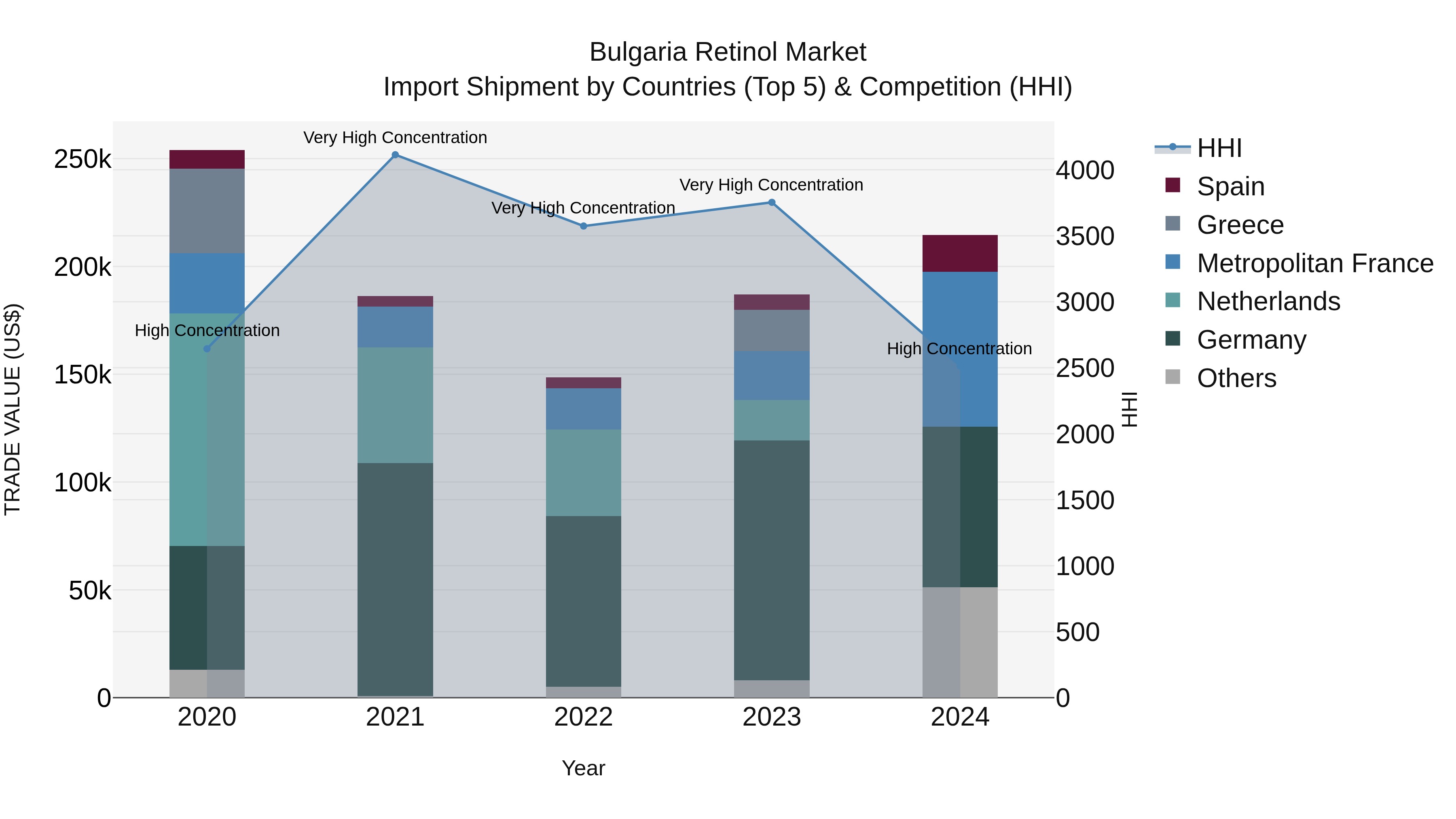
In 2024, Bulgaria continued to see a significant influx of retinol imports, with top exporting countries including Germany, Metropolitan France, Switzerland, China, and Spain. The Herfindahl-Hirschman Index (HHI) indicated a high concentration of imports in 2023, which intensified to become even higher in 2024. Despite a negative Compound Annual Growth Rate (CAGR) from 2020 to 2024, there was a notable growth rate of 14.8% from 2023 to 2024. This suggests a dynamic Market Top 5 Importing Countries and Market Competition (HHI) Analysis landscape for retinol imports in Bulgaria, driven by key players in the industry.
Bulgaria Retinol Market Synopsis
The Bulgaria Retinol Market is experiencing steady growth driven by increasing consumer awareness of the ingredient`s benefits in skincare products. Retinol, a form of vitamin A, is known for its anti-aging properties, such as reducing wrinkles and improving skin texture. The market is primarily driven by the rising demand for premium skincare products and the growing focus on personal grooming and beauty routines among the Bulgarian population. Key players in the market are focusing on product innovation, such as incorporating retinol in serums, creams, and masks, to cater to different consumer preferences. Additionally, the market is witnessing a trend towards natural and organic skincare products, leading to the introduction of retinol derived from plant-based sources. Overall, the Bulgaria Retinol Market is poised for further growth as consumers seek effective solutions for their skincare needs.
Bulgaria Retinol Market Trends
The Bulgaria Retinol market is experiencing steady growth driven by increasing consumer awareness of the benefits of retinol in skincare products. With a rising demand for anti-aging and skin rejuvenation products, there is a growing opportunity for skincare companies to introduce innovative retinol-based formulations. The market is witnessing a shift towards natural and organic products, presenting opportunities for companies to develop retinol products with clean and sustainable ingredients. Additionally, the rising popularity of online beauty retailers and social media influencers promoting skincare products is further driving the market growth. To capitalize on these trends, companies can focus on product differentiation, marketing strategies that emphasize the efficacy and safety of retinol, and building strong partnerships with key retailers and influencers in the Bulgarian market.
Bulgaria Retinol Market Challenges
In the Bulgaria Retinol Market, some of the primary challenges include increasing competition from both domestic and international brands, concerns over product quality and authenticity, and price sensitivity among consumers. The market is also affected by regulatory hurdles and strict requirements for product labeling and marketing claims. Additionally, consumer awareness and education about the benefits of retinol in skincare products remain relatively low, posing a challenge for companies looking to expand their market share. To succeed in this competitive landscape, companies operating in the Bulgaria Retinol Market need to focus on developing high-quality products, building trust with consumers through transparent communication, and implementing effective marketing strategies to differentiate themselves in the market.
Bulgaria Retinol Market Investment Opportunities
The Bulgaria Retinol Market is primarily driven by the growing demand for effective anti-aging skincare products among the aging population in the country. Retinol, a derivative of vitamin A, is well-known for its ability to reduce wrinkles, fine lines, and improve skin texture, making it a popular ingredient in various skincare formulations. Additionally, the increasing awareness about the benefits of retinol in treating acne and other skin conditions is driving its demand among younger consumers as well. The availability of a wide range of retinol-based products in the market, including creams, serums, and oils, further contributes to the market growth. The rising disposable income levels and changing lifestyle preferences also play a significant role in fueling the demand for retinol-based skincare products in Bulgaria.
Bulgaria Retinol Market Government Policie
In Bulgaria, government policies related to the Retinol market primarily focus on regulations set by the Bulgarian Drug Agency (BDA) regarding the production, import, and sale of Retinol-based products. These regulations ensure that Retinol products meet quality and safety standards, with stringent requirements for labeling, packaging, and advertising. Additionally, the Bulgarian government has implemented measures to control the distribution and pricing of Retinol products to protect consumers from counterfeit or substandard products. Importers and manufacturers are required to register their products with the BDA and comply with Good Manufacturing Practices (GMP) to maintain product quality and safety. Overall, these policies aim to promote a competitive and transparent market for Retinol products in Bulgaria while safeguarding consumer health and well-being.
Bulgaria Retinol Market Future Outlook
The Bulgaria Retinol Market is expected to experience steady growth over the next few years due to the rising demand for skincare products with anti-aging properties. The increasing awareness about the benefits of retinol in reducing wrinkles, improving skin texture, and combating acne is driving the market growth. Additionally, the growing focus on personal grooming and the influence of social media on beauty trends are expected to further boost the demand for retinol-based products in Bulgaria. Market players are likely to introduce innovative formulations and packaging to cater to the evolving consumer preferences, contributing to the overall expansion of the market. However, factors such as price sensitivity and the availability of alternative skincare ingredients may pose challenges to the market growth in the forecast period.
Key Highlights of the Report:
- Bulgaria Retinol Market Outlook
- Market Size of Bulgaria Retinol Market, 2024
- Forecast of Bulgaria Retinol Market, 2031
- Historical Data and Forecast of Bulgaria Retinol Revenues & Volume for the Period 2021- 2031
- Bulgaria Retinol Market Trend Evolution
- Bulgaria Retinol Market Drivers and Challenges
- Bulgaria Retinol Price Trends
- Bulgaria Retinol Porter's Five Forces
- Bulgaria Retinol Industry Life Cycle
- Historical Data and Forecast of Bulgaria Retinol Market Revenues & Volume By Type for the Period 2021- 2031
- Historical Data and Forecast of Bulgaria Retinol Market Revenues & Volume By Natural for the Period 2021- 2031
- Historical Data and Forecast of Bulgaria Retinol Market Revenues & Volume By Synthetic for the Period 2021- 2031
- Historical Data and Forecast of Bulgaria Retinol Market Revenues & Volume By Application for the Period 2021- 2031
- Historical Data and Forecast of Bulgaria Retinol Market Revenues & Volume By Personal Care & Cosmetics for the Period 2021- 2031
- Historical Data and Forecast of Bulgaria Retinol Market Revenues & Volume By Dietary Supplements for the Period 2021- 2031
- Historical Data and Forecast of Bulgaria Retinol Market Revenues & Volume By Food & Beverage for the Period 2021- 2031
- Historical Data and Forecast of Bulgaria Retinol Market Revenues & Volume By Animal Feed for the Period 2021- 2031
- Historical Data and Forecast of Bulgaria Retinol Market Revenues & Volume By Others for the Period 2021- 2031
- Bulgaria Retinol Import Export Trade Statistics
- Market Opportunity Assessment By Type
- Market Opportunity Assessment By Application
- Bulgaria Retinol Top Companies Market Share
- Bulgaria Retinol Competitive Benchmarking By Technical and Operational Parameters
- Bulgaria Retinol Company Profiles
- Bulgaria Retinol Key Strategic Recommendations






































