Burundi Quinine Market Size Growth Rate
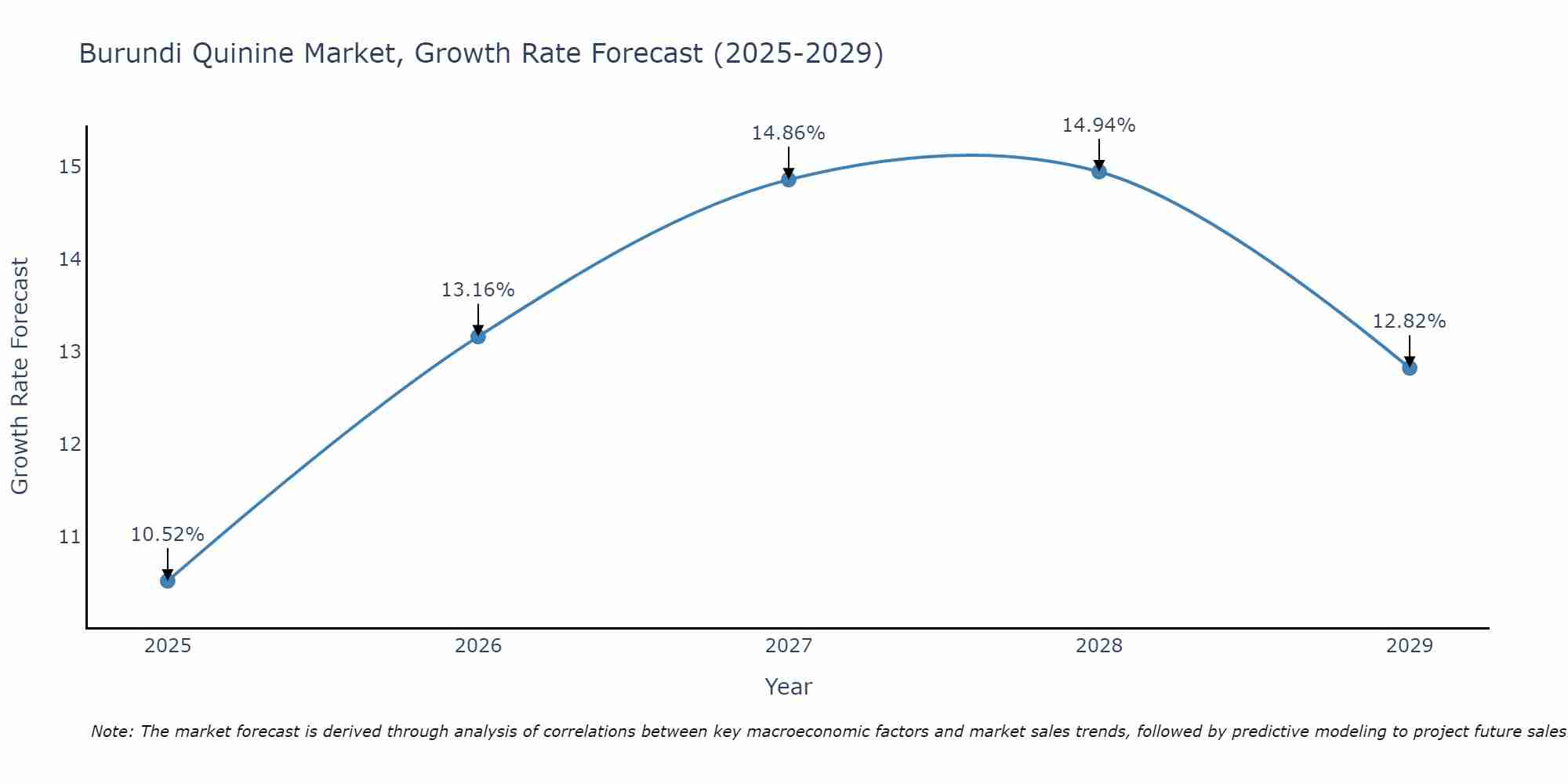
The Burundi Quinine Market is projected to witness mixed growth rate patterns during 2025 to 2029. The growth rate begins at 10.52% in 2025, climbs to a high of 14.94% in 2028, and moderates to 12.82% by 2029.
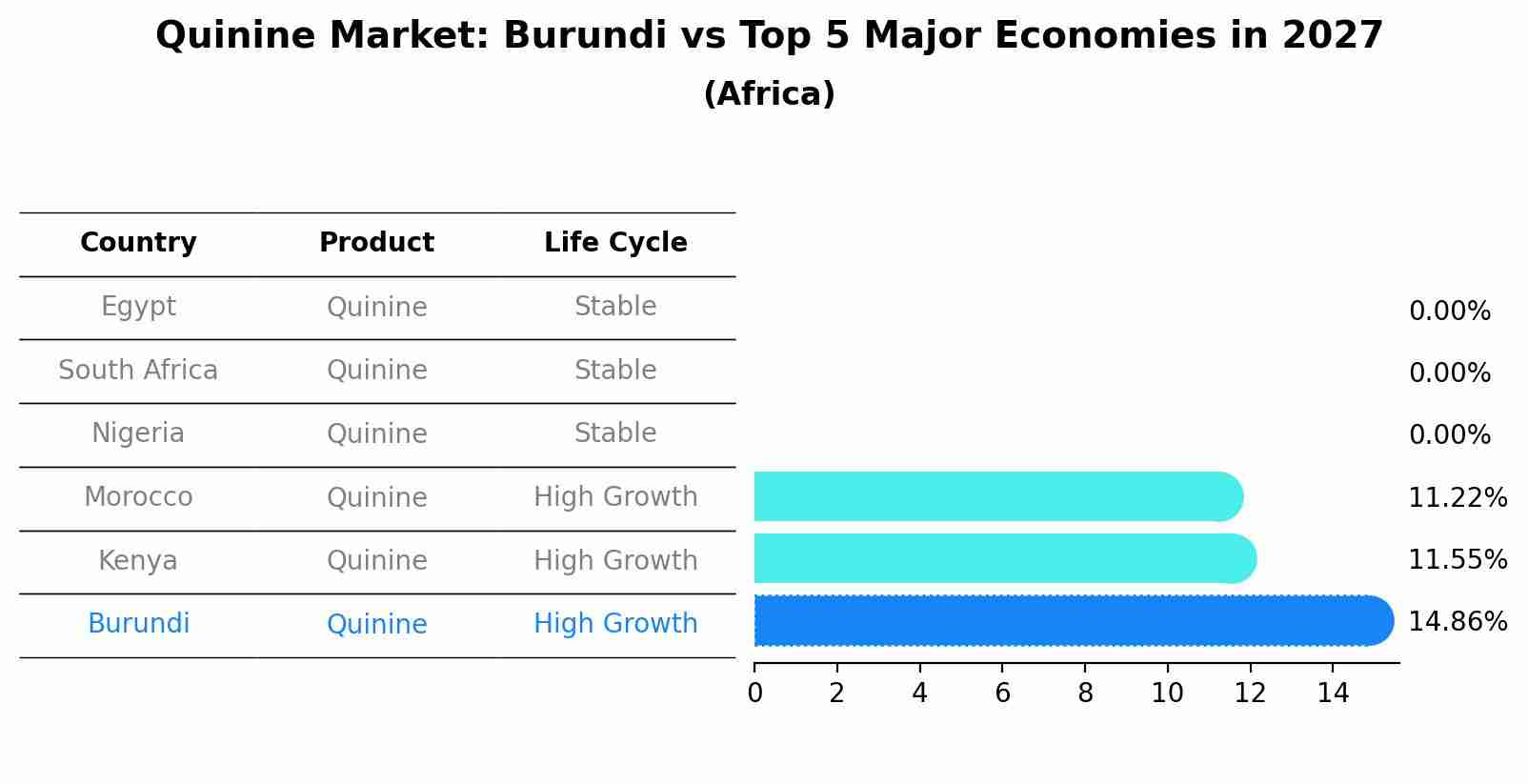
Quinine Market: Burundi vs Top 5 Major Economies in 2027 (Africa)
In the Africa region, the Quinine market in Burundi is projected to expand at a high growth rate of 14.86% by 2027. The largest economy is Egypt, followed by South Africa, Nigeria, Morocco and Kenya.
Burundi Quinine Market Overview
The quinine market in Burundi is relatively small but significant due to the country`s need to combat malaria, a prevalent disease in the region. Quinine is an essential medication used in the treatment of malaria, and its demand is primarily driven by the healthcare sector. The market faces challenges such as fluctuations in the global supply of quinine, high import costs, and competition from alternative malaria treatments such as artemisinin-based combination therapies (ACTs). Additionally, the lack of local production facilities and dependence on imports make the quinine market vulnerable to external factors, including changes in international trade policies and supply chain disruptions.
Drivers of the market
The Burundi Quinine Market is primarily driven by the high prevalence of malaria in the region, which necessitates the use of quinine as a treatment. The ongoing efforts to combat malaria, including government initiatives and international support, are contributing to the demand for quinine. Additionally, quinine`s application in the pharmaceutical industry for the treatment of other conditions and its use in the beverage industry as a flavoring agent are further driving market growth.
Challenges of the market
The quinine market in Burundi faces challenges due to fluctuations in the availability of raw materials, particularly the cinchona bark from which quinine is derived. Local production is minimal, leading to heavy reliance on imports, which are subject to price volatility and supply chain disruptions. Additionally, the market is affected by the growing prevalence of synthetic alternatives to quinine, which may be cheaper or more effective. Furthermore, the lack of investment in local pharmaceutical manufacturing infrastructure hampers the ability to produce quinine at scale domestically.
Government Policy of the market
The quinine market in Burundi is significantly influenced by government policies related to healthcare and agriculture. As quinine is a key treatment for malaria, which is prevalent in the region, the governments healthcare policies prioritize the availability and affordability of quinine-based drugs. This includes subsidies for pharmaceutical companies and partnerships with international health organizations. On the agricultural side, policies that support the cultivation of cinchona trees, the source of quinine, are essential for ensuring a steady supply. However, fluctuations in international prices and the need for more robust local production could affect market stability.
Key Highlights of the Report:
- Burundi Quinine Market Outlook
- Market Size of Burundi Quinine Market, 2024
- Forecast of Burundi Quinine Market, 2031
- Historical Data and Forecast of Burundi Quinine Revenues & Volume for the Period 2021-2031
- Burundi Quinine Market Trend Evolution
- Burundi Quinine Market Drivers and Challenges
- Burundi Quinine Price Trends
- Burundi Quinine Porter`s Five Forces
- Burundi Quinine Industry Life Cycle
- Historical Data and Forecast of Burundi Quinine Market Revenues & Volume By Mode of Administration for the Period 2021-2031
- Historical Data and Forecast of Burundi Quinine Market Revenues & Volume By Oral Administration for the Period 2021-2031
- Historical Data and Forecast of Burundi Quinine Market Revenues & Volume By Intravenous Administration for the Period 2021-2031
- Historical Data and Forecast of Burundi Quinine Market Revenues & Volume By Intramuscular Administration for the Period 2021-2031
- Historical Data and Forecast of Burundi Quinine Market Revenues & Volume By Others for the Period 2021-2031
- Historical Data and Forecast of Burundi Quinine Market Revenues & Volume By Application for the Period 2021-2031
- Historical Data and Forecast of Burundi Quinine Market Revenues & Volume By Antimalarial for the Period 2021-2031
- Historical Data and Forecast of Burundi Quinine Market Revenues & Volume By Antipyretic for the Period 2021-2031
- Historical Data and Forecast of Burundi Quinine Market Revenues & Volume By Others for the Period 2021-2031
- Historical Data and Forecast of Burundi Quinine Market Revenues & Volume By End-user for the Period 2021-2031
- Historical Data and Forecast of Burundi Quinine Market Revenues & Volume By Hospitals for the Period 2021-2031
- Historical Data and Forecast of Burundi Quinine Market Revenues & Volume By Clinics for the Period 2021-2031
- Historical Data and Forecast of Burundi Quinine Market Revenues & Volume By Ambulatory Surgical Centers for the Period 2021-2031
- Historical Data and Forecast of Burundi Quinine Market Revenues & Volume By Others for the Period 2021-2031
- Burundi Quinine Import Export Trade Statistics
- Market Opportunity Assessment By Mode of Administration
- Market Opportunity Assessment By Application
- Market Opportunity Assessment By End-user
- Burundi Quinine Top Companies Market Share
- Burundi Quinine Competitive Benchmarking By Technical and Operational Parameters
- Burundi Quinine Company Profiles
- Burundi Quinine Key Strategic Recommendations






































