Cambodia Cocoa Products Market: Import Trend Analysis
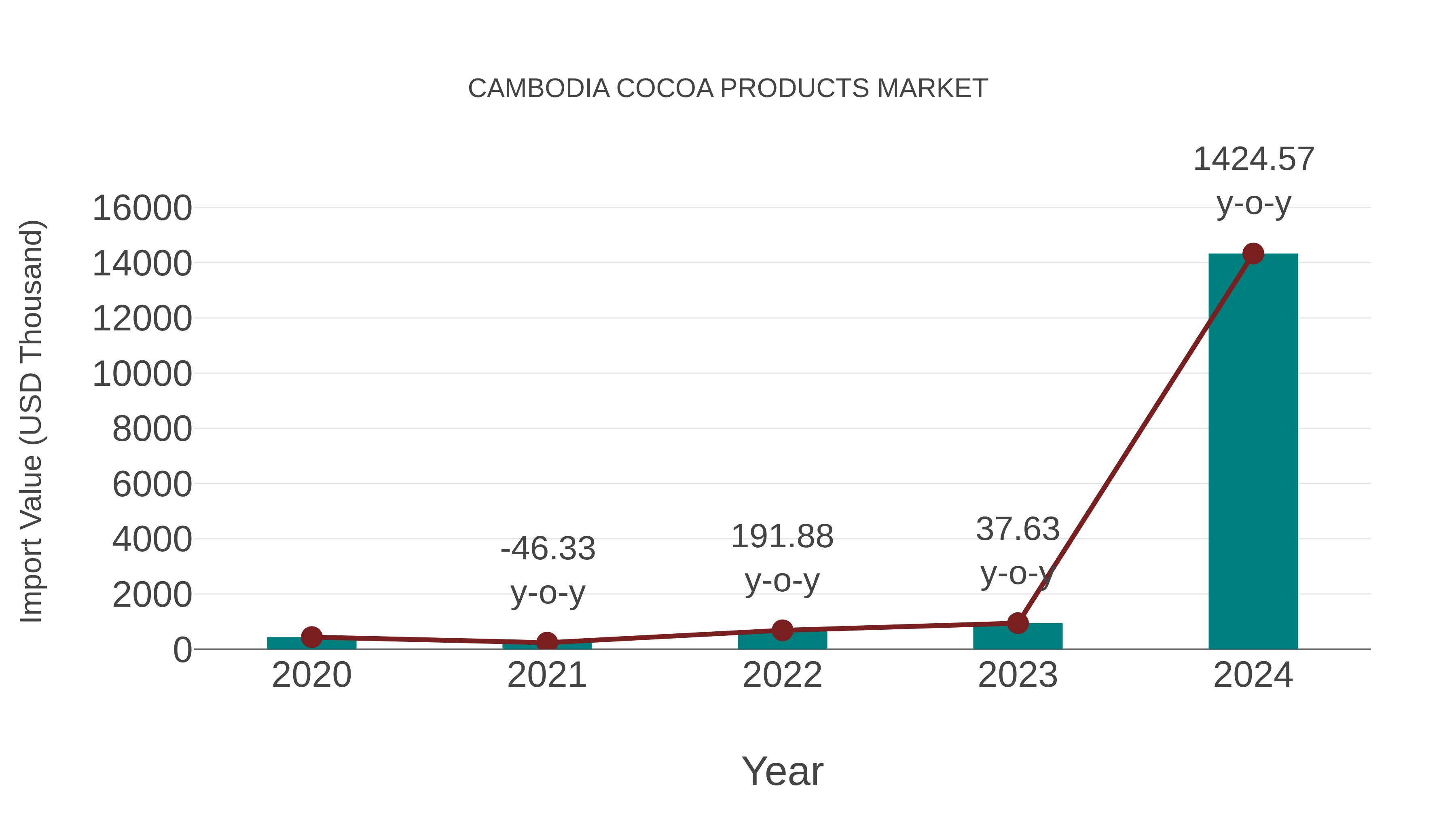
In the Cambodia cocoa products market, the import trend experienced significant growth from 2023 to 2024, with a remarkable increase of 1424.57%. The compound annual growth rate (CAGR) for imports from 2020 to 2024 stood at 139.44%. This exceptional import momentum can be attributed to a surge in demand for high-quality cocoa products and favorable trade policies that facilitated market stability during the period.
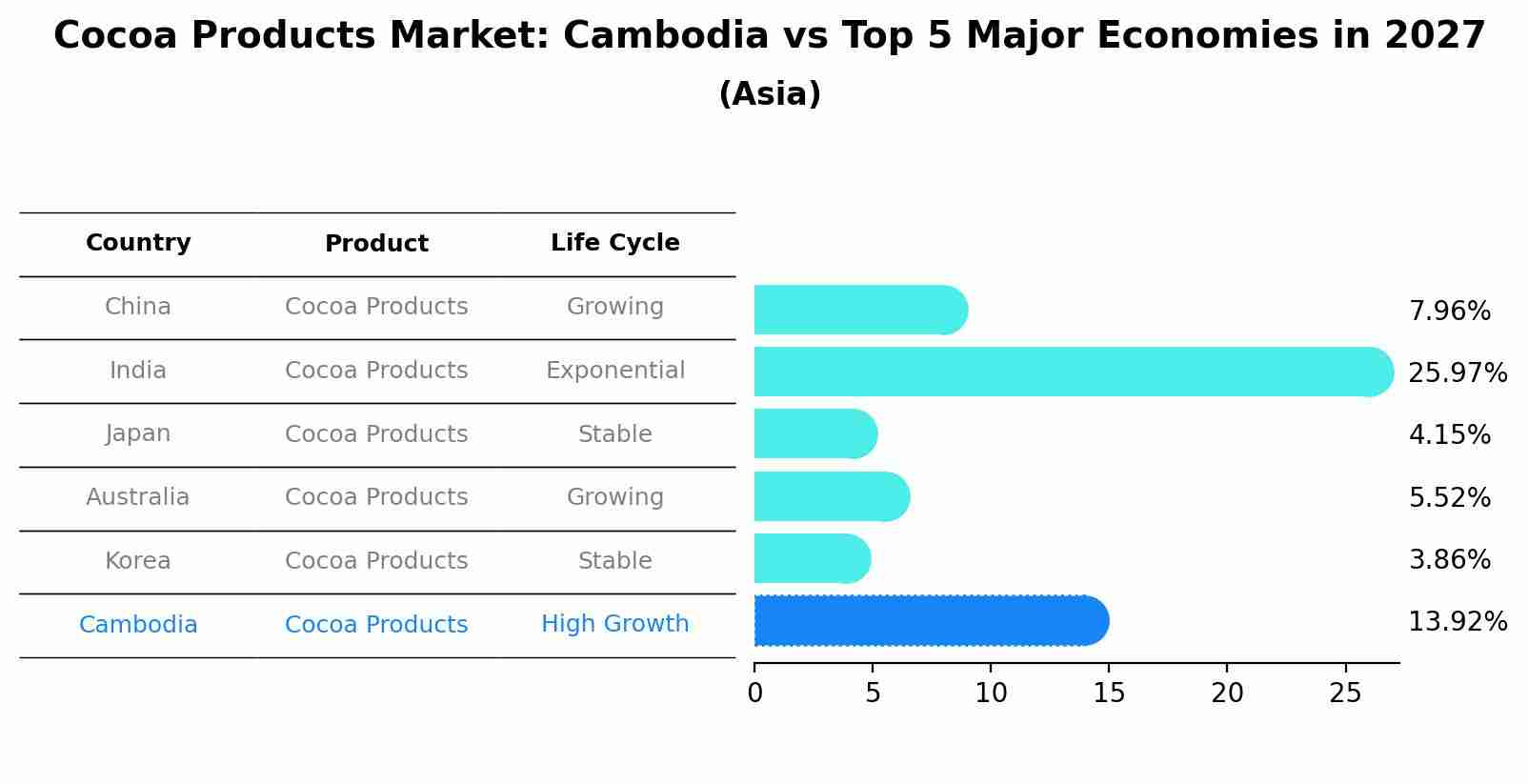
Cocoa Products Market: Cambodia vs Top 5 Major Economies in 2027 (Asia)
Cambodia's Cocoa Products market is anticipated to experience a high growth rate of 13.92% by 2027, reflecting trends observed in the largest economy China, followed by India, Japan, Australia and South Korea.
Cambodia Cocoa Products Market Overview
The Cambodia cocoa products market encompasses a wide range of finished goods, including chocolate bars, cocoa beverages, confectionery items, and cosmetics. As consumer preferences evolve and purchasing power increases, there`s a growing market for premium and specialty cocoa products in Cambodia.
Drivers of the market
The Cambodia Cocoa Products market is propelled by the growing demand for cocoa-based products such as chocolates, cocoa powder, cocoa butter, and cocoa beverages. Increasing disposable incomes, changing consumer preferences, and the influence of Western food culture are driving the consumption of cocoa products in Cambodia. Moreover, the expanding retail sector and the presence of multinational chocolate companies are further boosting the availability and accessibility of cocoa products in the market.
Challenges of the market
The Cambodia Cocoa Products market confronts challenges related to market awareness and consumer preferences. Limited domestic consumption of cocoa products and a relatively small market size restrict the growth potential for local manufacturers. Moreover, competition from imported cocoa products and established brands from neighboring countries poses a significant challenge for Cambodian cocoa product producers. Additionally, ensuring product differentiation and maintaining competitive pricing amidst rising production costs remain key challenges in this market.
Government Policy of the market
The cocoa products market in Cambodia encompasses a diverse range of chocolate confectionery and cocoa-based goods. Government policies focus on promoting local processing capacity, supporting small-scale entrepreneurs, and fostering innovation in product development. Initiatives such as market access programs and quality certifications aim to enhance the competitiveness of Cambodian cocoa products in domestic and international markets.
Key Highlights of the Report:
- Cambodia Cocoa Products Market Outlook
- Market Size of Cambodia Cocoa Products Market, 2024
- Forecast of Cambodia Cocoa Products Market, 2031
- Historical Data and Forecast of Cambodia Cocoa Products Revenues & Volume for the Period 2018 - 2031
- Cambodia Cocoa Products Market Trend Evolution
- Cambodia Cocoa Products Market Drivers and Challenges
- Cambodia Cocoa Products Price Trends
- Cambodia Cocoa Products Porter's Five Forces
- Cambodia Cocoa Products Industry Life Cycle
- Historical Data and Forecast of Cambodia Cocoa Products Market Revenues & Volume By Type for the Period 2018 - 2031
- Historical Data and Forecast of Cambodia Cocoa Products Market Revenues & Volume By Cocoa Beans for the Period 2018 - 2031
- Historical Data and Forecast of Cambodia Cocoa Products Market Revenues & Volume By Cocoa Butter for the Period 2018 - 2031
- Historical Data and Forecast of Cambodia Cocoa Products Market Revenues & Volume By Cocoa Powder & Cake for the Period 2018 - 2031
- Historical Data and Forecast of Cambodia Cocoa Products Market Revenues & Volume By Cocoa Paste & Liquor for the Period 2018 - 2031
- Historical Data and Forecast of Cambodia Cocoa Products Market Revenues & Volume By Chocolate for the Period 2018 - 2031
- Historical Data and Forecast of Cambodia Cocoa Products Market Revenues & Volume By Application for the Period 2018 - 2031
- Historical Data and Forecast of Cambodia Cocoa Products Market Revenues & Volume By Confectionery for the Period 2018 - 2031
- Historical Data and Forecast of Cambodia Cocoa Products Market Revenues & Volume By Food & Beverages for the Period 2018 - 2031
- Historical Data and Forecast of Cambodia Cocoa Products Market Revenues & Volume By Cosmetics for the Period 2018 - 2031
- Historical Data and Forecast of Cambodia Cocoa Products Market Revenues & Volume By Pharmaceutical for the Period 2018 - 2031
- Cambodia Cocoa Products Import Export Trade Statistics
- Market Opportunity Assessment By Type
- Market Opportunity Assessment By Application
- Cambodia Cocoa Products Top Companies Market Share
- Cambodia Cocoa Products Competitive Benchmarking By Technical and Operational Parameters
- Cambodia Cocoa Products Company Profiles
- Cambodia Cocoa Products Key Strategic Recommendations






































