Cambodia Whiskey Market: Import Trend Analysis
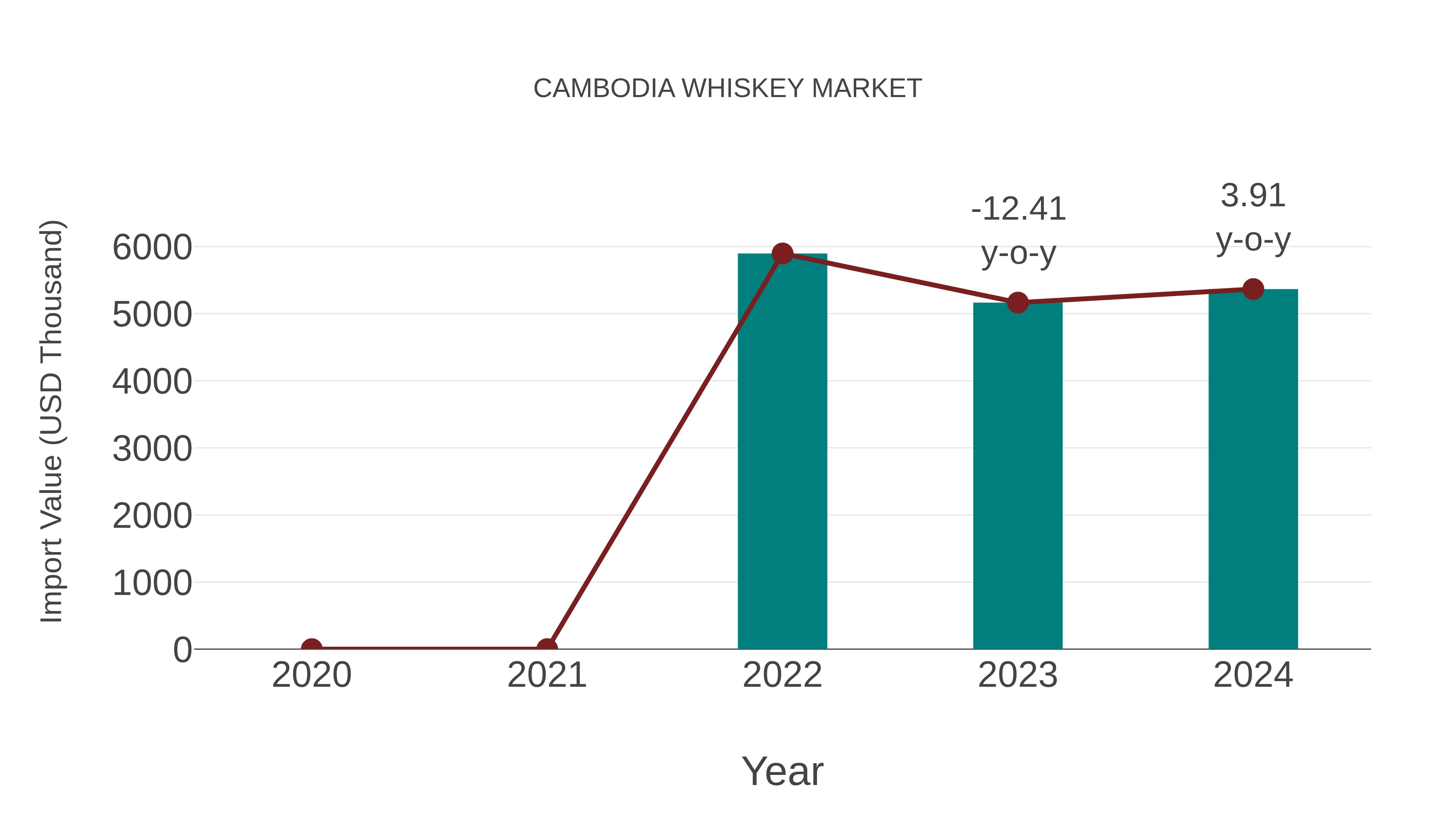
In the Cambodia whiskey market, the import trend showed a growth rate of 3.91% from 2023 to 2024, while the compound annual growth rate (CAGR) for 2020-2024 was -4.6%. This indicates a slight recovery in import momentum following a period of decline, potentially influenced by shifts in consumer preferences or market stabilization efforts.
Cambodia Whiskey Market Overview
The whiskey market in Cambodia is witnessing increasing demand driven by changing consumer preferences and rising disposable incomes. Whiskey, a popular alcoholic beverage, is gaining popularity among Cambodian consumers, especially in urban areas. As the country`s economy continues to grow and lifestyles evolve, the whiskey market is expected to expand further, driven by factors such as urbanization, Westernization of culture, and changing drinking habits.
Drivers of the market
The rising disposable income and changing consumer preferences in Cambodia are driving the demand for premium alcoholic beverages like whiskey. As urbanization and Westernization influence lifestyle choices, there is a growing inclination towards luxury and imported products, including whiskey. Moreover, the emergence of upscale bars and restaurants in urban centers is expanding the market for whiskey consumption.
Challenges of the market
The whiskey market in Cambodia may encounter challenges related to import regulations, taxation, and changing consumer preferences. Moreover, competition from other alcoholic beverages and counterfeit products can impact market growth and profitability.
Government Policy of the market
Government regulations in Cambodia alcoholic beverage industry aim to balance public health concerns with economic opportunities. This includes licensing requirements for whiskey production and distribution, age restrictions on consumption, advertising standards, and taxation policies to generate revenue while discouraging excessive consumption and underage drinking. The government collaborates with industry stakeholders to implement responsible drinking campaigns and enforce alcohol-related laws effectively.
Key Highlights of the Report:
- Cambodia Whiskey Market Outlook
- Market Size of Cambodia Whiskey Market, 2024
- Forecast of Cambodia Whiskey Market, 2031
- Historical Data and Forecast of Cambodia Whiskey Revenues & Volume for the Period 2018 - 2031
- Cambodia Whiskey Market Trend Evolution
- Cambodia Whiskey Market Drivers and Challenges
- Cambodia Whiskey Price Trends
- Cambodia Whiskey Porter's Five Forces
- Cambodia Whiskey Industry Life Cycle
- Historical Data and Forecast of Cambodia Whiskey Market Revenues & Volume By Product Type for the Period 2018 - 2031
- Historical Data and Forecast of Cambodia Whiskey Market Revenues & Volume By American Whisky for the Period 2018 - 2031
- Historical Data and Forecast of Cambodia Whiskey Market Revenues & Volume By Irish Whisky for the Period 2018 - 2031
- Historical Data and Forecast of Cambodia Whiskey Market Revenues & Volume By Scotch Whisky for the Period 2018 - 2031
- Historical Data and Forecast of Cambodia Whiskey Market Revenues & Volume By Canadian Whisky for the Period 2018 - 2031
- Historical Data and Forecast of Cambodia Whiskey Market Revenues & Volume By Others for the Period 2018 - 2031
- Historical Data and Forecast of Cambodia Whiskey Market Revenues & Volume By Distribution Channel for the Period 2018 - 2031
- Historical Data and Forecast of Cambodia Whiskey Market Revenues & Volume By On-trade for the Period 2018 - 2031
- Historical Data and Forecast of Cambodia Whiskey Market Revenues & Volume By Off-trade for the Period 2018 - 2031
- Cambodia Whiskey Import Export Trade Statistics
- Market Opportunity Assessment By Product Type
- Market Opportunity Assessment By Distribution Channel
- Cambodia Whiskey Top Companies Market Share
- Cambodia Whiskey Competitive Benchmarking By Technical and Operational Parameters
- Cambodia Whiskey Company Profiles
- Cambodia Whiskey Key Strategic Recommendations






































