Cameroon Cyclohexane Market Size Growth Rate
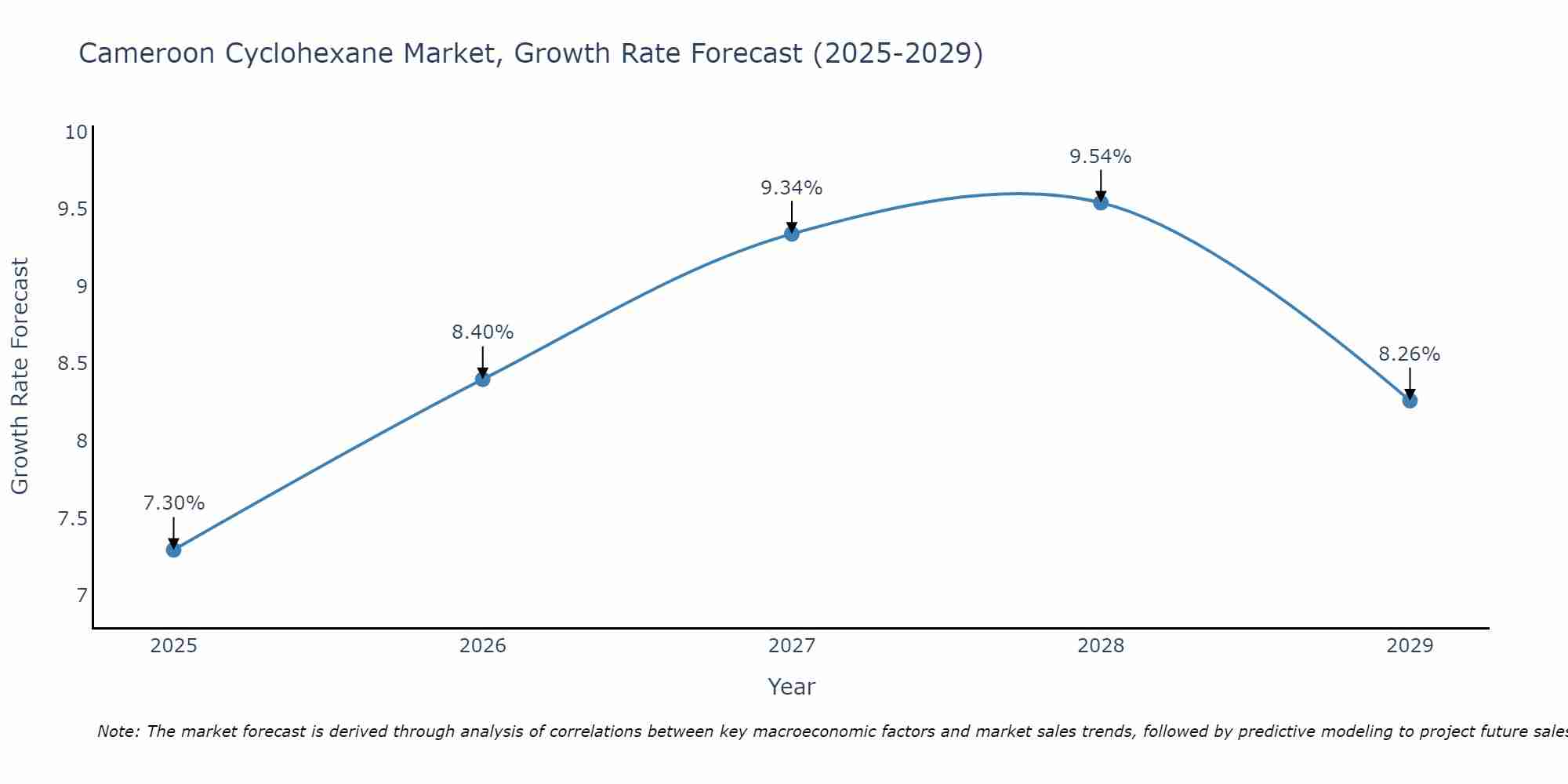
The Cameroon Cyclohexane Market is projected to witness mixed growth rate patterns during 2025 to 2029. The growth rate begins at 7.30% in 2025, climbs to a high of 9.54% in 2028, and moderates to 8.26% by 2029.
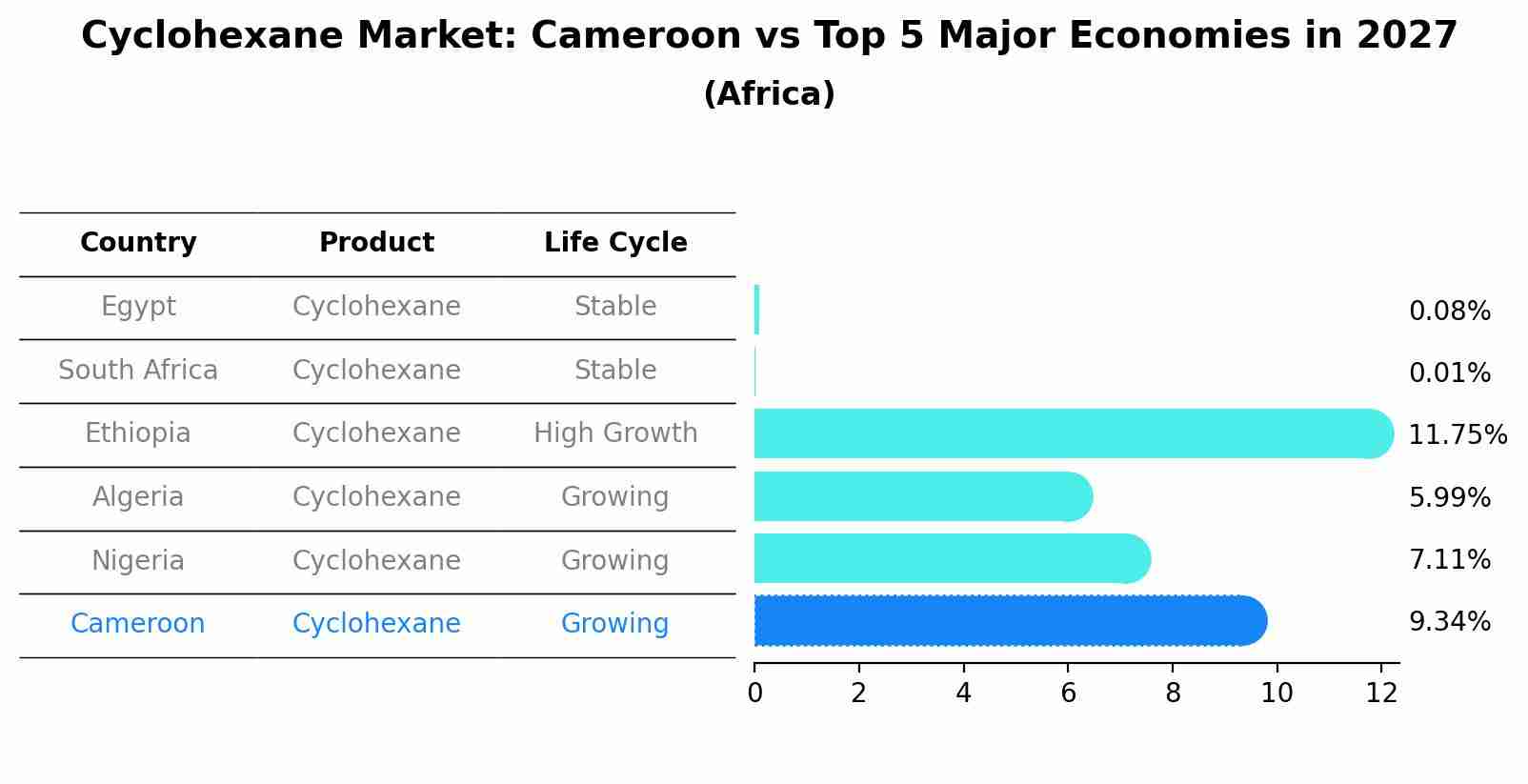
Cyclohexane Market: Cameroon vs Top 5 Major Economies in 2027 (Africa)
By 2027, Cameroon's Cyclohexane market is forecasted to achieve a growing growth rate of 9.34%, with Egypt leading the Africa region, followed by South Africa, Ethiopia, Algeria and Nigeria.
Cameroon Cyclohexane Market Overview
The Cameroon Cyclohexane Market is expanding due to the rising demand for cyclohexane as a raw material in the production of nylon, resins, and plastics. Cyclohexane is widely used in the chemical industry for various applications, including solvent extraction and the production of cyclohexanol and cyclohexanone. The market growth is driven by the expansion of the chemical and automotive industries, the increasing demand for synthetic fibers, and the rising focus on developing sustainable production processes.
Drivers of the market
The Cameroon Cyclohexane Market is expanding due to the increasing demand for cyclohexane as a raw material in the production of nylon and other synthetic fibers. The growing textile industry in Cameroon is driving the need for cyclohexane, which is used in the production of adipic acid and caprolactam, key intermediates in nylon manufacturing. Additionally, the rising demand for lightweight and durable materials in various industries is contributing to market growth.
Challenges of the market
The cyclohexane market in Cameroon encounters challenges related to high import costs and limited local production capabilities. The market is also affected by fluctuating global prices and supply chain disruptions. There is a lack of local expertise in handling and utilizing cyclohexane, which impacts its application in various industries. Additionally, regulatory and environmental concerns related to the use of cyclohexane can pose challenges for market growth.
Government Policy of the market
Government policies related to the cyclohexane market in Cameroon focus on regulating the safe use and handling of cyclohexane. The government enforces standards to ensure environmental protection and worker safety in the production and use of cyclohexane. Additionally, there are policies aimed at supporting local production and reducing reliance on imports.
Key Highlights of the Report:
- Cameroon Cyclohexane Market Outlook
- Market Size of Cameroon Cyclohexane Market, 2024
- Forecast of Cameroon Cyclohexane Market, 2031
- Historical Data and Forecast of Cameroon Cyclohexane Revenues & Volume for the Period 2021-2031
- Cameroon Cyclohexane Market Trend Evolution
- Cameroon Cyclohexane Market Drivers and Challenges
- Cameroon Cyclohexane Price Trends
- Cameroon Cyclohexane Porter`s Five Forces
- Cameroon Cyclohexane Industry Life Cycle
- Historical Data and Forecast of Cameroon Cyclohexane Market Revenues & Volume By Application for the Period 2021-2031
- Historical Data and Forecast of Cameroon Cyclohexane Market Revenues & Volume By Adipic acid for the Period 2021-2031
- Historical Data and Forecast of Cameroon Cyclohexane Market Revenues & Volume By Caprolactam for the Period 2021-2031
- Historical Data and Forecast of Cameroon Cyclohexane Market Revenues & Volume By Others for the Period 2021-2031
- Historical Data and Forecast of Cameroon Cyclohexane Market Revenues & Volume By End-use for the Period 2021-2031
- Historical Data and Forecast of Cameroon Cyclohexane Market Revenues & Volume By Nylon 6 for the Period 2021-2031
- Historical Data and Forecast of Cameroon Cyclohexane Market Revenues & Volume By Nylon 66 for the Period 2021-2031
- Historical Data and Forecast of Cameroon Cyclohexane Market Revenues & Volume By Others for the Period 2021-2031
- Cameroon Cyclohexane Import Export Trade Statistics
- Market Opportunity Assessment By Application
- Market Opportunity Assessment By End-use
- Cameroon Cyclohexane Top Companies Market Share
- Cameroon Cyclohexane Competitive Benchmarking By Technical and Operational Parameters
- Cameroon Cyclohexane Company Profiles
- Cameroon Cyclohexane Key Strategic Recommendations






































