Canada Castor Oil Market: Import Trend Analysis
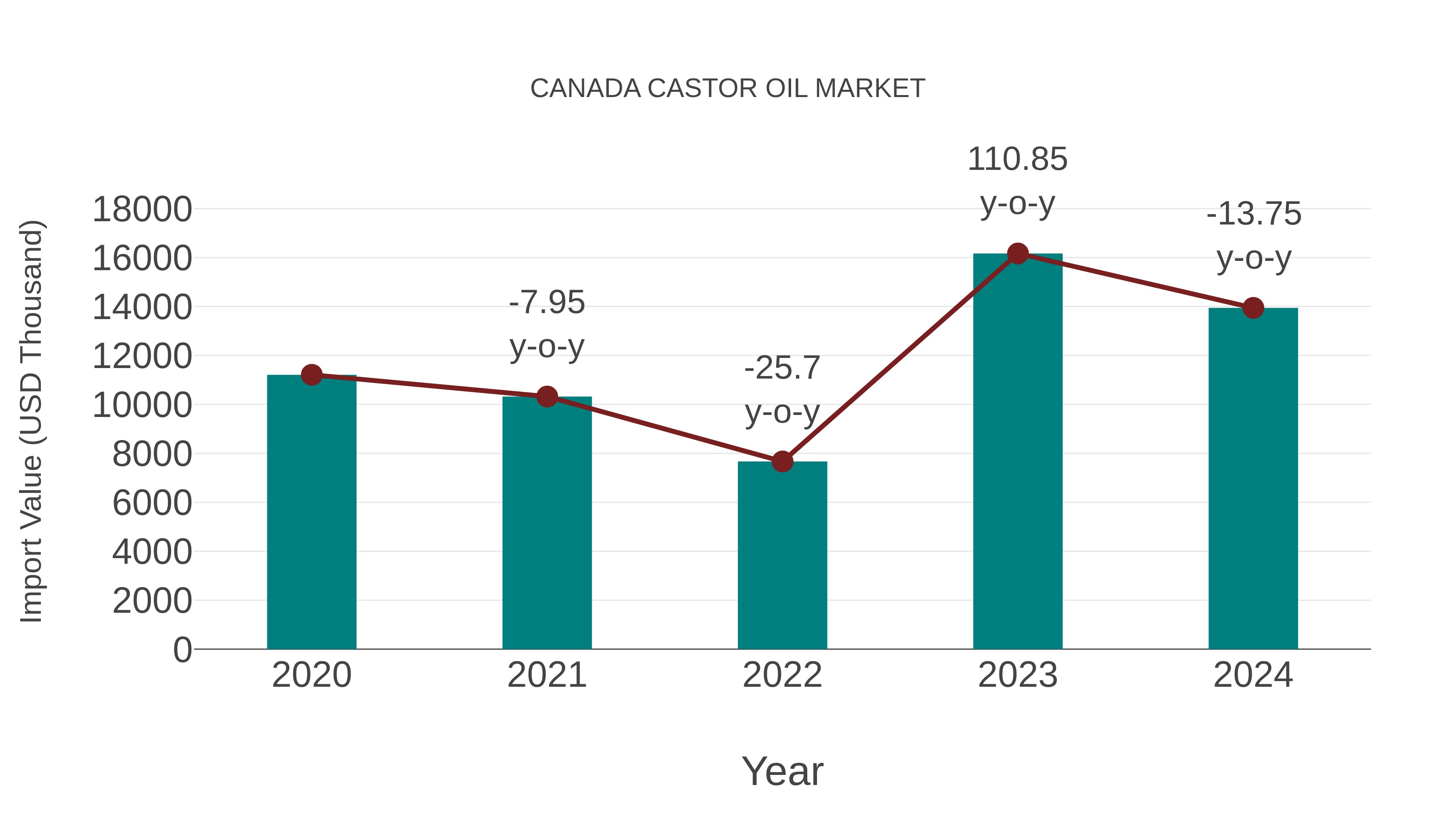
In the Canada castor oil market, the import trend experienced a decline in growth from 2023 to 2024, with a rate of -13.75%. However, the compound annual growth rate (CAGR) for the period 2020-2024 stood at 5.61%. This decline in import momentum could be attributed to shifts in demand dynamics or changes in trade policies affecting market stability.
Canada Castor Oil Market Overview
The castor oil market in Canada is driven by the oil`s applications in cosmetics, pharmaceuticals, and industrial processes. Castor oil is valued for its moisturizing properties and uses in manufacturing. Market growth is influenced by increasing demand for natural and organic products, as well as advancements in castor oil processing and applications.
Drivers of the market
The castor oil market in Canada is growing with the increasing use of castor oil in pharmaceuticals, cosmetics, and industrial applications. Castor oil is valued for its unique properties and versatility. The market is driven by advancements in oil extraction and processing technologies, the rising demand for natural and organic products, and the expansion of castor oil applications. The focus on product quality and sustainability further influences market dynamics.
Challenges of the market
The castor oil market in Canada faces challenges related to fluctuating raw material prices and supply chain issues. The market is also impacted by competition from synthetic alternatives and concerns about environmental sustainability. Additionally, there are regulatory requirements and changing consumer preferences for natural and organic products.
Government Policy of the market
Canadas government policies on natural products and imports shape the castor oil market. Since castor oil is largely imported, trade agreements and tariffs impact pricing and availability. The market also benefits from policies promoting the use of natural and biodegradable products in cosmetics, pharmaceuticals, and industrial applications. Environmental regulations ensure that the production and processing of castor oil adhere to sustainable practices.
Key Highlights of the Report:
- Canada Castor Oil Market Outlook
- Market Size of Canada Castor Oil Market, 2025
- Forecast of Canada Castor Oil Market, 2032
- Historical Data and Forecast of Canada Castor Oil Revenues & Volume for the Period 2022-2032F
- Canada Castor Oil Market Trend Evolution
- Canada Castor Oil Market Drivers and Challenges
- Canada Castor Oil Price Trends
- Canada Castor Oil Porter`s Five Forces
- Canada Castor Oil Industry Life Cycle
- Historical Data and Forecast of Canada Castor Oil Market Revenues & Volume By End Use for the Period 2022-2032F
- Historical Data and Forecast of Canada Castor Oil Market Revenues & Volume By Pharmaceuticals for the Period 2022-2032F
- Historical Data and Forecast of Canada Castor Oil Market Revenues & Volume By Lubricants for the Period 2022-2032F
- Historical Data and Forecast of Canada Castor Oil Market Revenues & Volume By Paints for the Period 2022-2032F
- Historical Data and Forecast of Canada Castor Oil Market Revenues & Volume By Soaps for the Period 2022-2032F
- Historical Data and Forecast of Canada Castor Oil Market Revenues & Volume By Others for the Period 2022-2032F
- Canada Castor Oil Import Export Trade Statistics
- Market Opportunity Assessment By End Use
- Canada Castor Oil Top Companies Market Share
- Canada Castor Oil Competitive Benchmarking By Technical and Operational Parameters
- Canada Castor Oil Company Profiles
- Canada Castor Oil Key Strategic Recommendations






































