Canada Gallic Acid Market: Import Trend Analysis
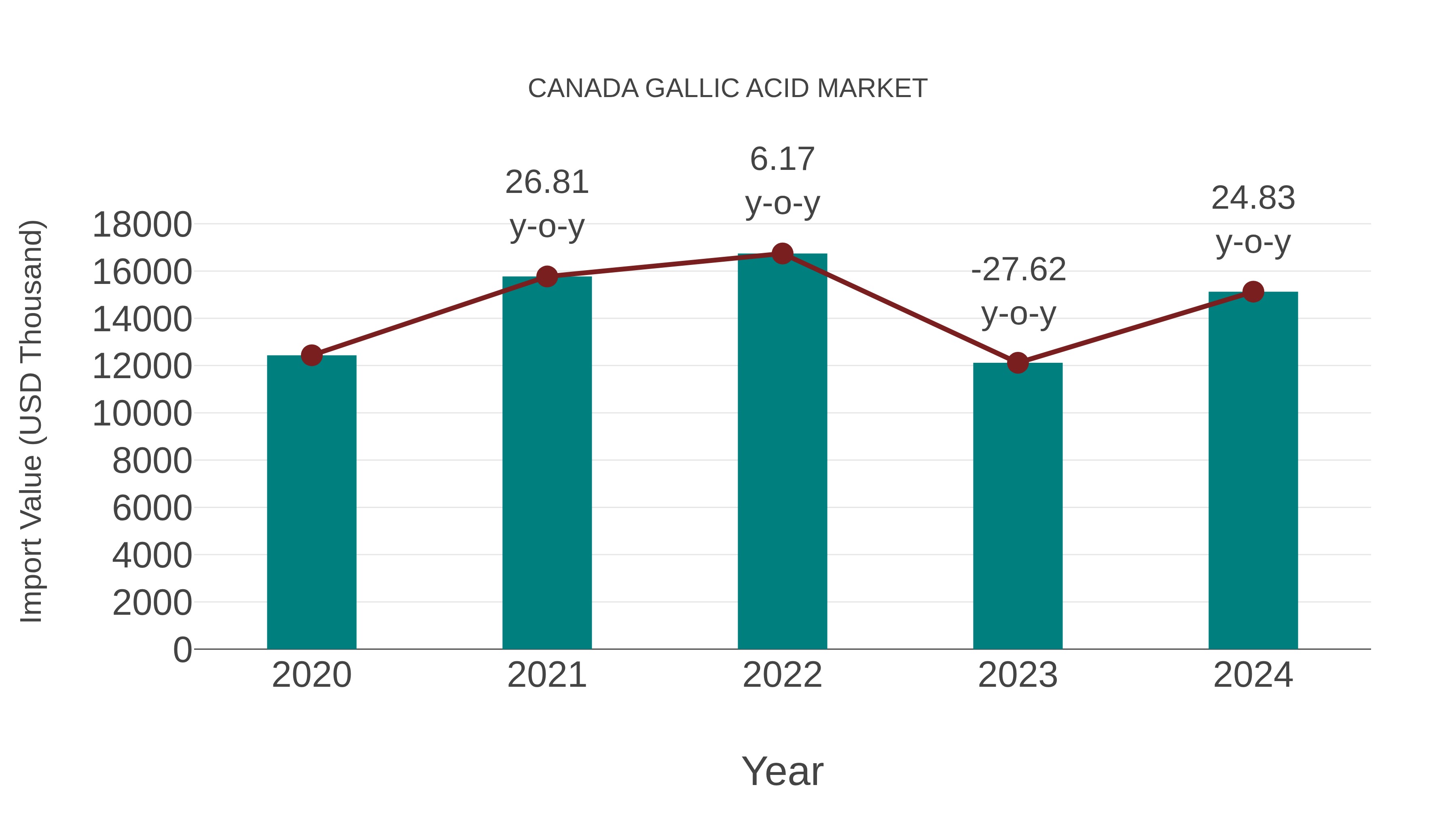
In the Canada gallic acid market, the import trend showed significant growth from 2023 to 2024, with a growth rate of 24.83%. The compound annual growth rate (CAGR) for the period 2020-2024 was 5.02%. This increase in imports can be attributed to a notable demand shift towards gallic acid-based products, indicating a strengthening market stability and favorable trade conditions during this period.
Canada Gallic Acid Market Overview
The Canada gallic acid market is experiencing steady growth driven by increasing demand from various industries such as food and beverage, pharmaceuticals, and personal care. Gallic acid, a natural antioxidant found in plants like gallnuts, has gained popularity for its health benefits and uses in food preservation and skincare products. The market is witnessing a surge in research and development activities to explore new applications and formulations of gallic acid. The growing consumer awareness regarding the health benefits of natural ingredients is further fueling the market growth in Canada. Key market players are focusing on product innovations and strategic partnerships to expand their market presence and cater to the evolving consumer preferences in the country.
Canada Gallic Acid Market Trends
In the Canada gallic acid market, there is a growing trend towards the utilization of gallic acid in the pharmaceutical and nutraceutical industries due to its antioxidant and anti-inflammatory properties. The demand for natural and plant-based ingredients in these sectors has driven the increased use of gallic acid as a key ingredient in supplements, skincare products, and pharmaceutical formulations. Additionally, there is a rising awareness among consumers regarding the health benefits of gallic acid, further fueling its popularity in the market. Manufacturers are also focusing on sustainable sourcing and production methods to meet the growing demand for gallic acid while maintaining ethical and environmentally friendly practices. Overall, the Canada gallic acid market is witnessing a steady growth trajectory driven by the increasing adoption of this versatile compound across various industries.
Canada Gallic Acid Market Challenges
In the Canada gallic acid market, some key challenges include limited awareness and understanding of the benefits of gallic acid among consumers and businesses, leading to slower adoption rates. Additionally, fluctuations in raw material prices and sourcing challenges can impact the supply chain and ultimately the pricing of gallic acid products. Regulatory hurdles and compliance with quality standards also pose challenges for companies operating in the market. Competition from alternative ingredients and substitutes further complicates the landscape, requiring companies to differentiate their offerings and demonstrate the unique value proposition of gallic acid. Overall, navigating these challenges requires strategic marketing efforts, strong supplier relationships, compliance with regulations, and continuous innovation to drive growth and success in the Canada gallic acid market.
Canada Gallic Acid Market Investment Opportunities
In the Canada gallic acid market, there are promising investment opportunities due to the growing demand for natural antioxidants in various industries such as food and beverage, pharmaceuticals, and cosmetics. Gallic acid is known for its antioxidant and anti-inflammatory properties, making it a popular ingredient in health and wellness products. Investing in the production and supply chain of gallic acid can be lucrative as the market is expected to experience steady growth driven by increasing consumer awareness of the health benefits associated with natural ingredients. Moreover, research and development efforts focused on expanding the applications of gallic acid in different sectors present opportunities for innovation and market expansion. Overall, investing in the Canada gallic acid market can be a strategic move for investors looking to capitalize on the rising demand for natural antioxidants and functional ingredients.
Canada Gallic Acid Market Government Policy
The Canadian government does not have specific policies targeted at regulating or promoting the gallic acid market. However, the regulation of gallic acid would fall under Health Canada`s oversight as a natural health product. Health Canada has established regulations and guidelines for the sale and importation of natural health products, including requirements for product safety, efficacy, and quality. Additionally, the Canadian Food Inspection Agency (CFIA) ensures compliance with labeling and packaging regulations for natural health products. While there are no direct incentives or subsidies for the gallic acid market in Canada, the government`s support for research and innovation in the natural health product industry indirectly benefits companies involved in the production and distribution of gallic acid. Overall, the regulatory framework in Canada aims to ensure consumer safety and product quality within the gallic acid market.
Canada Gallic Acid Market Future Outlook
The Canada gallic acid market is expected to witness steady growth in the coming years, driven by increasing awareness of the health benefits associated with gallic acid consumption. Gallic acid is known for its antioxidant, anti-inflammatory, and antimicrobial properties, making it a popular ingredient in the food and beverage, pharmaceutical, and cosmetic industries. With the rising demand for natural and organic products, there is a growing interest in incorporating gallic acid into various products. Additionally, ongoing research and development activities focused on exploring new applications of gallic acid are likely to further stimulate market growth. Overall, the Canada gallic acid market is poised for expansion as consumers continue to seek out products that offer health benefits and cater to their preference for natural ingredients.
Key Highlights of the Report:
- Canada Gallic Acid Market Outlook
- Market Size of Canada Gallic Acid Market,2025
- Forecast of Canada Gallic Acid Market, 2032
- Historical Data and Forecast of Canada Gallic Acid Revenues & Volume for the Period 2022-2032F
- Canada Gallic Acid Market Trend Evolution
- Canada Gallic Acid Market Drivers and Challenges
- Canada Gallic Acid Price Trends
- Canada Gallic Acid Porter's Five Forces
- Canada Gallic Acid Industry Life Cycle
- Historical Data and Forecast of Canada Gallic Acid Market Revenues & Volume By Type for the Period 2022-2032F
- Historical Data and Forecast of Canada Gallic Acid Market Revenues & Volume By Natural Gallic Acid for the Period 2022-2032F
- Historical Data and Forecast of Canada Gallic Acid Market Revenues & Volume By Synthetic Gallic Acid for the Period 2022-2032F
- Historical Data and Forecast of Canada Gallic Acid Market Revenues & Volume By Application for the Period 2022-2032F
- Historical Data and Forecast of Canada Gallic Acid Market Revenues & Volume By Pharmaceuticals for the Period 2022-2032F
- Historical Data and Forecast of Canada Gallic Acid Market Revenues & Volume By Food & Beverages for the Period 2022-2032F
- Historical Data and Forecast of Canada Gallic Acid Market Revenues & Volume By End User for the Period 2022-2032F
- Historical Data and Forecast of Canada Gallic Acid Market Revenues & Volume By Food Manufacturers for the Period 2022-2032F
- Historical Data and Forecast of Canada Gallic Acid Market Revenues & Volume By Pharmaceutical Companies for the Period 2022-2032F
- Canada Gallic Acid Import Export Trade Statistics
- Market Opportunity Assessment By Type
- Market Opportunity Assessment By Application
- Market Opportunity Assessment By End User
- Canada Gallic Acid Top Companies Market Share
- Canada Gallic Acid Competitive Benchmarking By Technical and Operational Parameters
- Canada Gallic Acid Company Profiles
- Canada Gallic Acid Key Strategic Recommendations






































