Chile Electronic Components Market Summary
The chile electronic components market was estimated at USD 503 Million in 2025 and is projected to reach USD 738 Million by 2032, growing at a CAGR of 6.7% from 2026 to 2032.
Chile Electronic Components Market Year-wise Growth Rate and Key Drivers
This graph highlights how the Chile Electronic Components Market has steadily grown over the past five years, supported by major growth factors.
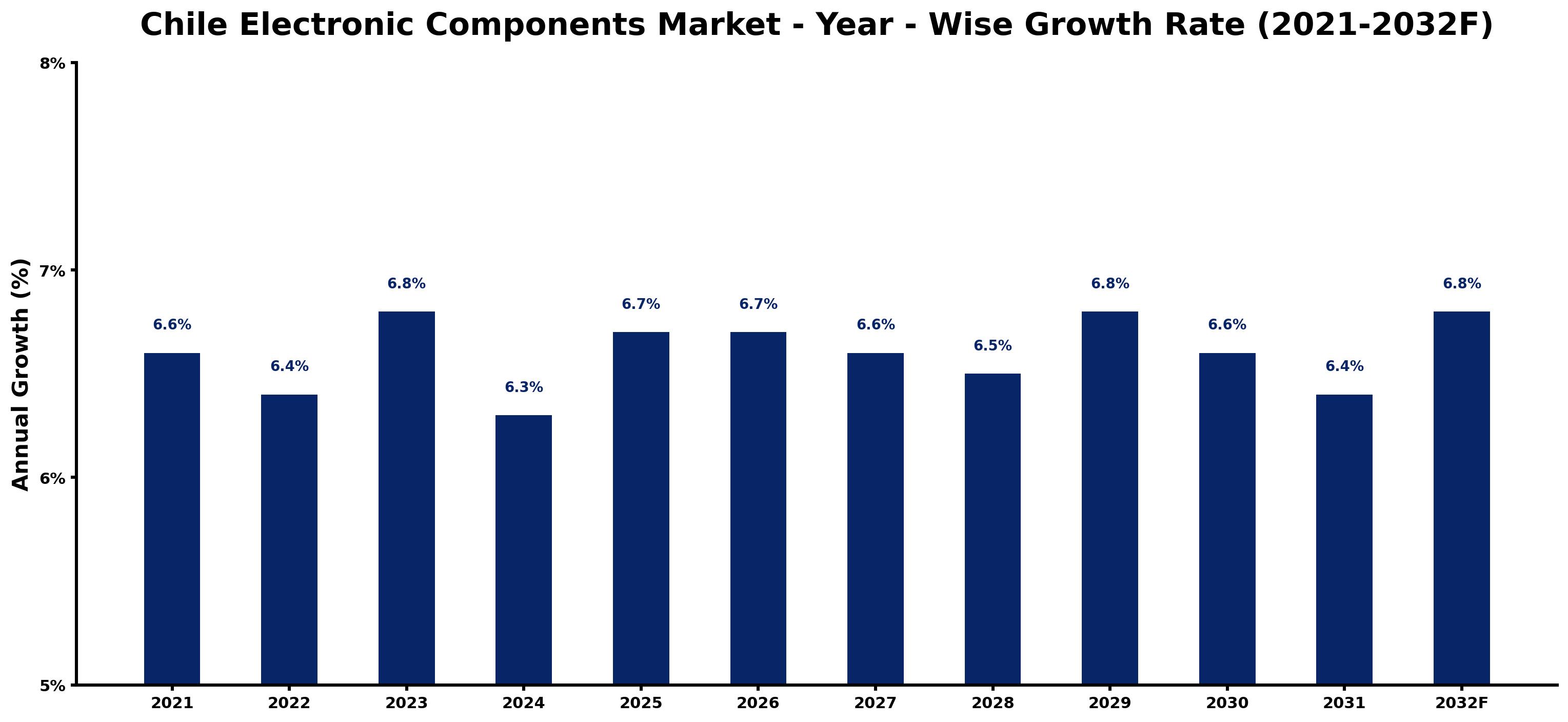
The table below presents the year wise growth rates along with the key drivers influencing the market
| Year | Growth Rate | Major Drivers |
| 2021 | 6.6% | Post-pandemic economic recovery spurs investments in electronic component manufacturing in Chile. |
| 2022 | 6.4% | Emerging tech sectors, such as electric vehicles, significantly boost component demand in Chile. |
| 2023 | 6.8% | Rising consumer electronics sales drive local production and sourcing of electronic parts. |
| 2024 | 6.3% | Increased international partnerships enhance Chile's electronic supply chain capabilities year-over-year. |
| 2025 | 6.7% | Local startups innovate, focusing on sustainable electronic solutions and eco-friendly components. |
| 2026 | 6.7% | Infrastructure upgrades for telecommunications support higher quality and diverse electronic components. |
| 2027 | 6.6% | Chile's growing renewable energy sector requires advanced components for smart grid technologies. |
| 2028 | 6.5% | Educational initiatives foster skilled workforce, aligning talent with electronic manufacturing needs. |
| 2029 | 6.8% | Export opportunities expand, positioning Chile as a regional hub for electronics trade. |
| 2030 | 6.6% | Technological advancements in automation enhance production efficiency in the electronic sector. |
| 2031 | 6.4% | Hardening cybersecurity regulations increase reliance on sophisticated electronic components for protection. |
| 2032 | 6.8% | Consumer preferences shift towards IoT devices, driving innovation in electronic component design. |
Note - Market size estimations and growth projections presented in this report are based on 6Wresearch's advanced forecasting approach, validated with industry datasets as of June 2026.
Chile Electronic Components Market Synopsis
The Chile Electronic Components Market is projected to reach 6.7% and witness significant growth during the forecast period (2026-2032). This expansion is largely driven by the increasing demand for electronic devices and components across various sectors, including automotive, healthcare, and telecommunications. With the rapid adoption of smart devices, automation technologies, and IoT solutions, the necessity for reliable electronic components such as semiconductors, capacitors, resistors, and connectors is intensifying, thereby presenting lucrative opportunities for market participants.
Chile Electronic Components Market Growth Drivers
Several key drivers are propelling the growth of the Chile Electronic Components Market. Firstly, the burgeoning electronics industry in Chile is creating a strong demand for high-quality electronic components. Secondly, the increasing integration of advanced technologies, including IoT and artificial intelligence, is fostering a need for specialized components, such as sensors and processors. Thirdly, government initiatives designed to boost the electronic sector through favorable policies and incentives are encouraging local production and innovation. Furthermore, the rise in disposable incomes among the population is leading to greater consumption of consumer electronics. Lastly, the trend towards sustainability is motivating manufacturers to invest in eco-friendly electronic components, further driving market growth.
Chile Electronic Components Market Trends and Opportunities
The Chile Electronic Components Market is characterized by several notable trends that are shaping its future. There is a significant shift towards miniaturization and enhanced performance of electronic components, driven by the popularity of portable devices and wearables. Additionally, the demand for energy-efficient components is escalating as businesses and consumers alike become more environmentally conscious. The ongoing partnerships between electronic component manufacturers and technology firms are leading to the development of innovative solutions that cater to emerging market needs. Moreover, the continuous evolution of technologies—such as the expansion of 5G networks and the growing emphasis on automation in industries—presents ample opportunities for component suppliers to innovate and capture new market segments.
Chile Electronic Components Market Challenges and Restraints
Despite the favorable growth landscape, the Chile Electronic Components Market faces several challenges. A major hurdle is Chile's heavy reliance on imported electronic components, which exposes local manufacturers to vulnerabilities related to exchange rate fluctuations and disruptions in global supply chains. This dependency often results in increased costs and delays in production. Additionally, the rapid pace of technological advancements necessitates continuous innovation, placing pressure on companies to keep up with the latest developments. Furthermore, competition from neighboring countries poses a significant threat, compelling local players to enhance their product quality and service offerings to maintain market relevance. Addressing these challenges requires strategic planning and robust partnerships within the global supply chain.
Chile Electronic Components Market Investment Opportunities
The Chile Electronic Components Market presents a variety of investment opportunities across several segments, such as semiconductors, passive components, connectors, and more. The increasing demand for consumer electronics and automotive electronics provides an inviting landscape for investors seeking high returns. Moreover, the stable economic environment and the government's focus on boosting innovation create a conducive atmosphere for investment in both manufacturing and distribution of electronic components. Collaborations with local suppliers and distributors can further enhance market penetration, enabling investors to access a broader customer base and improve their competitive stance in this dynamic market environment.
Chile Electronic Components Market Government Investment and Initiatives
The Chilean government has enacted various policies to foster the electronic components market's growth. One of the significant initiatives includes providing tax incentives for companies that invest in research and development, thereby stimulating innovation. Additionally, the government has been active in nurturing partnerships between industry stakeholders and educational institutions to enhance technological capabilities within the sector. Import regulations have also been streamlined to facilitate efficient access to electronic components while ensuring compliance with quality standards. Overall, these government initiatives aim to cultivate a favorable investment climate that supports sustainable growth in the electronic components market.
Chile Electronic Components Market Latest Developments (May 2025 - June 2026)
In the period between May 2025 and June 2026, the Chile Electronic Components Market has seen a flurry of activity characterized by increasing investments in local manufacturing capabilities and advancements in technology. Companies are increasingly focusing on developing high-performance, energy-efficient components that align with global sustainability trends. Additionally, collaborations between local and international firms have been prominent, aimed at leveraging technological expertise and expanding product offerings. Regulatory improvements and government support have further contributed to an enhanced operational environment, encouraging innovation and resilience in the face of global supply chain challenges. This period marks a significant step towards positioning Chile as a competitive player within the global electronic components landscape.
Chile Electronic Components Market - Key Attractiveness of the Report
- 10 Years of Market Numbers
- Historical Data Starting from 2022 to 2025
- Base Year: 2025
- Forecast Data until 2032
- Key Performance Indicators Impacting the Market
- Major Upcoming Developments and Projects
Key Highlights of the Report:
- Chile Electronic Components Market Outlook
- Market Size of Chile Electronic Components Market, 2025
- Forecast of Chile Electronic Components Market, 2032F
- Historical Data and Forecast of Chile Electronic Components Revenues & Volume for the Period 2022-2032F
- Chile Electronic Components Market Trend Evolution
- Chile Electronic Components Market Drivers and Challenges
- Chile Electronic Components Price Trends
- Chile Electronic Components Porter's Five Forces
- Chile Electronic Components Industry Life Cycle
- Historical Data and Forecast of Chile Electronic Components Market Revenues & Volume By Types for the Period 2022-2032F
- Historical Data and Forecast of Chile Electronic Components Market Revenues & Volume By Passive for the Period 2022-2032F
- Historical Data and Forecast of Chile Electronic Components Market Revenues & Volume By Active for the Period 2022-2032F
- Historical Data and Forecast of Chile Electronic Components Market Revenues & Volume By Electro Mechanic for the Period 2022-2032F
- Historical Data and Forecast of Chile Electronic Components Market Revenues & Volume By Applications for the Period 2022-2032F
- Historical Data and Forecast of Chile Electronic Components Market Revenues & Volume By Automotive for the Period 2022-2032F
- Historical Data and Forecast of Chile Electronic Components Market Revenues & Volume By Communications for the Period 2022-2032F
- Historical Data and Forecast of Chile Electronic Components Market Revenues & Volume By Industrial for the Period 2022-2032F
- Historical Data and Forecast of Chile Electronic Components Market Revenues & Volume By Computing Applications for the Period 2022-2032F
- Historical Data and Forecast of Chile Electronic Components Market Revenues & Volume By Others for the Period 2022-2032F
- Chile Electronic Components Import Export Trade Statistics
- Market Opportunity Assessment By Types
- Market Opportunity Assessment By Applications
- Chile Electronic Components Top Companies Market Share
- Chile Electronic Components Competitive Benchmarking By Technical and Operational Parameters
- Chile Electronic Components Company Profiles
- Chile Electronic Components Key Strategic Recommendations






































