Chile Food Dehydrators Market Top 5 Importing Countries and Market Competition (HHI) Analysis
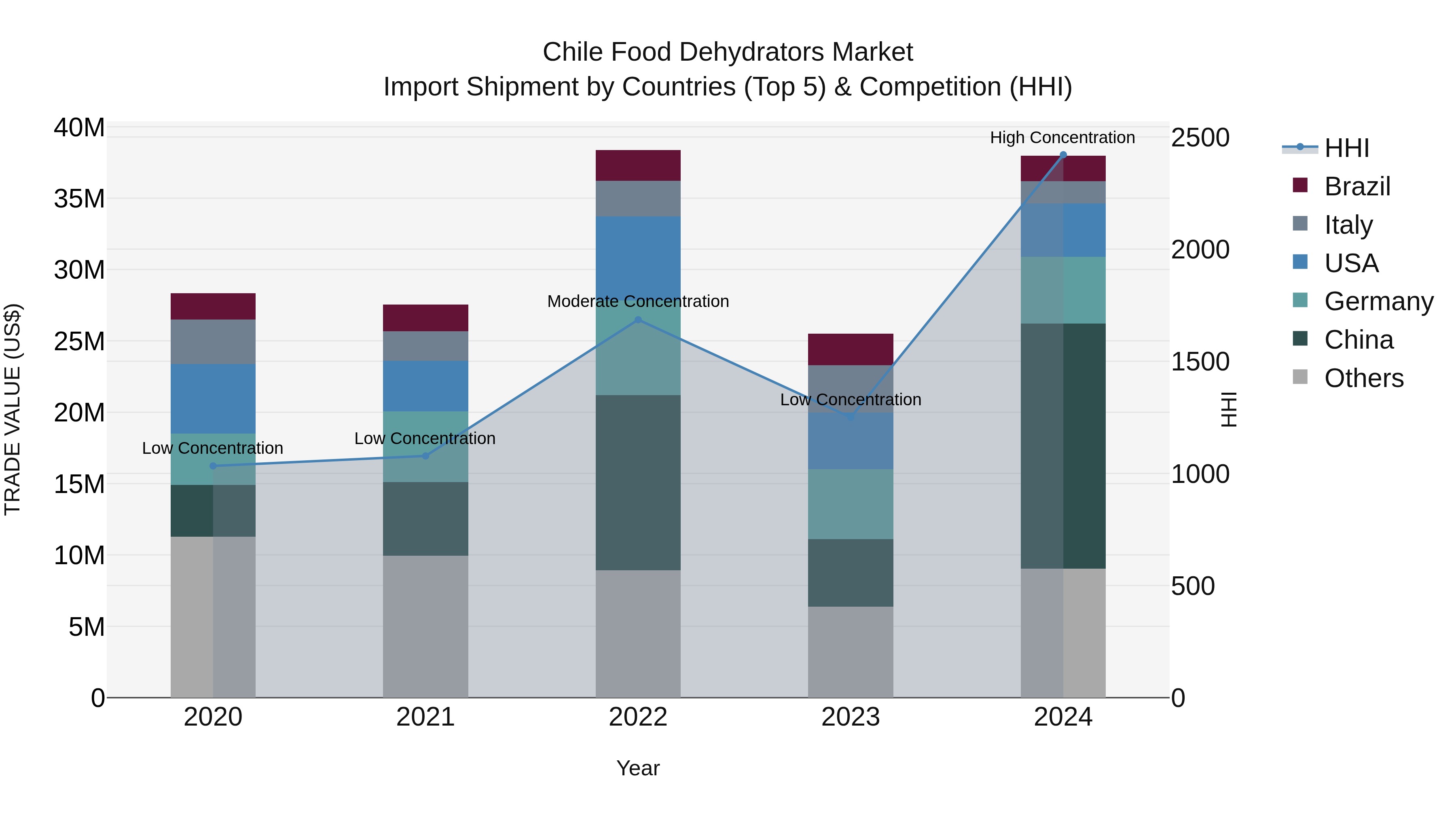
The Chilean market for food dehydrators saw a significant shift in 2024, with top exporting countries being China, Germany, USA, Spain, and Brazil. The market experienced a notable increase in concentration, as reflected by the rise in the Herfindahl-Hirschman Index (HHI). With a strong compound annual growth rate (CAGR) of 7.58% from 2020 to 2024, the sector continues to show promising growth potential. Furthermore, the impressive growth rate of 48.95% from 2023 to 2024 indicates a surge in demand for food dehydrators in Chile, presenting lucrative opportunities for both domestic and international suppliers.
Chile Food Dehydrators Market Overview
The Chile Food Dehydrators Market is experiencing steady growth driven by increasing consumer awareness about the benefits of dehydrated foods, such as longer shelf life, preservation of nutrients, and convenience. The market is primarily driven by the rising demand for healthy snack options, particularly among health-conscious consumers. Key players in the market are focusing on product innovation, such as the introduction of smart dehydrators with advanced features like temperature control and timer settings. Additionally, the trend of home food preservation and DIY food projects is further contributing to the market growth. The market is expected to continue its growth trajectory due to the growing interest in sustainable food practices and the popularity of homemade, preservative-free snacks.
Chile Food Dehydrators Market Trends
The Chile Food Dehydrators Market is experiencing a growing demand for compact and energy-efficient dehydrators as consumers are increasingly focused on healthy snacking options and food preservation techniques. There is a notable trend towards multi-functional dehydrators that offer various temperature settings and timer options to cater to a wider range of dehydrating needs, such as fruits, vegetables, herbs, and meat. Additionally, there is a rising interest in dehydrators with digital controls and smart features for convenient operation and monitoring. Eco-friendly and sustainable dehydrators made from BPA-free materials are also gaining popularity among environmentally conscious consumers in Chile. Overall, the market is witnessing a shift towards innovative and user-friendly food dehydrator products that align with the health and wellness preferences of consumers.
Chile Food Dehydrators Market Challenges
In the Chile Food Dehydrators Market, some key challenges include intense competition from both domestic and international manufacturers, fluctuating raw material costs, and the need for continuous innovation to meet evolving consumer preferences. Additionally, logistical challenges related to distribution and transportation can impact the market, especially for small and medium-sized enterprises. Regulatory hurdles and compliance requirements also pose challenges for companies operating in this sector. Moreover, consumer awareness about the benefits of food dehydrators and the availability of alternative food preservation methods present obstacles to market growth. To succeed in this competitive landscape, companies in the Chile Food Dehydrators Market need to focus on product differentiation, cost-effective manufacturing processes, and strategic marketing initiatives to attract and retain customers.
Chile Food Dehydrators Market Investment Opportunities
In the Chile Food Dehydrators Market, there are several promising investment opportunities for both manufacturers and distributors. The market is experiencing a growing demand for food dehydrators due to the increasing awareness of healthy eating habits and the popularity of preserving food in a convenient way. Investing in innovative and energy-efficient food dehydrator technologies can help businesses capitalize on this trend. Additionally, there is an opportunity to expand distribution channels and reach a wider consumer base by offering a diverse range of dehydrator models to cater to different customer needs and preferences. With the Chilean market showing a positive growth trajectory in the food dehydrator segment, strategic investments in product development, marketing, and distribution can yield significant returns for investors.
Chile Food Dehydrators Market Government Policy
In Chile, the government has implemented policies to promote food safety and quality standards, which directly impact the food dehydrators market. The Chilean Agricultural and Livestock Service (SAG) regulates and monitors food production processes, including dehydrated foods, to ensure compliance with health and safety requirements. Additionally, the Ministry of Agriculture supports small and medium-sized enterprises in the food processing industry, offering technical assistance and financial incentives to enhance productivity and competitiveness. Importantly, the government encourages sustainable practices in food production, aligning with global trends towards environmentally friendly processes. Overall, these policies create a favorable environment for the growth of the Chilean food dehydrators market by ensuring product quality, safety, and sustainability.
Chile Food Dehydrators Market Future Outlook
The future outlook for the Chile Food Dehydrators Market appears positive, driven by the growing demand for convenient and healthy food preservation methods. Consumers are increasingly adopting dehydrated foods due to their longer shelf life, retention of nutrients, and reduced food waste. Additionally, the trend towards home cooking and DIY food preparation is expected to further boost the market as consumers seek ways to preserve seasonal produce and make homemade snacks. Technological advancements in dehydrator products, such as energy-efficient models and smart features, are likely to attract more consumers. Moreover, the rise in online retail channels provides opportunities for market players to reach a wider customer base. Overall, the Chile Food Dehydrators Market is poised for steady growth in the coming years.
Key Highlights of the Report:
- Chile Food Dehydrators Market Outlook
- Market Size of Chile Food Dehydrators Market, 2024
- Forecast of Chile Food Dehydrators Market, 2031
- Historical Data and Forecast of Chile Food Dehydrators Revenues & Volume for the Period 2021 - 2031
- Chile Food Dehydrators Market Trend Evolution
- Chile Food Dehydrators Market Drivers and Challenges
- Chile Food Dehydrators Price Trends
- Chile Food Dehydrators Porter's Five Forces
- Chile Food Dehydrators Industry Life Cycle
- Historical Data and Forecast of Chile Food Dehydrators Market Revenues & Volume By Technology for the Period 2021 - 2031
- Historical Data and Forecast of Chile Food Dehydrators Market Revenues & Volume By Vertical Flow for the Period 2021 - 2031
- Historical Data and Forecast of Chile Food Dehydrators Market Revenues & Volume By Horizontal Flow for the Period 2021 - 2031
- Historical Data and Forecast of Chile Food Dehydrators Market Revenues & Volume By End-Use for the Period 2021 - 2031
- Historical Data and Forecast of Chile Food Dehydrators Market Revenues & Volume By Industrial for the Period 2021 - 2031
- Historical Data and Forecast of Chile Food Dehydrators Market Revenues & Volume By Commercial for the Period 2021 - 2031
- Historical Data and Forecast of Chile Food Dehydrators Market Revenues & Volume By Residential for the Period 2021 - 2031
- Historical Data and Forecast of Chile Food Dehydrators Market Revenues & Volume By Others for the Period 2021 - 2031
- Historical Data and Forecast of Chile Food Dehydrators Market Revenues & Volume By Energy Source for the Period 2021 - 2031
- Historical Data and Forecast of Chile Food Dehydrators Market Revenues & Volume By Electricity for the Period 2021 - 2031
- Historical Data and Forecast of Chile Food Dehydrators Market Revenues & Volume By Biofuel for the Period 2021 - 2031
- Historical Data and Forecast of Chile Food Dehydrators Market Revenues & Volume By Solar for the Period 2021 - 2031
- Historical Data and Forecast of Chile Food Dehydrators Market Revenues & Volume By Others for the Period 2021 - 2031
- Chile Food Dehydrators Import Export Trade Statistics
- Market Opportunity Assessment By Technology
- Market Opportunity Assessment By End-Use
- Market Opportunity Assessment By Energy Source
- Chile Food Dehydrators Top Companies Market Share
- Chile Food Dehydrators Competitive Benchmarking By Technical and Operational Parameters
- Chile Food Dehydrators Company Profiles
- Chile Food Dehydrators Key Strategic Recommendations






































