Chile Guitar Market Top 5 Importing Countries and Market Competition (HHI) Analysis
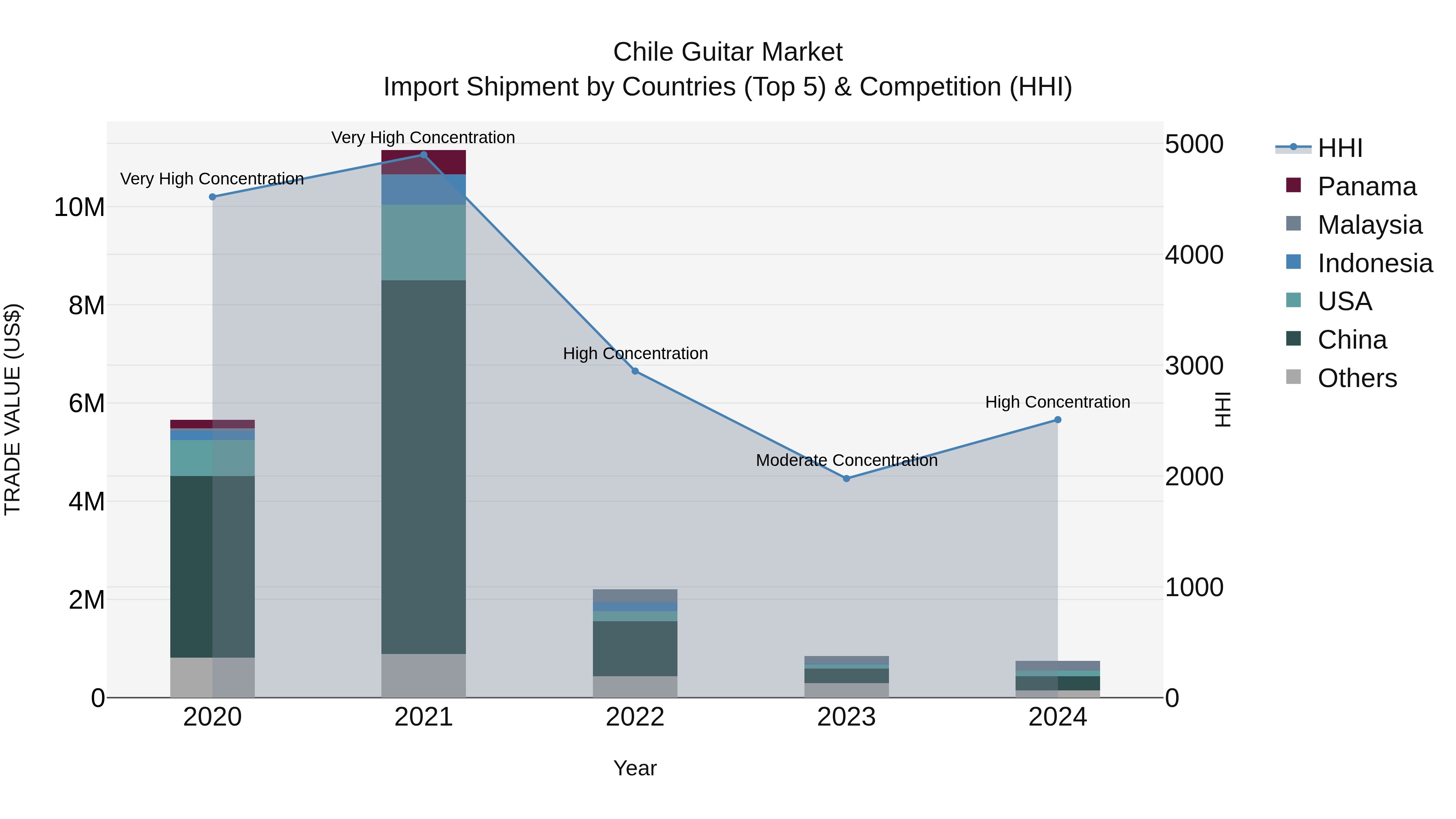
Chile`s guitar import market saw a shift in concentration from moderate to high in 2024, with top exporters being China, Malaysia, USA, Vietnam, and Japan. The market experienced a significant decline in CAGR from 2020 to 2024 at -39.6%, with a further decrease in growth rate from 2023 to 2024 at -11.37%. This indicates a challenging landscape for guitar importers in Chile, potentially influenced by global economic trends and changing consumer preferences. Stakeholders should closely monitor market dynamics and adapt strategies to navigate these evolving conditions.
Chile Guitar Market Overview
The Chilean guitar market is a growing segment within the country`s music industry. With a strong appreciation for music and a rich cultural heritage, guitars hold a significant place in Chilean music traditions. The market is characterized by a mix of local and international guitar brands catering to a diverse range of customers, from professional musicians to hobbyists. Acoustic guitars are particularly popular among consumers, reflecting a preference for traditional and folk music styles. Increasing interest in electric guitars, driven by the influence of rock and pop music, is also observed among younger demographics. The presence of music schools, live music venues, and a vibrant music scene further contribute to the demand for guitars in Chile. Overall, the Chilean guitar market presents opportunities for both established players and new entrants looking to tap into the country`s musical passion.
Chile Guitar Market Trends
In the Chile guitar market, there is a growing trend towards sustainability and eco-friendly practices. Consumers are increasingly seeking guitars made from ethically sourced materials, such as reclaimed wood or alternative eco-friendly materials. Electric guitars with advanced technology features are also gaining popularity among musicians looking for versatility and innovative sound capabilities. Additionally, there is a rising interest in custom-made guitars, allowing players to personalize their instruments to suit their specific preferences and style. The market is also seeing a demand for vintage and retro-inspired designs, appealing to a niche group of consumers looking for classic aesthetics and tones. Overall, the Chile guitar market is evolving to cater to a diverse range of preferences, from sustainable and tech-savvy options to traditional and custom offerings.
Chile Guitar Market Challenges
In the Chile guitar market, some key challenges include intense competition from international guitar brands, economic fluctuations impacting consumer spending, and the rise of digital music production tools reducing the demand for traditional guitars. Additionally, high import tariffs on musical instruments in Chile can drive up prices for consumers, making it difficult for local guitar manufacturers to compete. Limited access to quality raw materials and skilled labor can also hinder the growth of the domestic guitar industry. To stay competitive, local guitar manufacturers in Chile may need to focus on innovation, quality craftsmanship, and developing unique selling points to differentiate themselves in the market. Additionally, building strong relationships with retailers and implementing effective marketing strategies can help overcome these challenges and attract customers in the increasingly competitive guitar market.
Chile Guitar Market Investment Opportunities
The Chile guitar market presents promising investment opportunities due to the country`s vibrant music culture and growing interest in music education. With a rising number of individuals taking up guitar playing as a hobby or profession, there is a demand for a wide range of guitar products and services, including instruments, accessories, lessons, and maintenance services. Investing in guitar retail stores, online platforms, music schools, or guitar manufacturing facilities could be lucrative ventures in Chile. Additionally, there is potential for growth in the market through collaborations with local musicians, organizing music events, and offering specialized services catered to the diverse needs of guitar enthusiasts in the country. By tapping into this market segment and understanding the preferences of Chilean consumers, investors can capitalize on the expanding opportunities within the Chile guitar market.
Chile Guitar Market Government Policy
In Chile, the government has implemented various policies to support the guitar market. These policies include import tariffs on guitars to protect local manufacturers, incentives for music education programs to promote guitar playing, and tax breaks for music stores that sell locally made guitars. Additionally, the government has set quality standards and regulations for guitar manufacturing to ensure consumer safety and product quality. Furthermore, there are initiatives to promote Chilean guitar craftsmanship and heritage through exhibitions and cultural events. Overall, the government`s policies aim to boost the domestic guitar industry, encourage music education, and preserve the cultural significance of guitars in Chilean society.
Chile Guitar Market Future Outlook
The Chile guitar market is expected to see steady growth in the coming years, driven by factors such as increasing disposable income, growing interest in music education, and the rising popularity of live music performances. As more consumers seek creative outlets and ways to express themselves through music, the demand for guitars is likely to remain strong. Additionally, advancements in technology, such as online music lessons and digital recording tools, are making it easier for individuals to learn and create music, further fueling the market growth. With a diverse range of guitar brands and models available in the market, including both local and international players, consumers in Chile have a wide selection to choose from, ensuring a competitive landscape that will continue to drive innovation and product development in the industry.
Key Highlights of the Report:
- Chile Guitar Market Outlook
- Market Size of Chile Guitar Market, 2021
- Forecast of Chile Guitar Market, 2031
- Historical Data and Forecast of Chile Guitar Revenues & Volume for the Period 2018 - 2031
- Chile Guitar Market Trend Evolution
- Chile Guitar Market Drivers and Challenges
- Chile Guitar Price Trends
- Chile Guitar Porter's Five Forces
- Chile Guitar Industry Life Cycle
- Historical Data and Forecast of Chile Guitar Market Revenues & Volume By Type for the Period 2018 - 2031
- Historical Data and Forecast of Chile Guitar Market Revenues & Volume By Acoustic Guitars for the Period 2018 - 2031
- Historical Data and Forecast of Chile Guitar Market Revenues & Volume By Electric Guitars for the Period 2018 - 2031
- Historical Data and Forecast of Chile Guitar Market Revenues & Volume By Application for the Period 2018 - 2031
- Historical Data and Forecast of Chile Guitar Market Revenues & Volume By Online Retail for the Period 2018 - 2031
- Historical Data and Forecast of Chile Guitar Market Revenues & Volume By Offline Retail for the Period 2018 - 2031
- Chile Guitar Import Export Trade Statistics
- Market Opportunity Assessment By Type
- Market Opportunity Assessment By Application
- Chile Guitar Top Companies Market Share
- Chile Guitar Competitive Benchmarking By Technical and Operational Parameters
- Chile Guitar Company Profiles
- Chile Guitar Key Strategic Recommendations






































