Chile Natural Extracts Market Size, Share & Growth Rate
The Chile Natural Extracts Market was estimated at USD 450 Million in 2025 and is projected to reach USD 625 Million by 2032, growing at a CAGR of 4.8% from 2026 to 2032. This growth is driven by a marked increase in consumer preferences for natural and organic ingredients, particularly in sectors such as food and beverages, cosmetics, and pharmaceuticals. Furthermore, the nation's rich biodiversity and innovative extraction practices are enhancing the quality and appeal of its natural extracts in the global marketplace.
Chile Natural Extracts Market Year-wise Growth Rate and Key Drivers
This graph highlights how the Chile Natural Extracts Market has steadily grown over the years, supported by major growth factors.
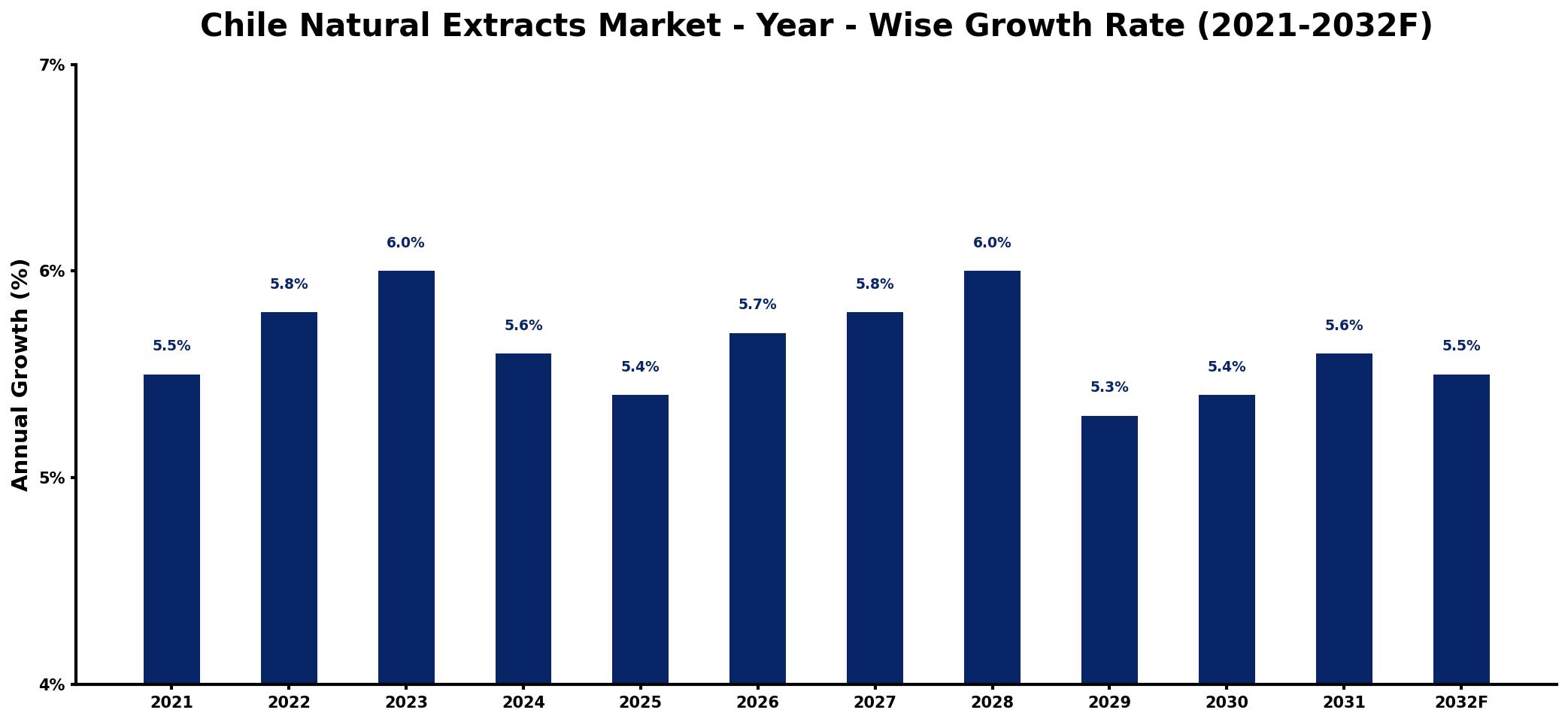
The table below presents the year‑wise growth rates along with the key drivers influencing the market
| Year | Growth Rate | Major Drivers |
| 2021 | 5.5% | Increased consumer health awareness |
| 2022 | 5.8% | Rising demand for organic products |
| 2023 | 6.0% | Growing interest in sustainability practices |
| 2024 | 5.6% | Expansion of e-commerce platforms |
| 2025 | 5.4% | Investment in innovative production methods |
| 2026 | 5.7% | Emerging market trends driving sales |
| 2027 | 5.8% | Strengthening international trade agreements |
| 2028 | 6.0% | Increased collaboration with local farmers |
| 2029 | 5.3% | Higher consumer spending on wellness |
| 2030 | 5.4% | Development of new application areas |
| 2031 | 5.6% | Growing popularity of clean labeling |
| 2032 | 5.5% | Strengthening supply chain efficiencies |
Note: Market size estimations and growth projections presented in this report are based on 6Wresearch's proprietary forecasting methodology, utilizing the latest available industry data, government publications, and primary research inputs.
Chile Natural Extracts Market Synopsis
Currently, the Chile Natural Extracts Market is on a trajectory of steady growth, fueled by the rising consumer demand for clean-label products across various industries. With a climate that fosters a diverse array of botanicals, Chile stands out as a significant source of natural extracts, such as maqui berry and quinoa, which are increasingly recognized for their health benefits.
Notably, the market is witnessing a trend towards sustainable sourcing, with manufacturers striving to meet consumer expectations for ethical and environmentally friendly practices. This focus not only positions Chile as a leader in natural extracts but also aligns with global trends prioritizing health, wellness, and sustainability.
Chile Natural Extracts Market Key Takeaways
- Chile's rich biodiversity enhances its position as a leading supplier of high-quality natural extracts.
- The market is driven by growing consumer interest in health and wellness-oriented products.
- Sustainable and ethical sourcing practices are becoming essential for manufacturers.
- Innovation in extraction technologies is key to improving the quality of natural extracts.
- Government policies support sustainable development and indigenous participation in the market.
Evaluation of Restraints in Chile Natural Extracts Market
Despite the promising growth of the Chile Natural Extracts Market, several constraints are at play. Competition from countries with established natural extracts markets poses a challenge. Fluctuating raw material prices, often impacted by unpredictable climatic conditions, can threaten profit margins and supply consistency. Additionally, companies must navigate complex regulatory frameworks regarding resource extraction and export, which can hinder operational agility. Lastly, maintaining sustainability certifications to meet evolving consumer demands requires ongoing investment and innovation.
Chile Natural Extracts Market Trends
Emerging trends indicate a shift towards ingredient transparency, with consumers increasingly opting for products that highlight natural and organic components. The recognition of native Chilean plants, such as quila and maqui, is fostering a demand for extracts that not only enhance product efficacy but also resonate with consumers ethical values. Additionally, advancements in extraction technology are streamlining processes, improving yield and potency while reducing environmental impact.
Chile Natural Extracts Market Opportunities
Investment opportunities abound in the Chile Natural Extracts Market, particularly for businesses looking to leverage the country's unique biodiversity. Establishing extraction and processing facilities can capitalize on the high demand for natural ingredients globally. Moreover, partnerships with local farmers ensure sustainable sourcing while fostering community development. Research and development initiatives aimed at innovative product formulations will likely unlock new market segments, as consumers continue to prioritize health-focused, clean-label products.
Government Initiatives in the Chile Natural Extracts Market
The Chilean government actively promotes sustainable practices within the natural extracts market through a range of initiatives. Policies focus on the sustainable management of native forests and support for indigenous communities in resource management. Programs like the National Biodiversity Strategy emphasize the conservation of biodiversity while encouraging the responsible use of natural resources. These efforts aim to foster a balanced approach that supports economic growth while safeguarding the environment.
Future Insights of the Chile Natural Extracts Market
The future of the Chile Natural Extracts Market looks bright, with the continued expansion anticipated from 2026 to 2032. Increasing health consciousness among consumers globally, coupled with a preference for natural ingredients, is expected to propel market growth. Moreover, ongoing support from government initiatives and the evolution of sustainable practices will enhance Chile's reputation as a key supplier of premium natural extracts in the international arena. This convergence of factors positions the market for dynamic growth and innovation, promising a vibrant future.
Chile Natural Extracts Market Latest Developments (2025 - 2026)
Recent developments in the Chile Natural Extracts Market indicate a strong push towards improving extraction technologies and product offerings. Companies are increasingly focusing on R&D to create unique formulations that cater to health-conscious consumers. In parallel, there has been a noticeable increase in collaborations aimed at enhancing the sustainability of sourcing practices, ensuring that the market remains competitive while preserving environmental integrity.
Chile Natural Extracts Market - Key Attractiveness of the Report
- 10 Years of Market Numbers
- Historical Data Starting from 2022 to 2025
- Base Year: 2025
- Forecast Data until 2032
- Key Performance Indicators Impacting the Market
- Major Upcoming Developments and Projects
Key Highlights of the Report:
- Chile Natural Extracts Market Outlook
- Market Size of Chile Natural Extracts Market, 2025
- Forecast of Chile Natural Extracts Market, 2032
- Historical Data and Forecast of Chile Natural Extracts Revenues & Volume for the Period 2022-2032F
- Chile Natural Extracts Market Trend Evolution
- Chile Natural Extracts Market Drivers and Challenges
- Chile Natural Extracts Price Trends
- Chile Natural Extracts Porter's Five Forces
- Chile Natural Extracts Industry Life Cycle
- Historical Data and Forecast of Chile Natural Extracts Market Revenues & Volume By Product for the Period 2022-2032F
- Historical Data and Forecast of Chile Natural Extracts Market Revenues & Volume By Essential Oils for the Period 2022-2032F
- Historical Data and Forecast of Chile Natural Extracts Market Revenues & Volume By Oleoresins for the Period 2022-2032F
- Historical Data and Forecast of Chile Natural Extracts Market Revenues & Volume By Herbal Extracts for the Period 2022-2032F
- Historical Data and Forecast of Chile Natural Extracts Market Revenues & Volume By Natural Colors for the Period 2022-2032F
- Historical Data and Forecast of Chile Natural Extracts Market Revenues & Volume By Dried Crops for the Period 2022-2032F
- Historical Data and Forecast of Chile Natural Extracts Market Revenues & Volume By Application for the Period 2022-2032F
- Historical Data and Forecast of Chile Natural Extracts Market Revenues & Volume By Personal Care & Cosmetics for the Period 2022-2032F
- Historical Data and Forecast of Chile Natural Extracts Market Revenues & Volume By Food & Beverage for the Period 2022-2032F
- Historical Data and Forecast of Chile Natural Extracts Market Revenues & Volume By Animal Feed for the Period 2022-2032F
- Historical Data and Forecast of Chile Natural Extracts Market Revenues & Volume By Pharmaceuticals for the Period 2022-2032F
- Historical Data and Forecast of Chile Natural Extracts Market Revenues & Volume By Nutraceuticals for the Period 2022-2032F
- Historical Data and Forecast of Chile Natural Extracts Market Revenues & Volume By Others for the Period 2022-2032F
- Chile Natural Extracts Import Export Trade Statistics
- Market Opportunity Assessment By Product
- Market Opportunity Assessment By Application
- Chile Natural Extracts Top Companies Market Share
- Chile Natural Extracts Competitive Benchmarking By Technical and Operational Parameters
- Chile Natural Extracts Company Profiles
- Chile Natural Extracts Key Strategic Recommendations






































