Chile Physiotherapy Equipment Market Summary
The chile physiotherapy equipment market was estimated at USD 313 Million in 2025 and is projected to reach USD 434 Million by 2032, growing at a CAGR of 5.5% from 2026 to 2032.
Chile Physiotherapy Equipment Market Year-wise Growth Rate and Key Drivers
This graph highlights how the Chile Physiotherapy Equipment Market has steadily grown over the past five years, supported by major growth factors.
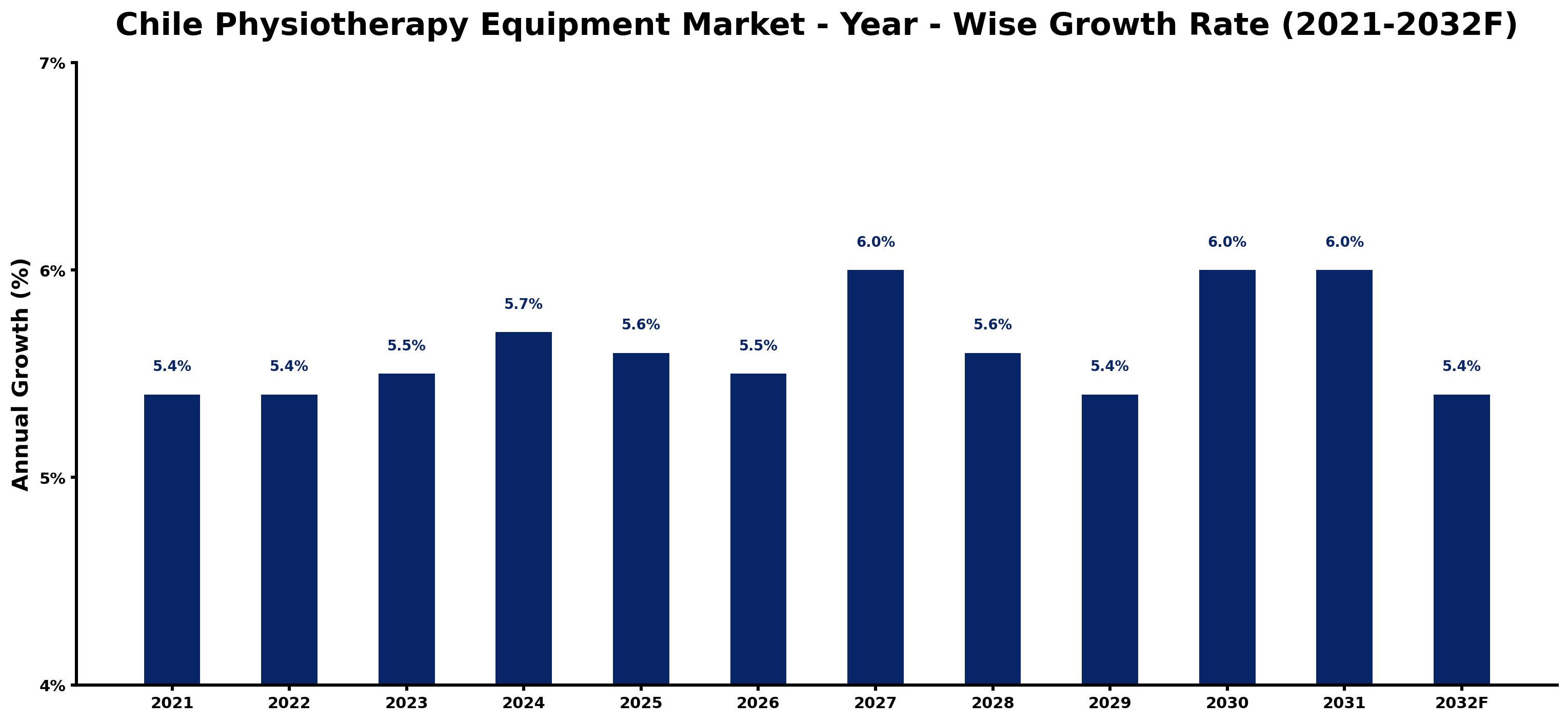
The table below presents the year wise growth rates along with the key drivers influencing the market
| Year | Growth Rate | Major Drivers |
| 2021 | 5.4% | Healthcare reforms initiated significant investments in rehabilitation and physiotherapy services. |
| 2022 | 5.4% | Increased awareness of mental health linked physical therapy with holistic wellness approaches. |
| 2023 | 5.5% | Advancements in telehealth technologies expanded physiotherapy access in remote regions. |
| 2024 | 5.7% | Integration of AI tools in treatment plans enhanced patient engagement and outcomes. |
| 2025 | 5.6% | The aging population necessitated specialized physiotherapy solutions for chronic conditions. |
| 2026 | 5.5% | Emergence of fitness trends highlighted importance of preventive physiotherapy and wellness. |
| 2027 | 6.0% | Growing sports culture stimulated demand for advanced physiotherapy and recovery equipment. |
| 2028 | 5.6% | Insurance companies began covering more physiotherapy services, improving affordability for patients. |
| 2029 | 5.4% | Collaborations between clinics and tech firms brought innovative physiotherapy devices to market. |
| 2030 | 6.0% | Emergence of patient-centered care models emphasized personalized physiotherapy treatment approaches. |
| 2031 | 6.0% | Increased educational programs produced more qualified physiotherapy professionals across Chile. |
| 2032 | 5.4% | Sustainable equipment solutions gained popularity, aligning with global health and environmental standards. |
Note - Market size estimations and growth projections presented in this report are based on 6Wresearch's advanced forecasting approach, validated with industry datasets as of June 2026.
Chile Physiotherapy Equipment Market Synopsis
The Chile Physiotherapy Equipment Market is projected to reach 5.5% and witness significant growth during the forecast period (2026-2032). Factors contributing to this growth include increased awareness regarding the therapeutic benefits of physiotherapy, a rising prevalence of musculoskeletal disorders, and an expanding elderly demographic. The market is characterized by a shift towards innovative technologies, particularly robotics and virtual reality, alongside a notable emphasis on home-based and remote physiotherapy solutions. The integration of data analytics for personalized treatment approaches further enhances the market's appeal.
Chile Physiotherapy Equipment Market Growth Drivers
The advancement of the Chile physiotherapy equipment market is driven by several key factors:
- Growing awareness of physiotherapy's benefits among the general population, which is leading to higher demand for effective treatment modalities.
- Increased prevalence of chronic ailments and musculoskeletal disorders, necessitating effective rehabilitation solutions that physiotherapy equipment can provide.
- The aging population in Chile is contributing to a higher incidence of age-related conditions, further propelling demand for physiotherapy services and equipment.
- Technological innovations such as electrotherapy and ultrasound equipment are enhancing treatment efficacy, resulting in elevated interest from healthcare providers.
- The market is responding to a significant shift towards preventative healthcare, with a growing demand for home physiotherapy solutions that enable patients to manage their health independently.
Chile Physiotherapy Equipment Market Trends and Opportunities
Several trends are shaping the Chile physiotherapy equipment landscape, providing opportunities for stakeholders:
- There is a notable shift towards integrating advanced technologies, including robotics and virtual reality, to improve patient engagement and treatment outcomes.
- Home-based physiotherapy equipment is gaining traction, driven by the desire for convenience and the capacity for patients to manage their rehabilitation in a non-clinical setting.
- The emergence of tele-rehabilitation is opening new avenues for physiotherapy providers, facilitating remote treatment and extending service reach to underserved regions.
- Portable and user-friendly physiotherapy devices are becoming increasingly popular among mobile practitioners, enhancing accessibility to effective treatment solutions.
- The rise of e-commerce is revolutionizing how physiotherapy equipment is marketed and sold, providing customers with greater access to a diverse range of products.
Chile Physiotherapy Equipment Market Challenges and Restraints
Despite its potential, the Chile physiotherapy equipment market faces several challenges that could impact growth:
- High import duties and taxes on medical equipment may escalate costs, making it difficult for both healthcare providers and patients to access necessary physiotherapy tools.
- Inconsistent access to advanced technology in rural or underserved areas can limit the adoption of modern physiotherapy practices, creating disparities in treatment availability.
- The presence of alternative treatment methods poses competitive pressure on physiotherapy, as patients may opt for less traditional approaches.
- A shortage of qualified physiotherapy professionals in certain regions can hinder the effective utilization of available equipment, impeding overall market growth.
- Addressing these challenges will necessitate strategic alliances, investments in local training programs, and advocacy for supportive market policies.
Chile Physiotherapy Equipment Market Investment Opportunities
Investment in the Chile physiotherapy equipment market presents several promising opportunities:
- With the elderly population on the rise, there is a clear demand for advanced physiotherapy equipment that caters specifically to age-related health issues.
- Investors can capitalize on the increasing recognition of non-invasive treatment options, particularly electrotherapy and rehabilitation exercise equipment.
- Tele-rehabilitation solutions hold significant growth potential, enabling providers to reach patients in remote locales while enhancing service efficiency.
- Forming partnerships with local healthcare providers can facilitate better distribution networks and improve market penetration for new entrants.
- Focusing on research and development to innovate products that specifically meet the unique demands of the Chilean population is critical for sustained growth and successful investment.
Chile Physiotherapy Equipment Market Government Investment and Initiatives
The Chilean government is involved in various initiatives to bolster the physiotherapy equipment market through stringent regulations aimed at ensuring safety and efficacy standards:
- The Instituto de Salud Pública (ISP) plays a pivotal role in overseeing the registration and approval processes for physiotherapy equipment, ensuring that all medical devices comply with national regulatory standards.
- The Ministry of Health is instrumental in formulating guidelines that govern the importation, distribution, and usage of medical devices, including physiotherapy tools, enhancing patient safety.
- Government policies focus on promoting transparency in the market, necessitating that equipment labeling and advertising provide clear and accurate information for consumers and healthcare professionals alike.
- Strategic public spending on healthcare infrastructure aims to improve access to physiotherapy services across the country, indirectly supporting the equipment market.
- Encouraging innovation through funding and grants for research purposes helps pave the way for new technologies in physiotherapy, benefitting the overall healthcare landscape.
Chile Physiotherapy Equipment Market Latest Developments (May 2025 - June 2026)
Recent developments within the Chile physiotherapy equipment market reflect a shifting focus towards technological integration and enhanced service delivery:
- There has been an observable increase in the utilization of telehealth solutions, enabling physiotherapy providers to deliver services remotely and cater to a broader demographic.
- The interest in portable physiotherapy devices has surged, driven by practitioners who require adaptable tools to accommodate various treatment environments.
- Discussions around regulatory reform have emerged, aimed at streamlining the process for introducing new physiotherapy equipment into the market.
- Public awareness campaigns have been launched to educate the population on the benefits of physiotherapy, further driving demand for equipment and services.
- New partnerships between technology firms and healthcare providers are beginning to flourish, aimed at harnessing advanced technologies for improved patient outcomes.
Chile Physiotherapy Equipment Market - Key Attractiveness of the Report
- 10 Years of Market Numbers
- Historical Data Starting from 2022 to 2025
- Base Year: 2025
- Forecast Data until 2032
- Key Performance Indicators Impacting the Market
- Major Upcoming Developments and Projects
Key Highlights of the Report:
- Chile Physiotherapy Equipment Market Outlook
- Market Size of Chile Physiotherapy Equipment Market, 2025
- Forecast of Chile Physiotherapy Equipment Market, 2032F
- Historical Data and Forecast of Chile Physiotherapy Equipment Revenues & Volume for the Period 2022-2032F
- Chile Physiotherapy Equipment Market Trend Evolution
- Chile Physiotherapy Equipment Market Drivers and Challenges
- Chile Physiotherapy Equipment Price Trends
- Chile Physiotherapy Equipment Porter's Five Forces
- Chile Physiotherapy Equipment Industry Life Cycle
- Historical Data and Forecast of Chile Physiotherapy Equipment Market Revenues & Volume By Product Types for the Period 2022-2032F
- Historical Data and Forecast of Chile Physiotherapy Equipment Market Revenues & Volume By Equipment for the Period 2022-2032F
- Historical Data and Forecast of Chile Physiotherapy Equipment Market Revenues & Volume By Accessories for the Period 2022-2032F
- Historical Data and Forecast of Chile Physiotherapy Equipment Market Revenues & Volume By Application? for the Period 2022-2032F
- Historical Data and Forecast of Chile Physiotherapy Equipment Market Revenues & Volume By Musculoskeletal Applications for the Period 2022-2032F
- Historical Data and Forecast of Chile Physiotherapy Equipment Market Revenues & Volume By Neurological Applications for the Period 2022-2032F
- Historical Data and Forecast of Chile Physiotherapy Equipment Market Revenues & Volume By Cardiovascular & Pulmonary Applications for the Period 2022-2032F
- Historical Data and Forecast of Chile Physiotherapy Equipment Market Revenues & Volume By Pediatric Applications for the Period 2022-2032F
- Historical Data and Forecast of Chile Physiotherapy Equipment Market Revenues & Volume By Gynecological Applications for the Period 2022-2032F
- Historical Data and Forecast of Chile Physiotherapy Equipment Market Revenues & Volume By Other? for the Period 2022-2032F
- Historical Data and Forecast of Chile Physiotherapy Equipment Market Revenues & Volume By End-user for the Period 2022-2032F
- Historical Data and Forecast of Chile Physiotherapy Equipment Market Revenues & Volume By Physiotherapy & Rehabilitation Centers for the Period 2022-2032F
- Historical Data and Forecast of Chile Physiotherapy Equipment Market Revenues & Volume By Hospitals for the Period 2022-2032F
- Historical Data and Forecast of Chile Physiotherapy Equipment Market Revenues & Volume By Home Care Settings for the Period 2022-2032F
- Historical Data and Forecast of Chile Physiotherapy Equipment Market Revenues & Volume By Physician Offices for the Period 2022-2032F
- Historical Data and Forecast of Chile Physiotherapy Equipment Market Revenues & Volume By Others for the Period 2022-2032F
- Chile Physiotherapy Equipment Import Export Trade Statistics
- Market Opportunity Assessment By Product Types
- Market Opportunity Assessment By Application?
- Market Opportunity Assessment By End-user
- Chile Physiotherapy Equipment Top Companies Market Share
- Chile Physiotherapy Equipment Competitive Benchmarking By Technical and Operational Parameters
- Chile Physiotherapy Equipment Company Profiles
- Chile Physiotherapy Equipment Key Strategic Recommendations






































