Chile Protein Market Growth Rate Analysis (2025 - 2031)
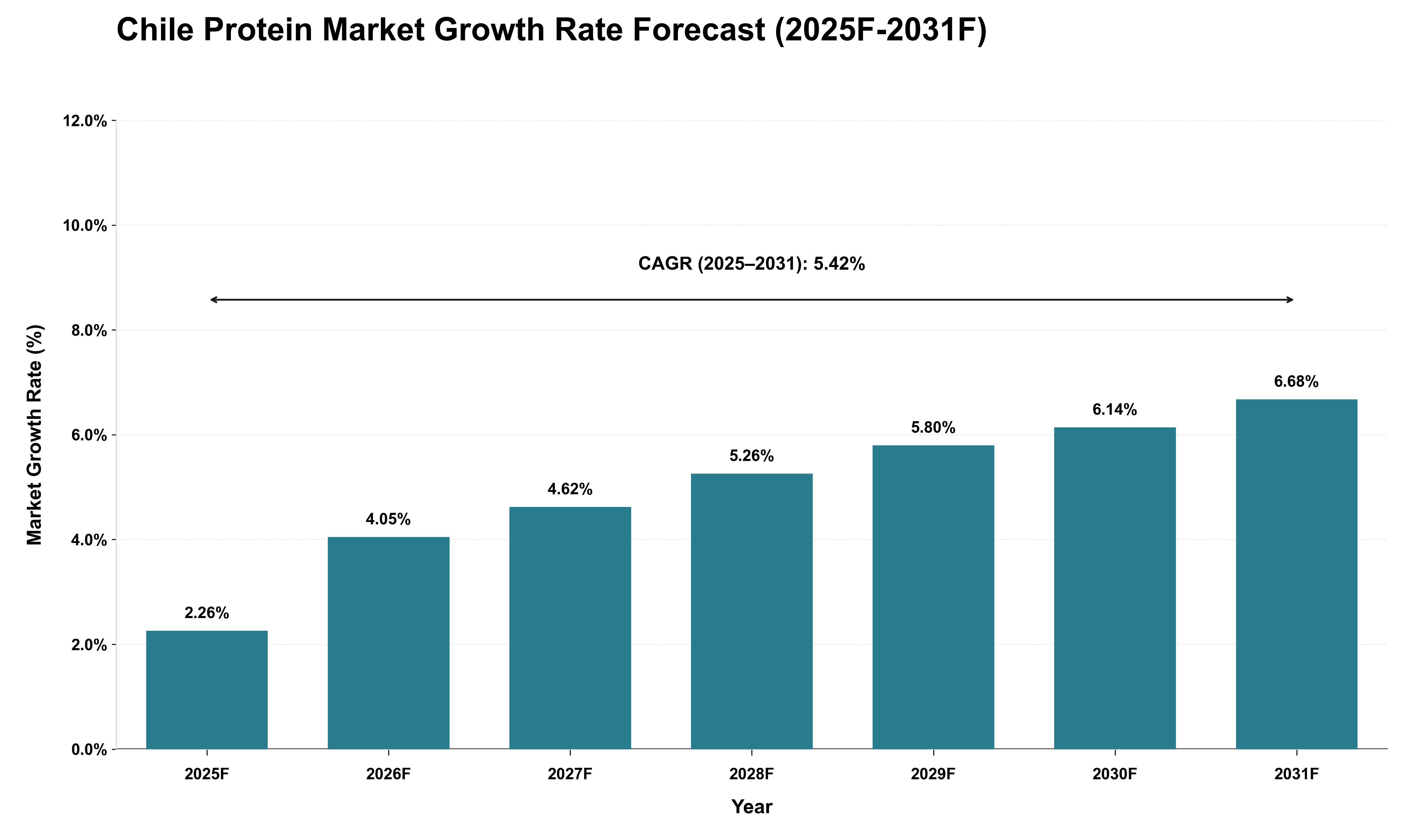
The Chile protein market is projected to experience a compound annual growth rate of 5.42% from 2025 to 2031, reflecting a robust trajectory driven by evolving consumer preferences and increasing health consciousness. The annual growth rates will escalate from 2.26% in 2025 to an impressive 6.68% by 2031, indicating a significant upward trend in demand for protein-rich products. This growth will likely be supported by macroeconomic factors such as rising disposable incomes and urbanization, which will enhance purchasing power and shift dietary patterns towards higher protein consumption. Additionally, Chile's import dependencies on certain protein sources may create opportunities for local producers to expand capacity and innovate product offerings, thereby enhancing competitiveness in both domestic and export markets. As global trends favor sustainable and diverse protein sources, the Chilean market is expected to adapt accordingly, fostering an environment conducive to continuous growth throughout the forecast period.
Key Highlights of the Report:
- Chile Protein Market Outlook
- Market Size of Chile Protein Market, 2024
- Forecast of Chile Protein Market, 2031
- Historical Data and Forecast of Chile Protein Revenues & Volume for the Period 2021- 2031
- Chile Protein Market Trend Evolution
- Chile Protein Market Drivers and Challenges
- Chile Protein Price Trends
- Chile Protein Porter's Five Forces
- Chile Protein Industry Life Cycle
- Historical Data and Forecast of Chile Protein Market Revenues & Volume By Source for the Period 2021- 2031
- Historical Data and Forecast of Chile Protein Market Revenues & Volume By Animal for the Period 2021- 2031
- Historical Data and Forecast of Chile Protein Market Revenues & Volume By Microbial for the Period 2021- 2031
- Historical Data and Forecast of Chile Protein Market Revenues & Volume By End User for the Period 2021- 2031
- Historical Data and Forecast of Chile Protein Market Revenues & Volume By Animal Feed for the Period 2021- 2031
- Historical Data and Forecast of Chile Protein Market Revenues & Volume By Food and Beverages for the Period 2021- 2031
- Historical Data and Forecast of Chile Protein Market Revenues & Volume By Personal Care and Cosmetics for the Period 2021- 2031
- Historical Data and Forecast of Chile Protein Market Revenues & Volume By Supplements for the Period 2021- 2031
- Chile Protein Import Export Trade Statistics
- Market Opportunity Assessment By Source
- Market Opportunity Assessment By End User
- Chile Protein Top Companies Market Share
- Chile Protein Competitive Benchmarking By Technical and Operational Parameters
- Chile Protein Company Profiles
- Chile Protein Key Strategic Recommendations






































