Chile Television Broadcasting Market Size, Share & Growth Rate
The Chile Television Broadcasting Market was estimated at USD 364 Million in 2025 and is projected to reach USD 637 Million by 2032, growing at a CAGR of 8.3% from 2026 to 2032. This growth is fueled by a robust demand for quality programming and the increasing popularity of streaming services among consumers. Additionally, traditional broadcasters are pivoting towards digital platforms, enhancing their offerings to capture the shifting preferences of a tech-savvy audience.
Chile Television Broadcasting Market Year-wise Growth Rate and Key Drivers
This graph highlights how the Chile Television Broadcasting Market has steadily grown over the years, supported by major growth factors.
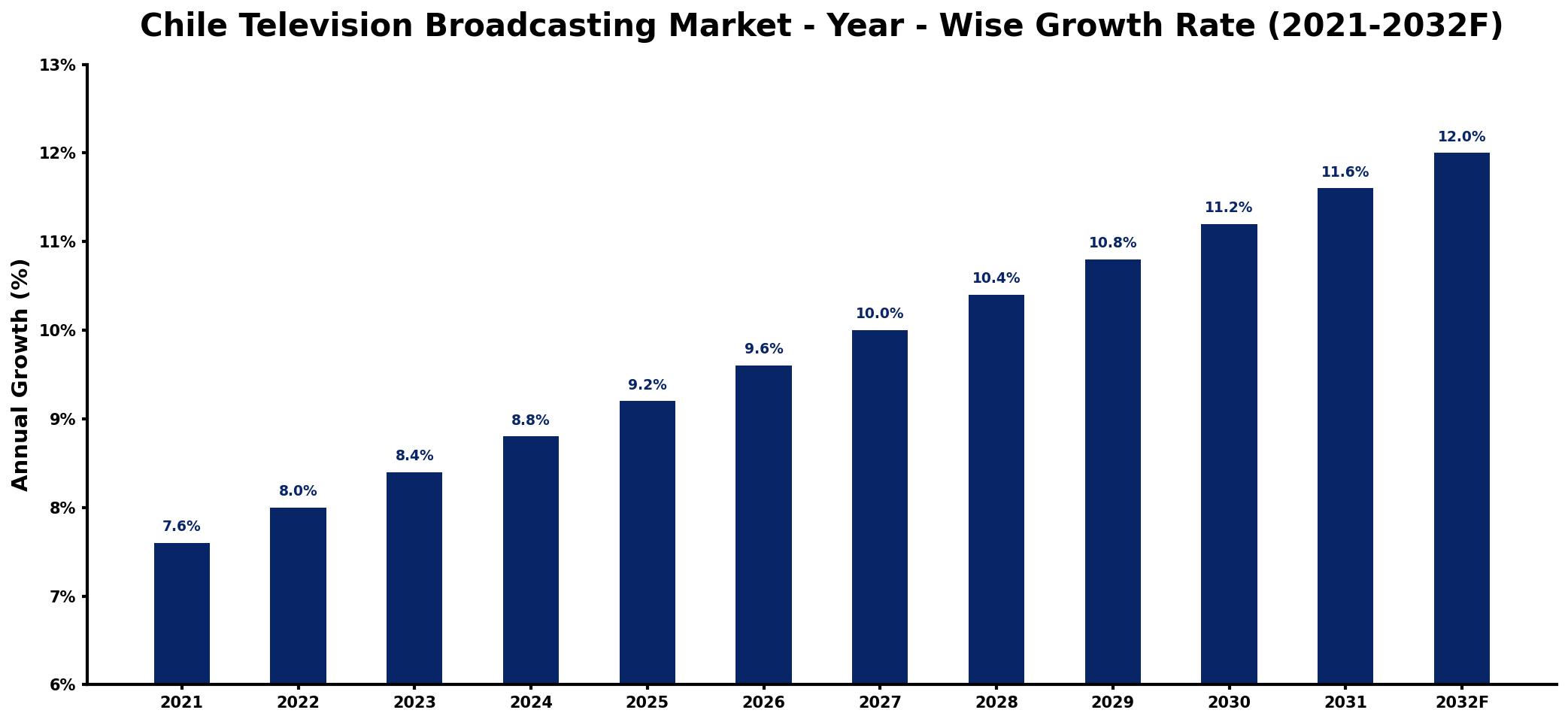
The table below presents the year‑wise growth rates along with the key drivers influencing the market
| Year | Growth Rate | Major Drivers |
| 2021 | 7.6% | Rising digital content consumption |
| 2022 | 8.0% | Increased advertising revenue growth |
| 2023 | 8.4% | Expansion of streaming platforms |
| 2024 | 8.8% | Higher subscription service uptake |
| 2025 | 9.2% | Investment in local programming |
| 2026 | 9.6% | Growing demand for original content |
| 2027 | 10.0% | Technological advancements in delivery |
| 2028 | 10.4% | Enhanced viewer engagement strategies |
| 2029 | 10.8% | Diversification of content offerings |
| 2030 | 11.2% | Strengthened partnerships with creators |
| 2031 | 11.6% | Broader access to high-speed internet |
| 2032 | 12.0% | Innovations in viewer analytics tools |
Note: Market size estimations and growth projections presented in this report are based on 6Wresearch's proprietary forecasting methodology, utilizing the latest available industry data, government publications, and primary research inputs.
Chile Television Broadcasting Market Synopsis
The Chile Television Broadcasting Market has recently witnessed dynamic changes with the influx of digital streaming services, which are reshaping how audiences consume content. While traditional networks still hold significant influence, the shift toward on-demand viewing experiences is redefining engagement strategies.
Looking ahead, the market is poised for further evolution. With a strong emphasis on localized content and innovative broadcasting formats, players in the industry are not only competing for viewership but also aiming to enhance cultural representation and storytelling that resonates deeply with Chilean audiences.
Chile Television Broadcasting Market Key Takeaways
- Major players are expanding digital offerings to compete with rising streaming services.
- Localized content production is becoming a key focus for broadcasters to attract diverse audiences.
- Technological advancements are enabling interactive viewing experiences that enhance audience engagement.
- Investment opportunities exist in advertising, sponsorships, and content creation for targeted demographics.
- Government regulations aim to promote competition and cultural diversity in broadcasting.
Evaluation of Restraints in Chile Television Broadcasting Market
The Chile Television Broadcasting Market faces several restraints that can impede growth. One significant barrier is the intense competition posed by international streaming giants, which often fragment the audience and shift viewership away from traditional broadcasters. Additionally, regulatory hurdles related to content licensing and broadcasting rights can complicate market entry for new players. Economic fluctuations also pose a risk, affecting advertising revenues which are crucial for the financial stability of television networks. To overcome these challenges, industry participants must embrace innovation, strengthen partnerships, and focus on delivering quality content that meets evolving consumer expectations.
Chile Television Broadcasting Market Trends
Several trends are shaping the Chile Television Broadcasting Market. The pivot towards digital and streaming platforms is evident, with audiences favoring on-demand content over traditional schedules. As a response, broadcasters are investing in their digital infrastructures and developing exclusive online content to retain viewership.
Moreover, theres a marked increase in the production of local and regional content, fostering a sense of cultural identity among viewers. Partnerships between traditional broadcasters and local production companies are becoming more common, aiming to enhance the quality and relevance of programming while appealing to varied audience tastes.
Chile Television Broadcasting Market Opportunities
Investors looking to capitalize on the Chile Television Broadcasting Market will find significant opportunities in content production and distribution tailored to local audiences. The advent of smart TVs and mobile devices is creating avenues for companies to innovate with interactive content and personalized viewing experiences. Furthermore, lucrative advertising and sponsorship deals with popular networks present additional pathways for investment, particularly as brands look to engage specific demographics more effectively.
Government Initiatives in the Chile Television Broadcasting Market
The Chilean government plays a crucial role in regulating the television broadcasting market through the National Television Council (CNTV). This body oversees licensing and ensures compliance with content standards that foster cultural diversity and quality programming. In addition to promoting media plurality, the CNTV has also introduced digital terrestrial television (DTT), enhancing broadcast quality and accessibility throughout the nation. Overall, these initiatives support a competitive landscape that encourages innovation and a diverse array of viewing options.
Future Insights of the Chile Television Broadcasting Market
The Chile Television Broadcasting Market is well-positioned for growth from 2026 to 2032. The increasing inclination toward digital content consumption is expected to drive demand, as more consumers embrace streaming services alongside traditional television. Additionally, advancements in technology will likely facilitate richer user experiences through personalized content delivery and interactive features. While challenges such as regulatory shifts and competition from streaming platforms persist, the overall outlook remains promising, with potential for innovative programming and an expansive digital presence.
Chile Television Broadcasting Market Latest Developments (2025 - 2026)
Recent developments in the Chile Television Broadcasting Market reflect a growing emphasis on technological integration and audience engagement strategies. Broadcasters are increasingly launching new digital platforms to enhance user experience and reach wider audiences. Partnerships with technology firms are also on the rise, aiming to leverage advanced analytics for better content targeting. Additionally, there is a noticeable trend towards co-productions with international entities, enriching the local content landscape and broadening the market's appeal.
Chile Television Broadcasting Market - Key Attractiveness of the Report
- 10 Years of Market Numbers
- Historical Data Starting from 2022 to 2025
- Base Year: 2025
- Forecast Data until 2032
- Key Performance Indicators Impacting the Market
- Major Upcoming Developments and Projects
Key Highlights of the Report:
- Chile Television Broadcasting Market Outlook
- Market Size of Chile Television Broadcasting Market, 2025
- Forecast of Chile Television Broadcasting Market, 2032
- Historical Data and Forecast of Chile Television Broadcasting Revenues & Volume for the Period 2022-2032F
- Chile Television Broadcasting Market Trend Evolution
- Chile Television Broadcasting Market Drivers and Challenges
- Chile Television Broadcasting Price Trends
- Chile Television Broadcasting Porter's Five Forces
- Chile Television Broadcasting Industry Life Cycle
- Historical Data and Forecast of Chile Television Broadcasting Market Revenues & Volume By Type for the Period 2022-2032F
- Historical Data and Forecast of Chile Television Broadcasting Market Revenues & Volume By Television Station for the Period 2022-2032F
- Historical Data and Forecast of Chile Television Broadcasting Market Revenues & Volume By Television Network for the Period 2022-2032F
- Historical Data and Forecast of Chile Television Broadcasting Market Revenues & Volume By Broadcaster Type for the Period 2022-2032F
- Historical Data and Forecast of Chile Television Broadcasting Market Revenues & Volume By Public for the Period 2022-2032F
- Historical Data and Forecast of Chile Television Broadcasting Market Revenues & Volume By Commercial for the Period 2022-2032F
- Historical Data and Forecast of Chile Television Broadcasting Market Revenues & Volume By Revenue Source for the Period 2022-2032F
- Historical Data and Forecast of Chile Television Broadcasting Market Revenues & Volume By Subscription-based for the Period 2022-2032F
- Historical Data and Forecast of Chile Television Broadcasting Market Revenues & Volume By Advertisement-based for the Period 2022-2032F
- Chile Television Broadcasting Import Export Trade Statistics
- Market Opportunity Assessment By Type
- Market Opportunity Assessment By Broadcaster Type
- Market Opportunity Assessment By Revenue Source
- Chile Television Broadcasting Top Companies Market Share
- Chile Television Broadcasting Competitive Benchmarking By Technical and Operational Parameters
- Chile Television Broadcasting Company Profiles
- Chile Television Broadcasting Key Strategic Recommendations






































