China Algorithmic Trading Market Size & Growth Rate (2026-2032)
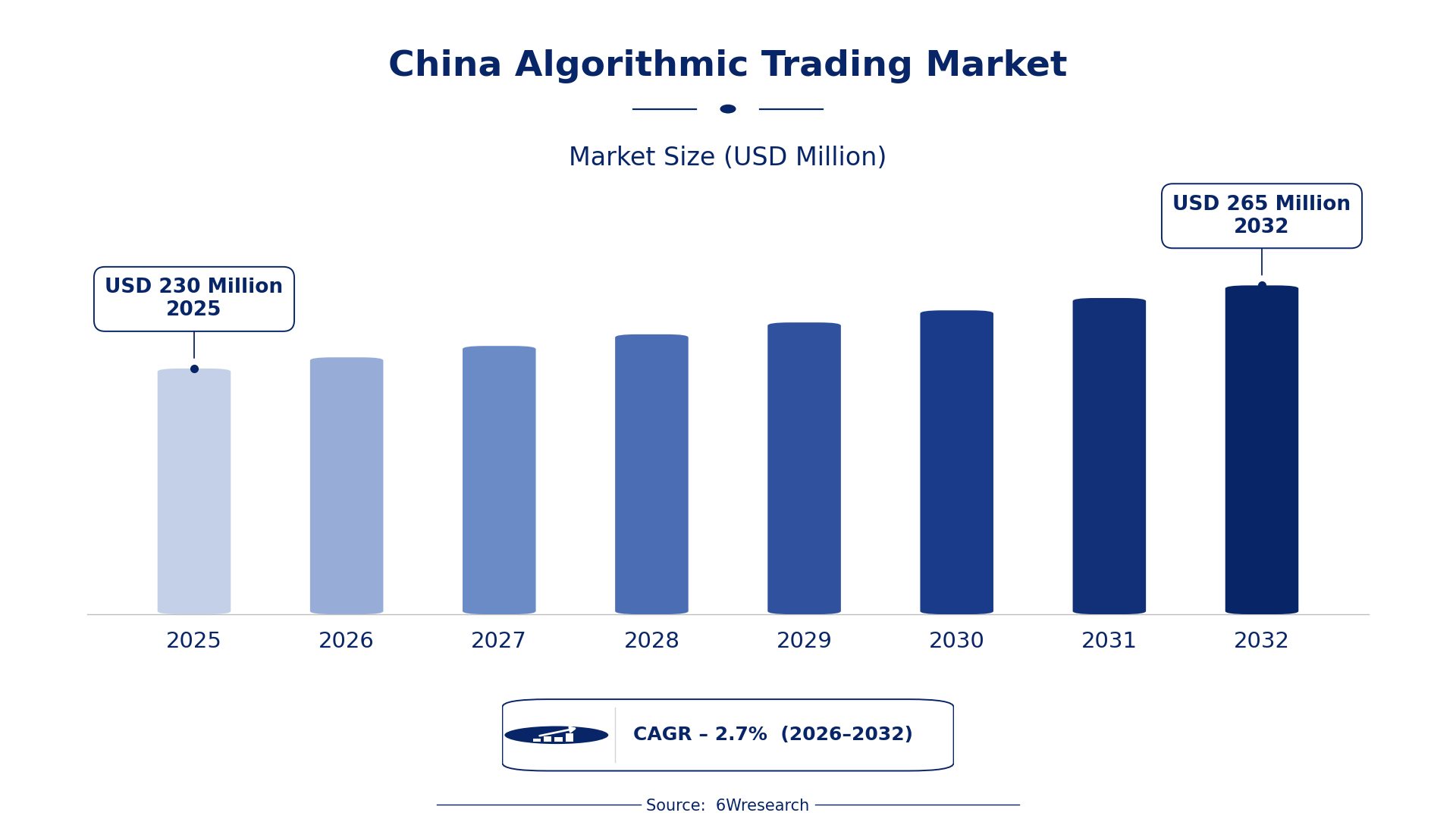
The China Algorithmic Trading Market was estimated at USD 230 Million in 2025 and is projected to reach USD 265 Million by 2032, growing at a CAGR of 2.7% from 2026 to 2032.
China Algorithmic Trading Market Synopsis
The growth of the China algorithmic trading market is underscored by a surge in demand for automated trading solutions among both institutional and retail investors. As technology continues to advance, financial institutions are increasingly implementing algorithmic strategies to enhance their trading efficiency and competitiveness.
The market is characterized by a mix of homegrown firms and foreign entrants, all vying for market share in a burgeoning environment. The rise of artificial intelligence and machine learning technologies is shaping trading algorithms, driving innovation and increasing the complexity of trading strategies.
China Algorithmic Trading Market Year-wise Growth Rate and Key Drivers
This graph illustrates the annual growth rates of the China Algorithmic Trading Market from 2021 to 2032, highlighting a steady upward trajectory and projected expansion over the forecast period.
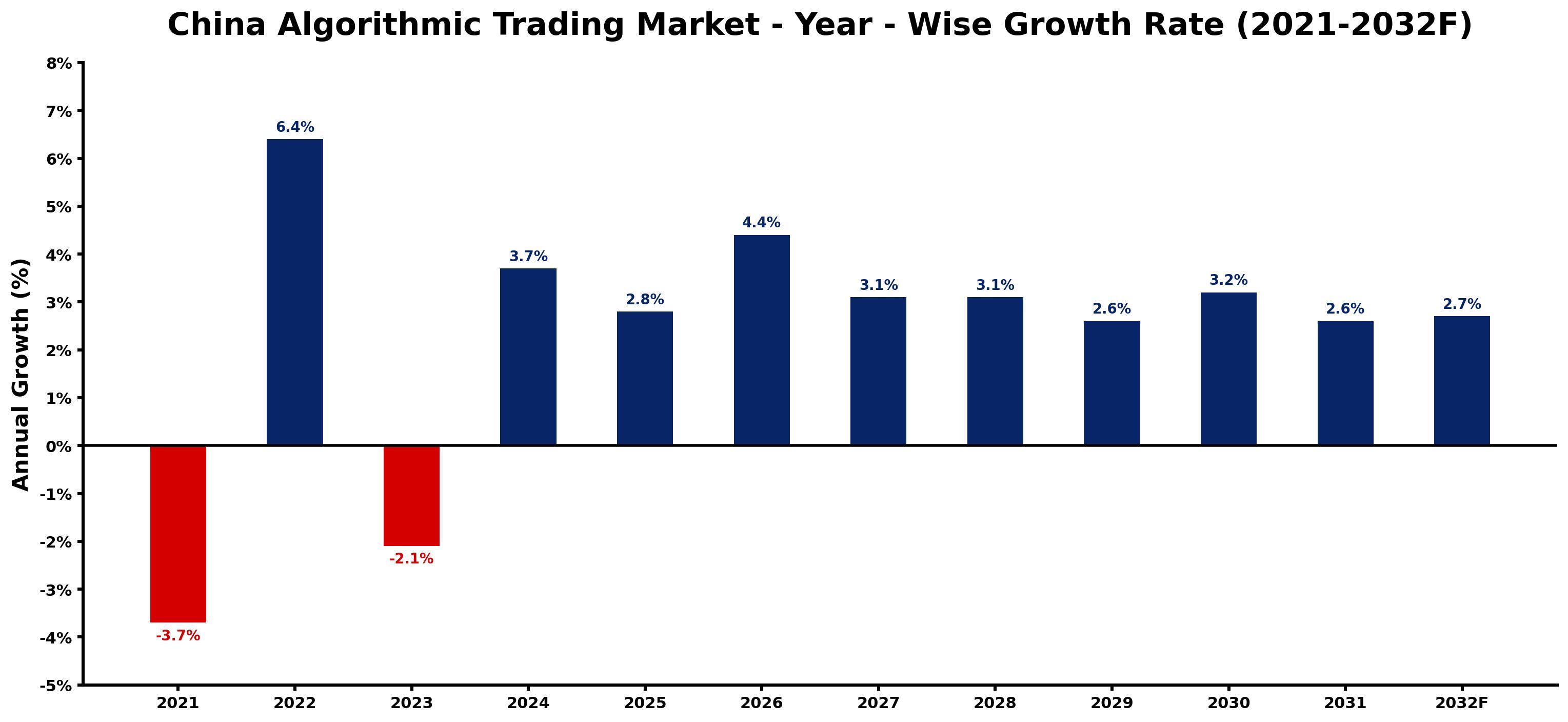
The table below presents the year‑wise growth rates along with the key drivers influencing the market
| Year | Growth Rate | Major Drivers |
| 2021 | -3.7% | PBOC's tightened regulations on algorithmic trading practices |
| 2022 | 6.4% | Increased retail investor participation via mobile trading apps. |
| 2023 | -2.1% | Increased market volatility reducing trading activity sentiment |
| 2024 | 3.7% | Strengthened regulations from CSRC enhancing market transparency. |
| 2025 | 2.8% | Rise of AI analytics improving trading strategy effectiveness. |
| 2026 | 4.4% | Growth in fintech collaborations for advanced trading technologies. |
| 2027 | 3.1% | Emergence of blockchain solutions for transaction security. |
| 2028 | 3.1% | Increased algorithmic trading adoption among institutional investors. |
| 2029 | 2.6% | Government support for digital finance innovation initiatives. |
| 2030 | 3.2% | Development of low-latency trading infrastructure in major cities. |
| 2031 | 2.6% | Enhanced data sourcing capabilities through local partnerships. |
| 2032 | 2.7% | Continued investment in cybersecurity for financial platforms. |
Note: Market size estimations and growth projections presented in this report are based on 6Wresearch's proprietary forecasting methodology, utilizing the latest available industry data, government publications, and primary research inputs.
China Algorithmic Trading Market Key Takeaways
Below are some of the specific key takeaways from the market, including:
- Technological advancements are a primary catalyst for market growth.
- Institutional interest in automated trading strategies is on the rise.
- Regulatory reforms are gradually enhancing market efficiency.
- The integration of AI and machine learning is reshaping trading strategies.
- Market participants face challenges related to data quality and regulatory uncertainties.
Evaluation of Restraints in China Algorithmic Trading Market
Despite the promising growth, several factors are constraining the expansion of the China algorithmic trading market. Regulatory uncertainties often create an unpredictable environment for firms operating in this space. The evolving nature of compliance requirements can deter potential investors and complicate operational strategies. Limited access to high-quality data remains a significant hurdle as firms struggle to obtain reliable information, which is crucial for developing effective algorithms. Finally, the threat of market manipulation, including practices like spoofing, continues to pose risks that could undermine investor confidence and disrupt market stability.
China Algorithmic Trading Market Trends
Several key trends are currently shaping the China algorithmic trading market. The utilization of machine learning algorithms is gaining traction, allowing traders to analyze vast datasets and make faster, more informed decisions. High-frequency trading strategies are also becoming more prevalent, as firms seek to capitalize on minute price discrepancies in real-time. on top of that, there is an increasing focus on algorithmic trading in alternative asset classes such as cryptocurrencies and commodities, reflecting a diversification of investment strategies.
China Algorithmic Trading Market Opportunities
Investment opportunities abound in the China algorithmic trading market, particularly for those ready to embrace innovation. Companies that develop algorithmic trading platforms and data analytics tools tailored for local investors can expect substantial demand. Collaborations with financial institutions to provide algorithmic trading services can also yield fruitful returns. Additionally, engaging with emerging fintech startups specializing in algorithmic solutions presents a strategic avenue for investment.
Government Initiatives in the China Algorithmic Trading Market
Government policies are actively shaping the operational landscape of the algorithmic trading market in China. The regulatory framework aims to promote stability and transparency while addressing the risks associated with automated trading. As the market matures, these initiatives are crucial for fostering investor confidence and ensuring fair competition.
- A regulatory framework introduced in 2023 mandates algorithmic trading firms to register with authorities and comply with rigorous risk management protocols.
- Ongoing assessments of high-frequency trading practices are being conducted to prevent market manipulation and ensure equitable trading conditions.
- Recent initiatives focus on enhancing data security and transparency in algorithmic trading operations.
- Planned updates to regulations are expected in 2025, aiming to streamline compliance processes for algorithmic trading firms.
Future Insights of the China Algorithmic Trading Market
Looking ahead to 2026-2032, the China algorithmic trading market is set for continued expansion. The increasing sophistication of market participants and the ongoing adoption of automated trading strategies will drive growth. Regulatory reforms will likely further enhance market efficiency, encouraging more players to enter the space. As technology evolves, expect to see more innovative trading strategies and a greater emphasis on compliance and risk management, shaping the future of this dynamic market.
China Algorithmic Trading Market Latest Developments
In the past year, the China algorithmic trading market has witnessed a flurry of activity as participants adapt to technological advancements and regulatory changes. Firms are increasingly prioritizing the integration of AI and machine learning into their trading strategies, reflecting a shift towards data-driven decision-making.
- A major technology vendor launched a new algorithmic trading platform in Q1 2025, aimed at enhancing trading efficiency for institutional clients.
- A partnership between a leading brokerage firm and a data analytics company is currently underway, focusing on improving algorithmic trading capabilities through enhanced market data analysis.
- Ongoing training programs for traders are being implemented to ensure they are equipped with the latest algorithmic trading strategies and compliance knowledge.
- A rollout of a regulatory sandbox is expected to begin in mid-2026, providing a controlled environment for testing new algorithmic trading models.
China Algorithmic Trading Market - Key Attractiveness of the Report
- 10 Years of Market Numbers
- Historical Data Starting from 2022 to 2025
- Base Year: 2025
- Forecast Data until 2032
- Key Performance Indicators Impacting the Market
- Major Upcoming Developments and Projects
Key Highlights of the Report:
- China Algorithmic Trading Market Outlook
- Market Size of China Algorithmic Trading Market, 2025
- Forecast of China Algorithmic Trading Market, 2032
- Historical Data and Forecast of China Algorithmic Trading Revenues & Volume for the Period 2022-2032F
- China Algorithmic Trading Market Trend Evolution
- China Algorithmic Trading Market Drivers and Challenges
- China Algorithmic Trading Price Trends
- China Algorithmic Trading Porter's Five Forces
- China Algorithmic Trading Industry Life Cycle
- Historical Data and Forecast of China Algorithmic Trading Market Revenues & Volume By Trading Type for the Period 2022-2032F
- Historical Data and Forecast of China Algorithmic Trading Market Revenues & Volume By Foreign Exchange (FOREX) for the Period 2022-2032F
- Historical Data and Forecast of China Algorithmic Trading Market Revenues & Volume By Stock Markets for the Period 2022-2032F
- Historical Data and Forecast of China Algorithmic Trading Market Revenues & Volume By Exchange-Traded Fund (ETF) for the Period 2022-2032F
- Historical Data and Forecast of China Algorithmic Trading Market Revenues & Volume By Bonds for the Period 2022-2032F
- Historical Data and Forecast of China Algorithmic Trading Market Revenues & Volume By Cryptocurrencies for the Period 2022-2032F
- Historical Data and Forecast of China Algorithmic Trading Market Revenues & Volume By Others for the Period 2022-2032F
- Historical Data and Forecast of China Algorithmic Trading Market Revenues & Volume By Deployment Mode for the Period 2022-2032F
- Historical Data and Forecast of China Algorithmic Trading Market Revenues & Volume By Cloud for the Period 2022-2032F
- Historical Data and Forecast of China Algorithmic Trading Market Revenues & Volume By On-premises for the Period 2022-2032F
- Historical Data and Forecast of China Algorithmic Trading Market Revenues & Volume By Component for the Period 2022-2032F
- Historical Data and Forecast of China Algorithmic Trading Market Revenues & Volume By Solutions for the Period 2022-2032F
- Historical Data and Forecast of China Algorithmic Trading Market Revenues & Volume By Services for the Period 2022-2032F
- Historical Data and Forecast of China Algorithmic Trading Market Revenues & Volume By Enterprise Size for the Period 2022-2032F
- Historical Data and Forecast of China Algorithmic Trading Market Revenues & Volume By Small and Medium-sized Enterprises (SMEs) for the Period 2022-2032F
- Historical Data and Forecast of China Algorithmic Trading Market Revenues & Volume By Large Enterprises for the Period 2022-2032F
- China Algorithmic Trading Import Export Trade Statistics
- Market Opportunity Assessment By Trading Type
- Market Opportunity Assessment By Deployment Mode
- Market Opportunity Assessment By Component
- Market Opportunity Assessment By Enterprise Size
- China Algorithmic Trading Top Companies Market Share
- China Algorithmic Trading Competitive Benchmarking By Technical and Operational Parameters
- China Algorithmic Trading Company Profiles
- China Algorithmic Trading Key Strategic Recommendations






































