China Asbestos Market Growth Rate Analysis (2025 - 2031)
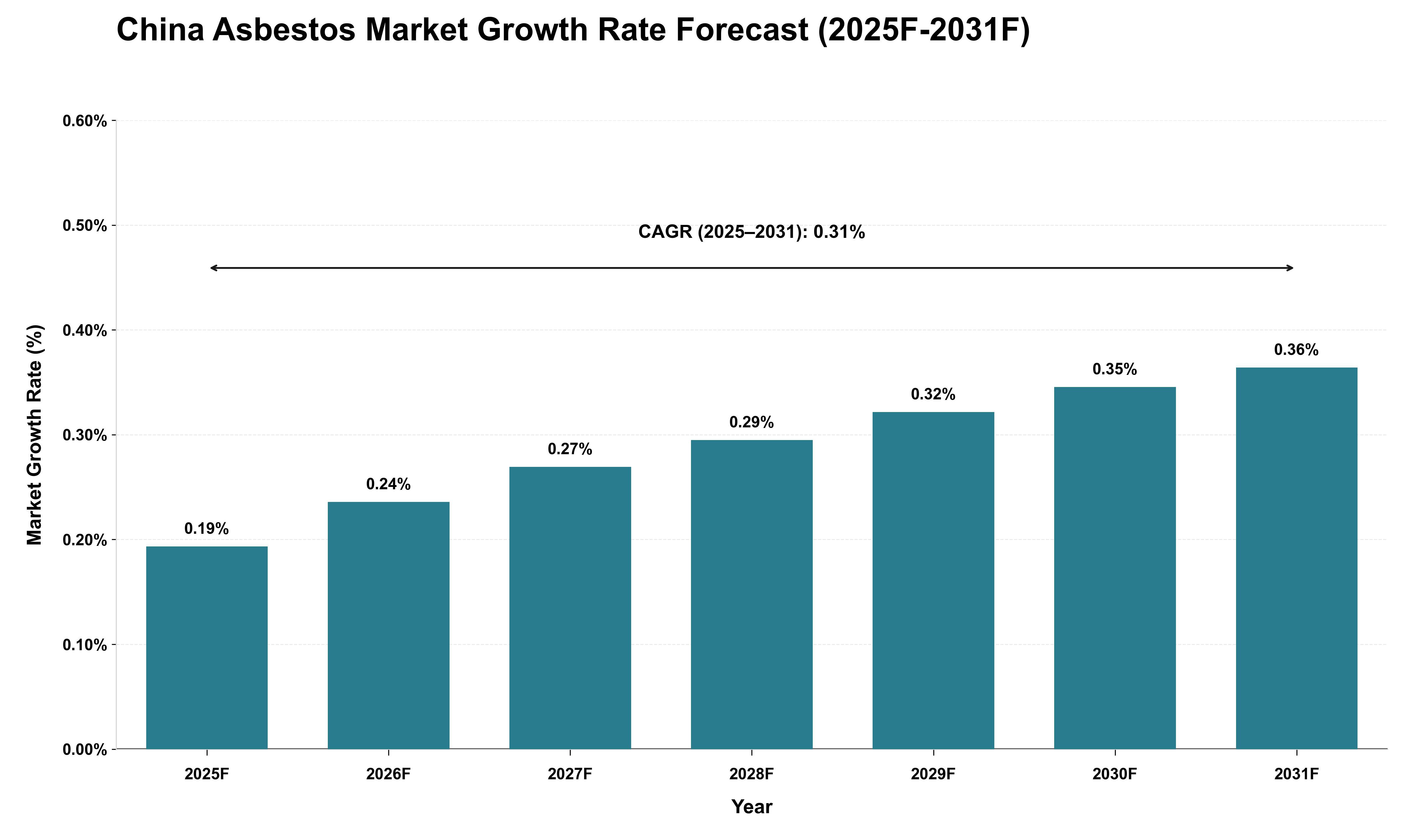
The outlook for the China asbestos market will be shaped by a combination of regulatory frameworks, shifting industrial applications, and evolving end-use demand. As construction and manufacturing sectors continue to adapt to stricter environmental regulations, the demand for asbestos may experience nuanced fluctuations, reflected in the projected CAGR of 0.31% from 2025 to 2031. The annual growth rates will gradually increase from 0.19% in 2025 to 0.36% by 2031, indicating a slow but steady rise in consumption driven by specific industrial needs such as insulation and fireproofing materials. Additionally, import dependencies may influence market dynamics as global supply chains adjust to changing trade policies and sourcing strategies. Overall, these macroeconomic factors will dictate how the asbestos market evolves within China's broader economic landscape during this period.
Key Highlights of the Report:
- China Asbestos Market Outlook
- Market Size of China Asbestos Market, 2024
- Forecast of China Asbestos Market, 2031
- Historical Data and Forecast of China Asbestos Revenues & Volume for the Period 2021- 2031
- China Asbestos Market Trend Evolution
- China Asbestos Market Drivers and Challenges
- China Asbestos Price Trends
- China Asbestos Porter's Five Forces
- China Asbestos Industry Life Cycle
- Historical Data and Forecast of China Asbestos Market Revenues & Volume By Type for the Period 2021- 2031
- Historical Data and Forecast of China Asbestos Market Revenues & Volume By Chrysotile for the Period 2021- 2031
- Historical Data and Forecast of China Asbestos Market Revenues & Volume By Amosite for the Period 2021- 2031
- Historical Data and Forecast of China Asbestos Market Revenues & Volume By Crocidolite for the Period 2021- 2031
- Historical Data and Forecast of China Asbestos Market Revenues & Volume By Anthophyllite for the Period 2021- 2031
- Historical Data and Forecast of China Asbestos Market Revenues & Volume By Tremolite for the Period 2021- 2031
- Historical Data and Forecast of China Asbestos Market Revenues & Volume By Actinolite for the Period 2021- 2031
- Historical Data and Forecast of China Asbestos Market Revenues & Volume By Application for the Period 2021- 2031
- Historical Data and Forecast of China Asbestos Market Revenues & Volume By Building materials for the Period 2021- 2031
- Historical Data and Forecast of China Asbestos Market Revenues & Volume By Electrical insulation for the Period 2021- 2031
- Historical Data and Forecast of China Asbestos Market Revenues & Volume By Friction products for the Period 2021- 2031
- Historical Data and Forecast of China Asbestos Market Revenues & Volume By Packaging for the Period 2021- 2031
- Historical Data and Forecast of China Asbestos Market Revenues & Volume By Gaskets for the Period 2021- 2031
- Historical Data and Forecast of China Asbestos Market Revenues & Volume By Other applications for the Period 2021- 2031
- China Asbestos Import Export Trade Statistics
- Market Opportunity Assessment By Type
- Market Opportunity Assessment By Application
- China Asbestos Top Companies Market Share
- China Asbestos Competitive Benchmarking By Technical and Operational Parameters
- China Asbestos Company Profiles
- China Asbestos Key Strategic Recommendations






































