China Awning Market Growth Rate Analysis (2025 - 2031)
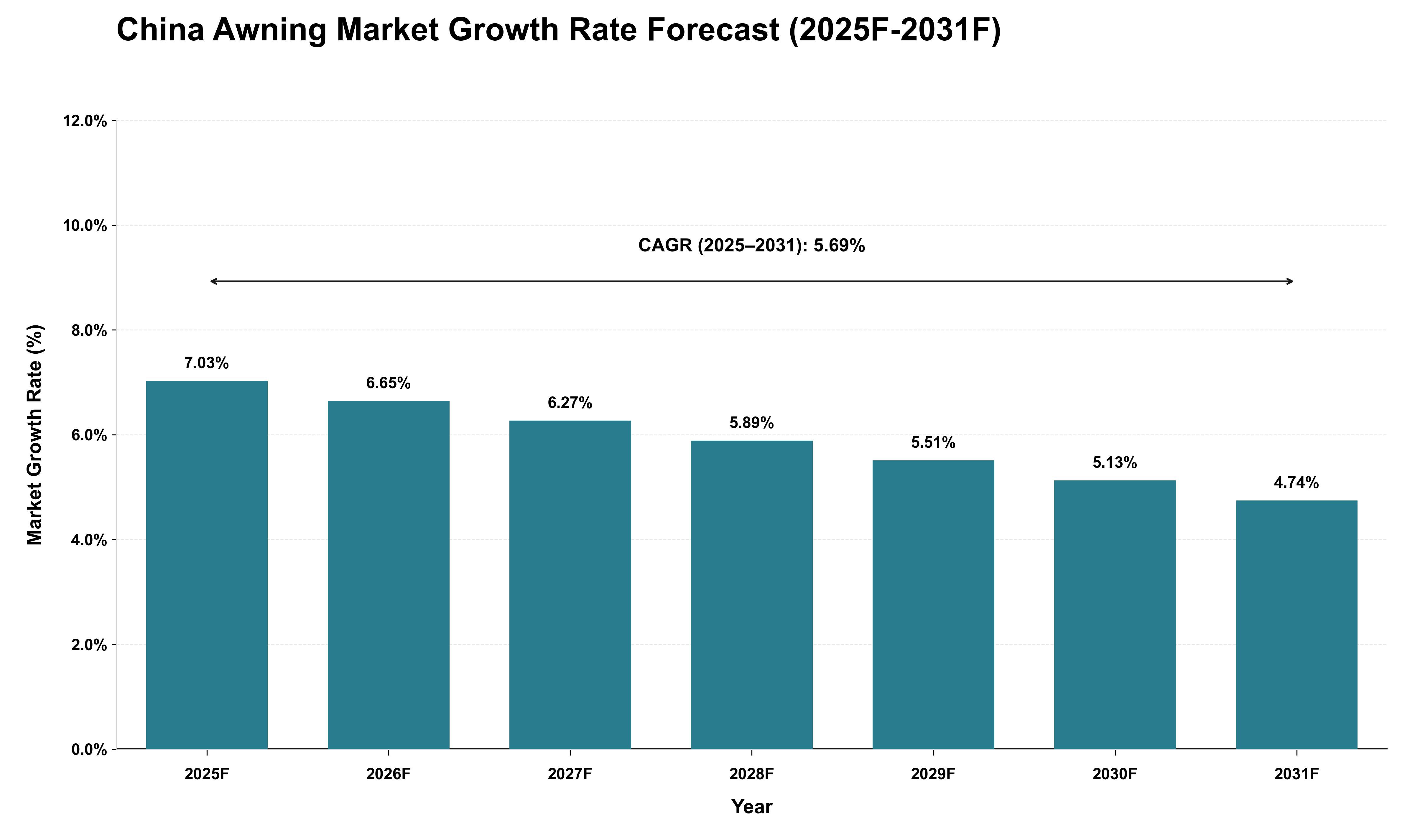
The China awning market will experience a notable transformation driven by evolving consumer preferences and increasing urbanization, which will enhance demand for outdoor living solutions. As the forecast period progresses, the competitive landscape will intensify, with manufacturers likely focusing on innovation and customization to differentiate their offerings. The projected CAGR of 5.69% reflects a robust growth trajectory, with annual growth rates starting at 7.03% in 2025 and gradually tapering to 4.74% by 2031. This deceleration may indicate a shift towards more sustainable production practices and heightened import dependencies as domestic suppliers adapt to changing regulatory environments and material costs. Additionally, cyclical trends in construction and real estate development will influence market dynamics, as increased investments in residential and commercial properties are expected to drive demand for awnings as essential architectural features during this period.
Key Highlights of the Report:
- China Awning Market Outlook
- Market Size of China Awning Market, 2024
- Forecast of China Awning Market, 2031
- Historical Data and Forecast of China Awning Revenues & Volume for the Period 2021- 2031
- China Awning Market Trend Evolution
- China Awning Market Drivers and Challenges
- China Awning Price Trends
- China Awning Porter's Five Forces
- China Awning Industry Life Cycle
- Historical Data and Forecast of China Awning Market Revenues & Volume By Type for the Period 2021- 2031
- Historical Data and Forecast of China Awning Market Revenues & Volume By Fixed Awning for the Period 2021- 2031
- Historical Data and Forecast of China Awning Market Revenues & Volume By Retractable Awning for the Period 2021- 2031
- Historical Data and Forecast of China Awning Market Revenues & Volume By Product for the Period 2021- 2031
- Historical Data and Forecast of China Awning Market Revenues & Volume By Patio for the Period 2021- 2031
- Historical Data and Forecast of China Awning Market Revenues & Volume By Window for the Period 2021- 2031
- Historical Data and Forecast of China Awning Market Revenues & Volume By Freestanding for the Period 2021- 2031
- Historical Data and Forecast of China Awning Market Revenues & Volume By Others for the Period 2021- 2031
- Historical Data and Forecast of China Awning Market Revenues & Volume By End User for the Period 2021- 2031
- Historical Data and Forecast of China Awning Market Revenues & Volume By Commercial for the Period 2021- 2031
- Historical Data and Forecast of China Awning Market Revenues & Volume By Residential for the Period 2021- 2031
- China Awning Import Export Trade Statistics
- Market Opportunity Assessment By Type
- Market Opportunity Assessment By End User
- China Awning Top Companies Market Share
- China Awning Competitive Benchmarking By Technical and Operational Parameters
- China Awning Company Profiles
- China Awning Key Strategic Recommendations






































