China Filters Market Growth Rate Analysis (2025 - 2031)
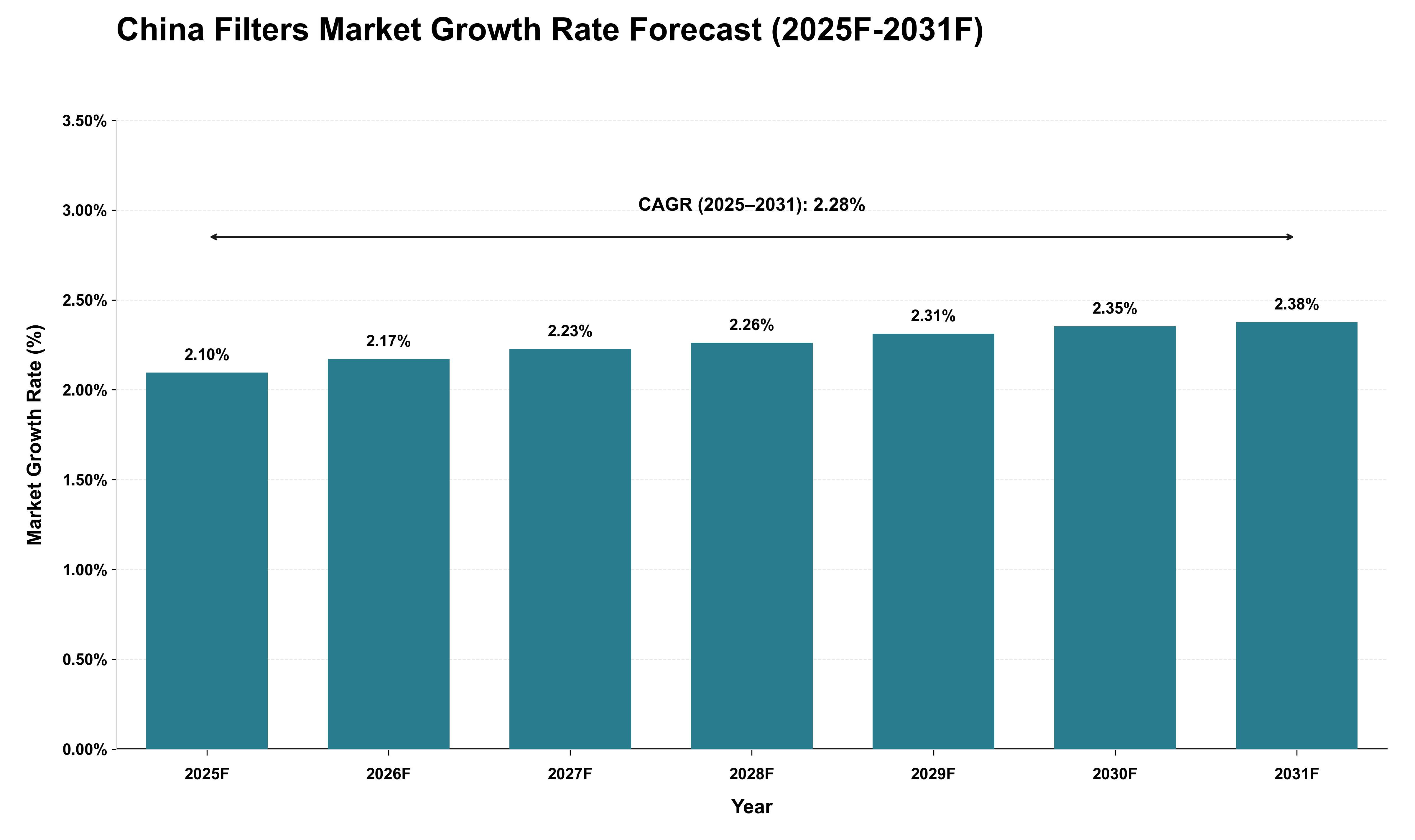
The China filters market is projected to experience a compound annual growth rate of 2.28% from 2025 to 2031, reflecting a gradual increase in demand driven by evolving industrial and environmental regulations. As input costs fluctuate due to global supply chain dynamics, manufacturers will likely face pressures from rising raw material prices and transportation expenses, which could influence pricing strategies and profit margins. The annual growth rates indicate a steady upward trajectory, with increases from 2.10% in 2025 to 2.38% by 2031, suggesting that the market will respond positively to heightened awareness of air and water quality issues. Additionally, import dependencies on specialized filter technologies may create opportunities for domestic producers to innovate and capture market share, while cyclical trends in manufacturing output will further shape the competitive landscape within this sector.
Key Highlights of the Report:
- China Filters Market Outlook
- Market Size of China Filters Market, 2024
- Forecast of China Filters Market, 2031
- Historical Data and Forecast of China Filters Revenues & Volume for the Period 2021- 2031
- China Filters Market Trend Evolution
- China Filters Market Drivers and Challenges
- China Filters Price Trends
- China Filters Porter's Five Forces
- China Filters Industry Life Cycle
- Historical Data and Forecast of China Filters Market Revenues & Volume By Type for the Period 2021- 2031
- Historical Data and Forecast of China Filters Market Revenues & Volume By Fluid Filters for the Period 2021- 2031
- Historical Data and Forecast of China Filters Market Revenues & Volume By ICE Filters for the Period 2021- 2031
- Historical Data and Forecast of China Filters Market Revenues & Volume By Air Filters for the Period 2021- 2031
- Historical Data and Forecast of China Filters Market Revenues & Volume By Application for the Period 2021- 2031
- Historical Data and Forecast of China Filters Market Revenues & Volume By Motor Vehicle for the Period 2021- 2031
- Historical Data and Forecast of China Filters Market Revenues & Volume By Consumers Applications for the Period 2021- 2031
- Historical Data and Forecast of China Filters Market Revenues & Volume By Utilities for the Period 2021- 2031
- Historical Data and Forecast of China Filters Market Revenues & Volume By Industrial & Manufacturing for the Period 2021- 2031
- Historical Data and Forecast of China Filters Market Revenues & Volume By Other Applications for the Period 2021- 2031
- China Filters Import Export Trade Statistics
- Market Opportunity Assessment By Type
- Market Opportunity Assessment By Application
- China Filters Top Companies Market Share
- China Filters Competitive Benchmarking By Technical and Operational Parameters
- China Filters Company Profiles
- China Filters Key Strategic Recommendations






































