China Forklift Truck Market Growth Rate Analysis (2025 - 2031)
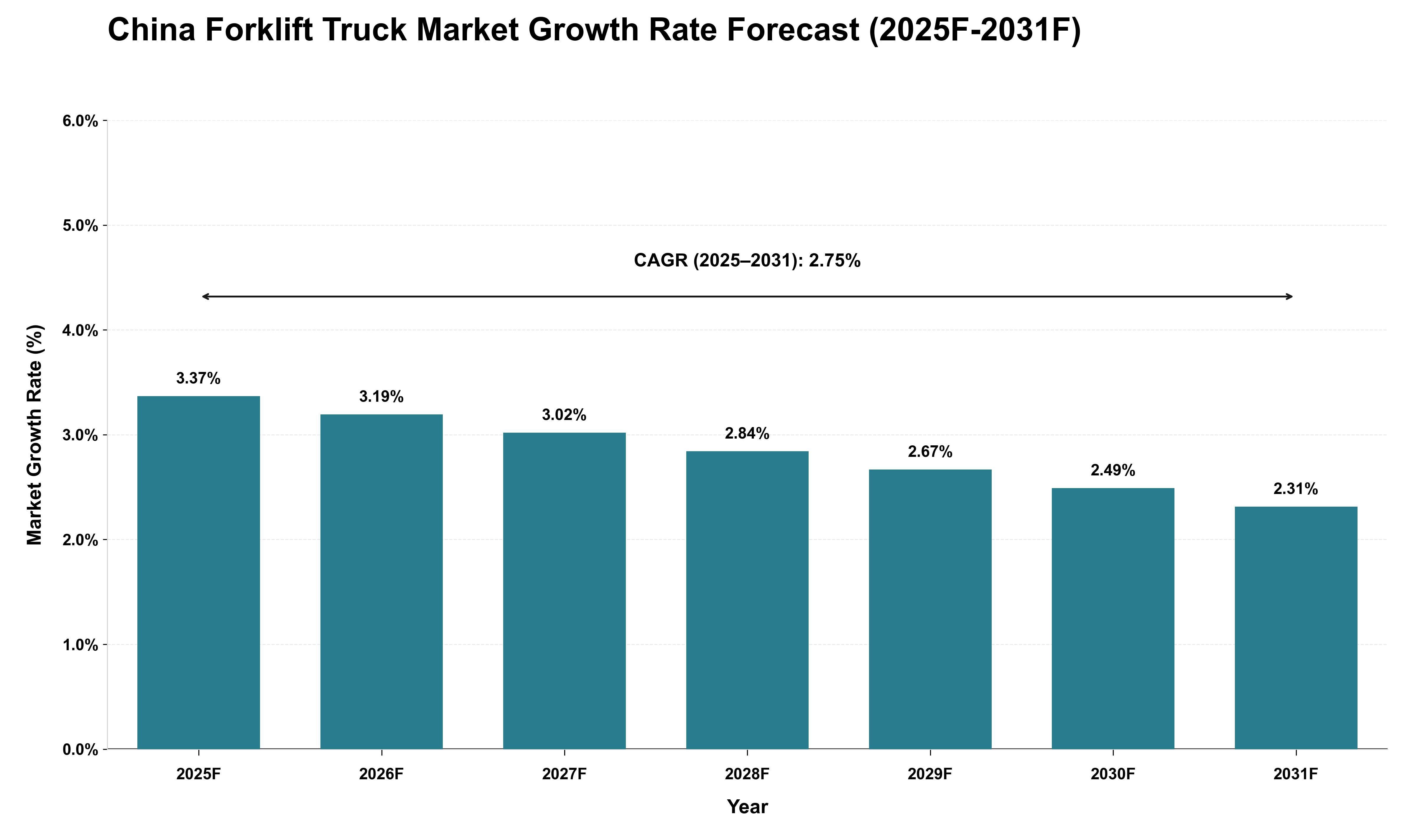
From 2025 onward, the China forklift truck market will experience a gradual deceleration in growth, with an anticipated compound annual growth rate (CAGR) of 2.75%. This trend will reflect shifting end-use demand driven by evolving industrial practices and increased automation across sectors such as logistics and manufacturing. The initial robust growth of 3.37% in 2025 will likely be supported by heightened investment in supply chain efficiencies and infrastructure development, but as the years progress, growth rates will taper off to 2.31% by 2031. This decline may be influenced by cyclical trends in economic activity, where fluctuations in global trade dynamics and domestic consumption patterns could impact import dependencies for advanced forklift technologies. Consequently, manufacturers may need to adapt their strategies to align with these changing demand profiles while navigating potential supply chain disruptions that could arise from geopolitical tensions or regulatory shifts within the region.
Key Highlights of the Report:
- China Forklift Truck Market Outlook
- Market Size of China Forklift Truck Market, 2025
- Forecast of China Forklift Truck Market, 2032
- Historical Data and Forecast of China Forklift Truck Revenues & Volume for the Period 2022 - 2032
- China Forklift Truck Market Trend Evolution
- China Forklift Truck Market Drivers and Challenges
- China Forklift Truck Price Trends
- China Forklift Truck Porter's Five Forces
- China Forklift Truck Industry Life Cycle
- Historical Data and Forecast of China Forklift Truck Market Revenues & Volume By Type for the Period 2022 - 2032
- Historical Data and Forecast of China Forklift Truck Market Revenues & Volume By Counterbalance for the Period 2022 - 2032
- Historical Data and Forecast of China Forklift Truck Market Revenues & Volume By Warehouse for the Period 2022 - 2032
- Historical Data and Forecast of China Forklift Truck Market Revenues & Volume By Power Source for the Period 2022 - 2032
- Historical Data and Forecast of China Forklift Truck Market Revenues & Volume By Internal Combustion Forklift Truck for the Period 2022 - 2032
- Historical Data and Forecast of China Forklift Truck Market Revenues & Volume By Electric Forklift Truck for the Period 2022 - 2032
- China Forklift Truck Import Export Trade Statistics
- Market Opportunity Assessment By Type
- Market Opportunity Assessment By Power Source
- China Forklift Truck Top Companies Market Share
- China Forklift Truck Competitive Benchmarking By Technical and Operational Parameters
- China Forklift Truck Company Profiles
- China Forklift Truck Key Strategic Recommendations






































