China Home Bedding Market Size Growth Rate
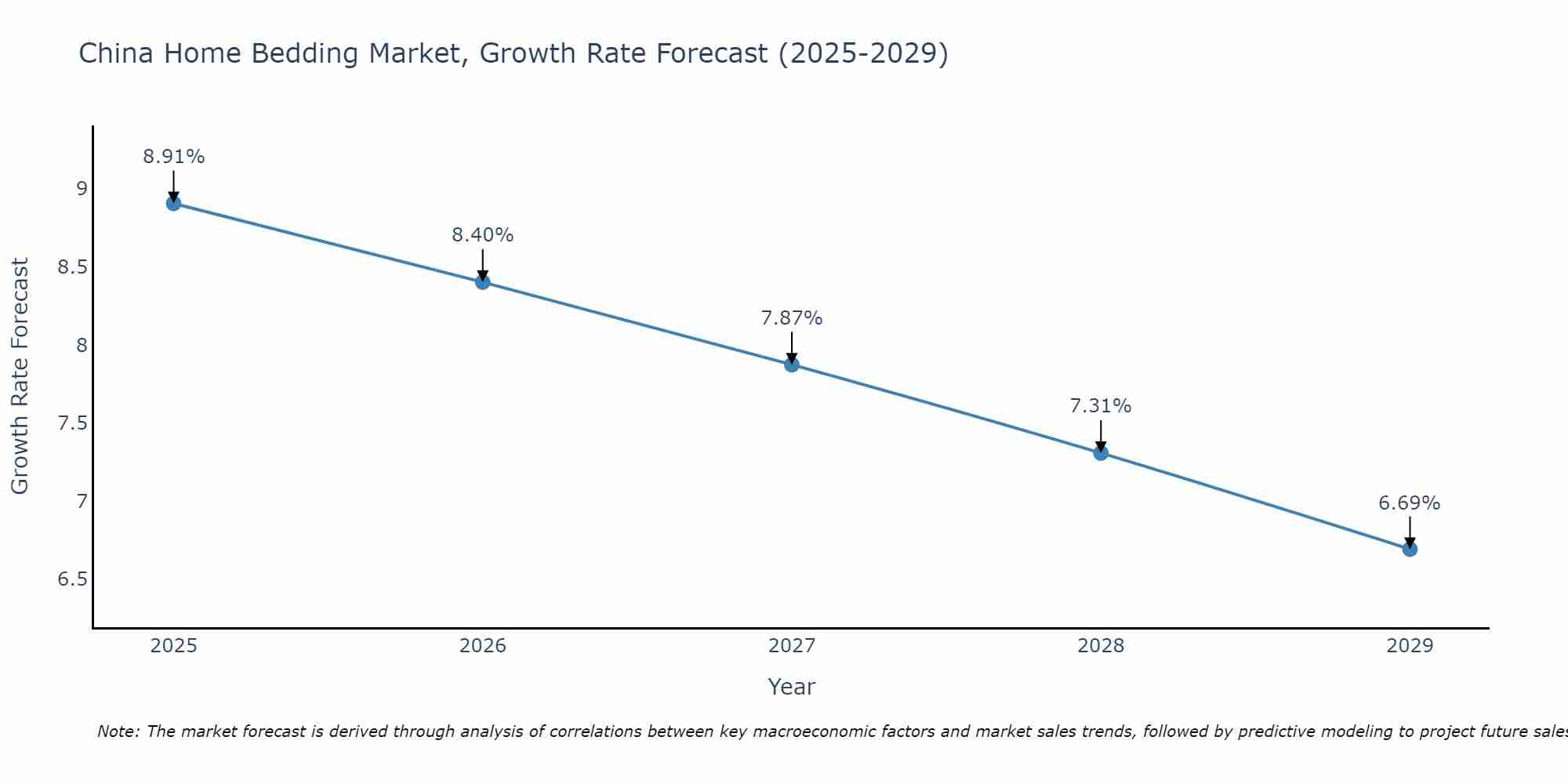
The China Home Bedding Market could see a tapering of growth rates over 2025 to 2029. Although the growth rate starts strong at 8.91% in 2025, it steadily loses momentum, ending at 6.69% by 2029.
China Home Bedding Market Synopsis
The China home bedding market is experiencing significant growth driven by factors such as increasing disposable income, urbanization, and changing consumer preferences. Rising awareness about the importance of quality sleep and demand for comfortable and aesthetically pleasing bedding products are fueling market expansion. Key players in the market are focusing on innovation, product differentiation, and online sales channels to cater to the diverse needs of consumers. The market offers a wide range of products including bed linens, pillows, blankets, and mattresses, with a growing trend towards eco-friendly and sustainable materials. With a large population and a growing middle-class segment, China presents lucrative opportunities for both domestic and international home bedding manufacturers to capitalize on the evolving consumer demands in the market.
China Home Bedding Market Trends
The China Home Bedding Market is experiencing several key trends. Firstly, there is a growing demand for high-quality, eco-friendly bedding materials such as organic cotton and bamboo fiber, driven by increasing consumer awareness of sustainability and health. Secondly, customization and personalization are becoming more popular as consumers seek unique and personalized bedding options to reflect their individual style. Additionally, with the rise of e-commerce platforms, online sales of home bedding products are witnessing significant growth, offering consumers a convenient way to shop for a wide range of bedding products. Lastly, smart bedding products incorporating technology such as temperature control features and sleep tracking capabilities are gaining traction among tech-savvy consumers looking to enhance their sleep experience.
China Home Bedding Market Challenges
The China Home Bedding Market faces challenges such as intense competition due to the presence of numerous domestic and international players, price wars, and the need to constantly innovate to meet changing consumer preferences. Counterfeiting and quality control issues also pose a significant challenge in maintaining consumer trust. Additionally, fluctuations in raw material costs and changing regulations related to environmental sustainability and product safety further complicate the operating environment for companies in the home bedding sector in China. Adapting to e-commerce trends and digital marketing strategies is crucial for companies to stay competitive in this market, as online retail continues to gain prominence among Chinese consumers.
China Home Bedding Market Investment Opportunities
The China Home Bedding Market offers promising investment opportunities due to the growing demand for high-quality bedding products driven by increasing disposable income and changing consumer preferences. Key areas for investment include the premium bedding segment catering to affluent consumers seeking luxury and comfort, eco-friendly and sustainable bedding options to meet the rising environmental consciousness, and technology-driven innovations such as smart bedding solutions integrating features like temperature control and sleep tracking. Additionally, there is potential for growth in e-commerce platforms specializing in selling home bedding products, enabling investors to tap into the growing trend of online shopping in China. Overall, investing in the China Home Bedding Market presents a favorable outlook for those looking to capitalize on the evolving needs and preferences of Chinese consumers in the home textiles industry.
China Home Bedding Market Future Outlook
The future outlook for the China home bedding market is promising, driven by factors such as increasing disposable incomes, urbanization, and a growing awareness of the importance of quality sleep. With consumers placing a higher emphasis on comfort and aesthetics in their homes, demand for premium and customized bedding products is expected to rise. E-commerce platforms are also playing a significant role in expanding the market reach and providing consumers with a wide range of options to choose from. Additionally, sustainability and eco-friendly practices are becoming more important to Chinese consumers, leading to a shift towards organic and sustainable materials in bedding products. Overall, the China home bedding market is anticipated to experience steady growth in the coming years, presenting opportunities for both domestic and international players in the industry.
Key Highlights of the Report:
- China Home Bedding Market Outlook
- Market Size of China Home Bedding Market, 2021
- Forecast of China Home Bedding Market, 2031
- Historical Data and Forecast of China Home Bedding Revenues & Volume for the Period 2018 - 2031
- China Home Bedding Market Trend Evolution
- China Home Bedding Market Drivers and Challenges
- China Home Bedding Price Trends
- China Home Bedding Porter's Five Forces
- China Home Bedding Industry Life Cycle
- Historical Data and Forecast of China Home Bedding Market Revenues & Volume By Type for the Period 2018 - 2031
- Historical Data and Forecast of China Home Bedding Market Revenues & Volume By Bed Linen for the Period 2018 - 2031
- Historical Data and Forecast of China Home Bedding Market Revenues & Volume By Mattress for the Period 2018 - 2031
- Historical Data and Forecast of China Home Bedding Market Revenues & Volume By Pillows for the Period 2018 - 2031
- Historical Data and Forecast of China Home Bedding Market Revenues & Volume By Blankets for the Period 2018 - 2031
- Historical Data and Forecast of China Home Bedding Market Revenues & Volume By Others for the Period 2018 - 2031
- Historical Data and Forecast of China Home Bedding Market Revenues & Volume By Distribution Channel for the Period 2018 - 2031
- Historical Data and Forecast of China Home Bedding Market Revenues & Volume By Offline for the Period 2018 - 2031
- Historical Data and Forecast of China Home Bedding Market Revenues & Volume By Online for the Period 2018 - 2031
- China Home Bedding Import Export Trade Statistics
- Market Opportunity Assessment By Type
- Market Opportunity Assessment By Distribution Channel
- China Home Bedding Top Companies Market Share
- China Home Bedding Competitive Benchmarking By Technical and Operational Parameters
- China Home Bedding Company Profiles
- China Home Bedding Key Strategic Recommendations






































