China Precious Metals Market Size Growth Rate
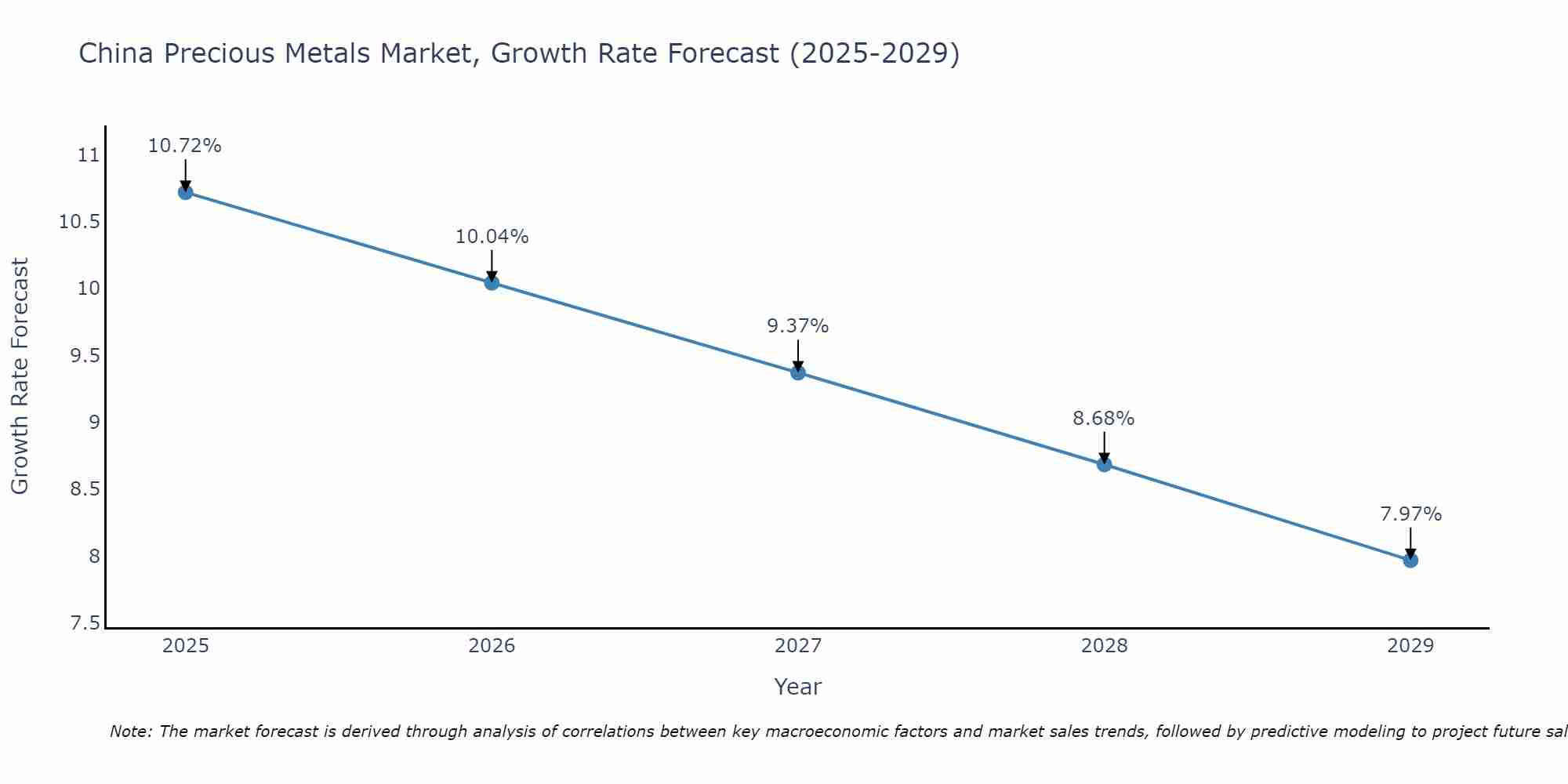
The China Precious Metals Market may undergo a gradual slowdown in growth rates between 2025 and 2029. Although the growth rate starts strong at 10.72% in 2025, it steadily loses momentum, ending at 7.97% by 2029.
China Precious Metals Market Overview
The Precious Metals market in China is growing due to the use of precious metals in various applications, including jewelry, electronics, and investment. Precious metals like gold, silver, and platinum are valued for their properties and versatility. The market is driven by advancements in metal extraction and processing technologies, increasing industrial demand, and investment trends. Chinese producers and traders are investing in quality and innovation to meet market needs and support diverse applications.
Drivers of the market
The Precious Metals market in China is driven by the demand for metals with high economic value, including gold, silver, and platinum, used in diverse sectors such as jewelry, electronics, and finance. Precious metals offer benefits such as high value retention, durability, and various industrial applications. Market growth is supported by increasing consumer demand for luxury items, technological advancements in metal processing, and the rising interest in investing in precious metals.
Challenges of the market
The precious metals market encounters challenges related to price volatility and supply chain issues. The market for precious metals like gold, silver, and platinum is influenced by global economic trends and geopolitical factors, leading to fluctuating prices. Additionally, supply chain disruptions and regulatory challenges in mining and trading can impact market stability. The market must also address competition from alternative assets and shifting consumer preferences toward sustainable and ethical sourcing.
Government Policy of the market
The precious metals market in China is guided by government policies focusing on material safety, environmental impact, and trading regulations. The government sets rigorous standards for the performance and safety of precious metals to ensure they comply with industry requirements. Policies support the development and integration of advanced technologies for precious metal processing and recycling, addressing concerns related to resource management and environmental sustainability.
Key Highlights of the Report:
- China Precious Metals Market Outlook
- Market Size of China Precious Metals Market, 2024
- Forecast of China Precious Metals Market, 2031
- Historical Data and Forecast of China Precious Metals Revenues & Volume for the Period 2021-2031
- China Precious Metals Market Trend Evolution
- China Precious Metals Market Drivers and Challenges
- China Precious Metals Price Trends
- China Precious Metals Porter's Five Forces
- China Precious Metals Industry Life Cycle
- Historical Data and Forecast of China Precious Metals Market Revenues & Volume By Product for the Period 2021-2031
- Historical Data and Forecast of China Precious Metals Market Revenues & Volume By Gold for the Period 2021-2031
- Historical Data and Forecast of China Precious Metals Market Revenues & Volume By Silver for the Period 2021-2031
- Historical Data and Forecast of China Precious Metals Market Revenues & Volume By Platinum Group Metals (PGM) for the Period 2021-2031
- Historical Data and Forecast of China Precious Metals Market Revenues & Volume By Application for the Period 2021-2031
- Historical Data and Forecast of China Precious Metals Market Revenues & Volume By Jewelry for the Period 2021-2031
- Historical Data and Forecast of China Precious Metals Market Revenues & Volume By Industrial for the Period 2021-2031
- Historical Data and Forecast of China Precious Metals Market Revenues & Volume By Investment for the Period 2021-2031
- China Precious Metals Import Export Trade Statistics
- Market Opportunity Assessment By Product
- Market Opportunity Assessment By Application
- China Precious Metals Top Companies Market Share
- China Precious Metals Competitive Benchmarking By Technical and Operational Parameters
- China Precious Metals Company Profiles
- China Precious Metals Key Strategic Recommendations






































