Colombia Digital Market Size & Growth Rate (2026-2032)
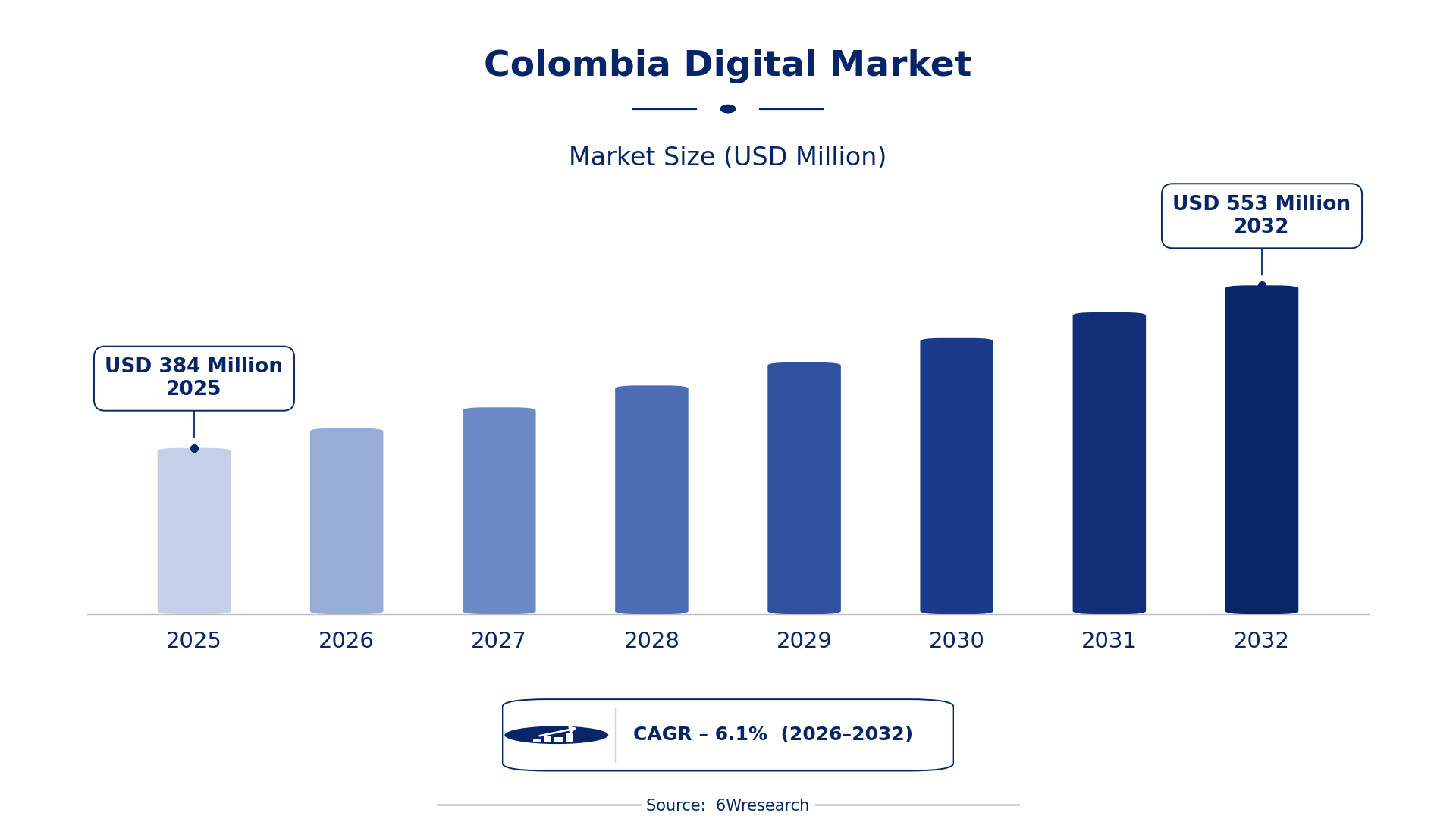
The Colombia Digital Market was estimated at USD 384 Million in 2025 and is projected to reach USD 553 Million by 2032, growing at a CAGR of 6.1% from 2026 to 2032.
Colombia Digital Market Synopsis
In recent years, the Colombia Digital Market has witnessed impressive momentum, driven primarily by rising internet access and the widespread adoption of smartphones. As we look to the future, this momentum is expected to persist, with e-commerce and digital advertising poised for robust growth.
The shift toward online shopping is not just a fleeting trend; it reflects changing consumer behaviors that favor convenience and accessibility. As Colombian businesses adapt to these dynamics, the digital market will likely see a surge in innovative solutions and services, presenting a fertile ground for growth.
Colombia Digital Market Year-wise Growth Rate and Key Drivers
This graph illustrates the annual growth rates of the Colombia Digital Market from 2021 to 2032, highlighting a steady upward trajectory and projected expansion over the forecast period.
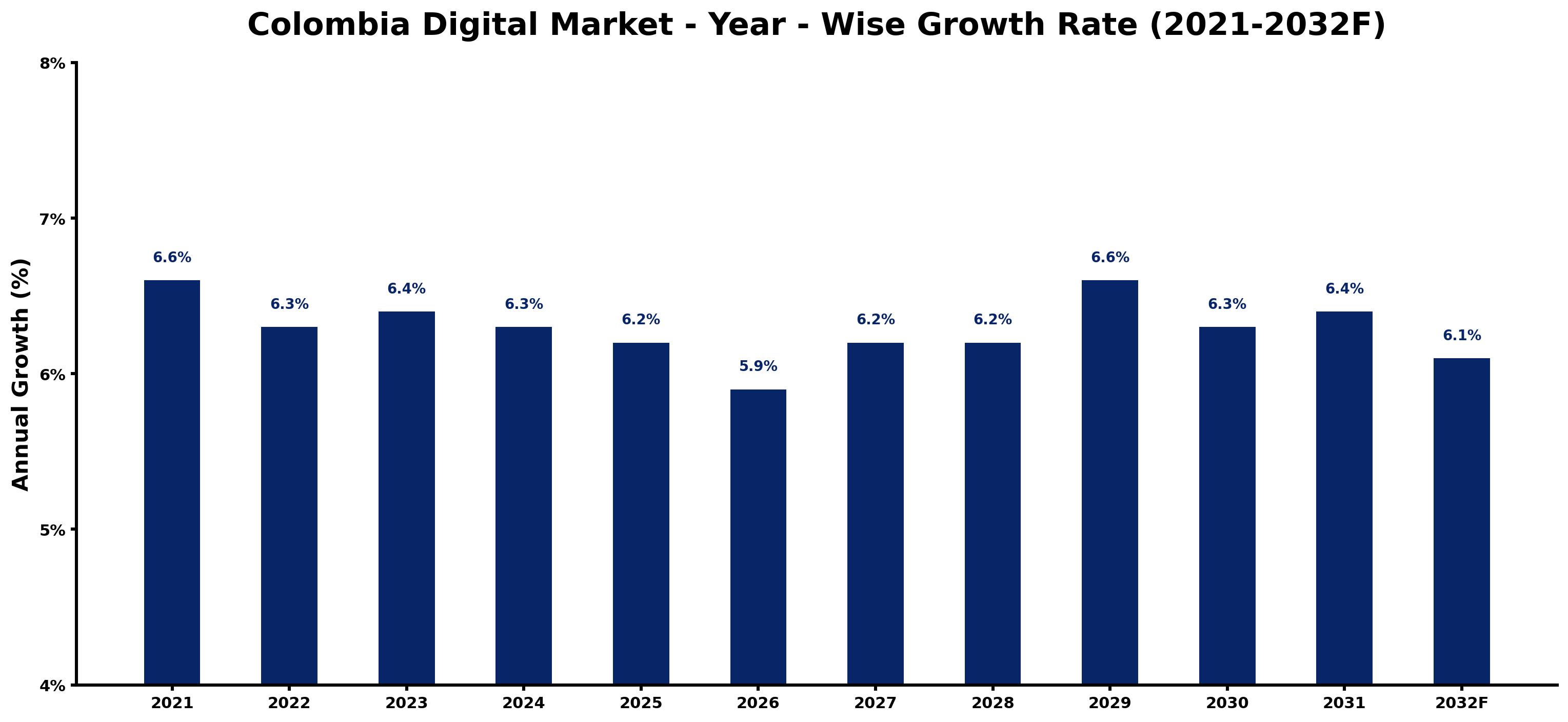
The table below presents the year‑wise growth rates along with the key drivers influencing the market
| Year | Growth Rate | Major Drivers |
| 2021 | 6.6% | National plan promoting digital transformation in businesses. |
| 2022 | 6.3% | Increased online payment adoption fueling e-commerce growth. |
| 2023 | 6.4% | Regulatory framework supporting data privacy and protection. |
| 2024 | 6.3% | Rising smartphone penetration driving mobile application usage. |
| 2025 | 6.2% | Local universities enhancing digital literacy programs nationwide. |
| 2026 | 5.9% | Corporate investment in digital marketing strategies surging. |
| 2027 | 6.2% | Government initiatives encouraging digital skills training sessions. |
| 2028 | 6.2% | Social media platform growth boosting advertising opportunities. |
| 2029 | 6.6% | Economic recovery post-pandemic increasing online service utilization. |
| 2030 | 6.3% | Access to affordable broadband stimulating digital entrepreneurship. |
| 2031 | 6.4% | Popularity of fintech solutions transforming traditional banking. |
| 2032 | 6.1% | Growing telehealth services demand expanding digital health ecosystems. |
Note: Market size estimations and growth projections presented in this report are based on 6Wresearch's proprietary forecasting methodology, utilizing the latest available industry data, government publications, and primary research inputs.
Colombia Digital Market Key Takeaways
Below are some of the specific key takeaways from the market, including:
- E-commerce continues to grow, with more consumers preferring online shopping.
- Mobile payment solutions are increasingly adopted, enhancing transaction convenience.
- Digital advertising investments are rising, as companies seek to expand their reach.
- Social media platforms are becoming crucial for marketing and consumer engagement.
- Government initiatives aim to bolster digital infrastructure and promote literacy.
Evaluation of Restraints in Colombia Digital Market
Despite the promising growth, the Colombia Digital Market faces significant restraints that hinder its full potential. Limited internet infrastructure, especially in rural areas, poses a challenge for widespread adoption. Many consumers still lack the necessary digital literacy, which restricts their participation in the online economy.
on top of that, concerns surrounding cybersecurity and data privacy are causing apprehension among users, discouraging them from fully engaging with digital services. Addressing these issues requires a concerted effort from various stakeholders, including the government and private sector, to create a safer and more inclusive digital environment.
Colombia Digital Market Trends
Several trends are shaping the Colombia Digital Market today. The rapid proliferation of e-commerce is one of the most notable, as more consumers are shifting their shopping habits online. This trend is complemented by the rise of mobile payment systems, making transactions simpler and more secure.
Social media's role in marketing cannot be overlooked; influencer marketing is gaining traction as brands seek to connect with younger audiences. Additionally, the digital advertising sector is diversifying, with companies exploring innovative strategies to enhance visibility and engagement across various platforms.
Colombia Digital Market Opportunities
Opportunities in the Colombia Digital Market are abundant. Retailers can capitalize on the rising trend of e-commerce by enhancing their online presence and offering seamless shopping experiences. The growing demand for digital content and streaming services presents another avenue for investment.
on top of that, as digital literacy improves, businesses can engage with a broader audience, fostering deeper consumer relationships. There is also a considerable opportunity for fintech solutions that streamline payment processes and enhance security in online transactions.
Government Initiatives in the Colombia Digital Market
The Colombian government plays a crucial role in shaping the digital market through various initiatives aimed at promoting growth and innovation. With a focus on enhancing digital infrastructure and ensuring fair competition, these policies aim to create a conducive environment for businesses and consumers alike.
- A national digital infrastructure upgrade programme now in its rollout phase aims to expand internet access across urban and rural areas.
- Currently underway, the Digital Transformation Program seeks to improve digital literacy among the population, ensuring broader participation in the digital economy.
- A regulatory framework introduced in 2025 mandates billing transparency for online transactions, enhancing consumer trust.
- A planned public-private initiative expected to expand telecom infrastructure access by 2028 is set to boost connectivity.
- The Ministry of Information Technology and Communications is actively overseeing the development of the digital economy, promoting innovation and fair practices.
Future Insights of the Colombia Digital Market
Looking ahead to 2026-2032, the Colombia Digital Market is on a promising trajectory. With increasing internet penetration and smartphone adoption, the e-commerce sector is expected to thrive. Businesses that adapt to these trends will likely see substantial growth and investment opportunities.
on top of that, as the government continues to enhance digital infrastructure, the landscape will become increasingly favorable for innovation. However, addressing cybersecurity concerns and ensuring robust regulatory frameworks will be essential for sustaining this growth.
Colombia Digital Market Latest Developments
Recent developments in the Colombia Digital Market indicate a dynamic environment, with various initiatives and projects underway. The focus on digitalization is evident in the efforts made by both the government and private sector to enhance services and accessibility for consumers.
- A major technology vendor launched a new e-commerce platform in early 2025, aimed at simplifying online transactions for local businesses.
- An initiative that began in mid-2025 focuses on promoting digital literacy through community workshops, enhancing consumer engagement.
- A rollout expected to begin in the second half of 2026 will introduce innovative mobile payment solutions to further facilitate online shopping.
- In late 2025, a partnership was formed between regional operators to expand digital infrastructure in underserved areas.
- Upcoming legislation planned for 2026 will establish clearer guidelines for data privacy, addressing consumer concerns and boosting confidence in online services.
Colombia Digital Market - Key Attractiveness of the Report
- 10 Years of Market Numbers
- Historical Data Starting from 2022 to 2025
- Base Year: 2025
- Forecast Data until 2032
- Key Performance Indicators Impacting the Market
- Major Upcoming Developments and Projects
Key Highlights of the Report:
- Colombia Digital Market Outlook
- Market Size of Colombia Digital Market, 2025
- Forecast of Colombia Digital Market, 2032
- Historical Data and Forecast of Colombia Digital Revenues & Volume for the Period 2022-2032F
- Colombia Digital Market Trend Evolution
- Colombia Digital Market Drivers and Challenges
- Colombia Digital Price Trends
- Colombia Digital Porter's Five Forces
- Colombia Digital Industry Life Cycle
- Historical Data and Forecast of Colombia Digital Market Revenues & Volume By Software for the Period 2022-2032F
- Historical Data and Forecast of Colombia Digital Market Revenues & Volume By CRM Software for the Period 2022-2032F
- Historical Data and Forecast of Colombia Digital Market Revenues & Volume By Email Marketing Software for the Period 2022-2032F
- Historical Data and Forecast of Colombia Digital Market Revenues & Volume By Social Media Advertising for the Period 2022-2032F
- Colombia Digital Import Export Trade Statistics
- Market Opportunity Assessment By Software
- Colombia Digital Top Companies Market Share
- Colombia Digital Competitive Benchmarking By Technical and Operational Parameters
- Colombia Digital Company Profiles
- Colombia Digital Key Strategic Recommendations






































